

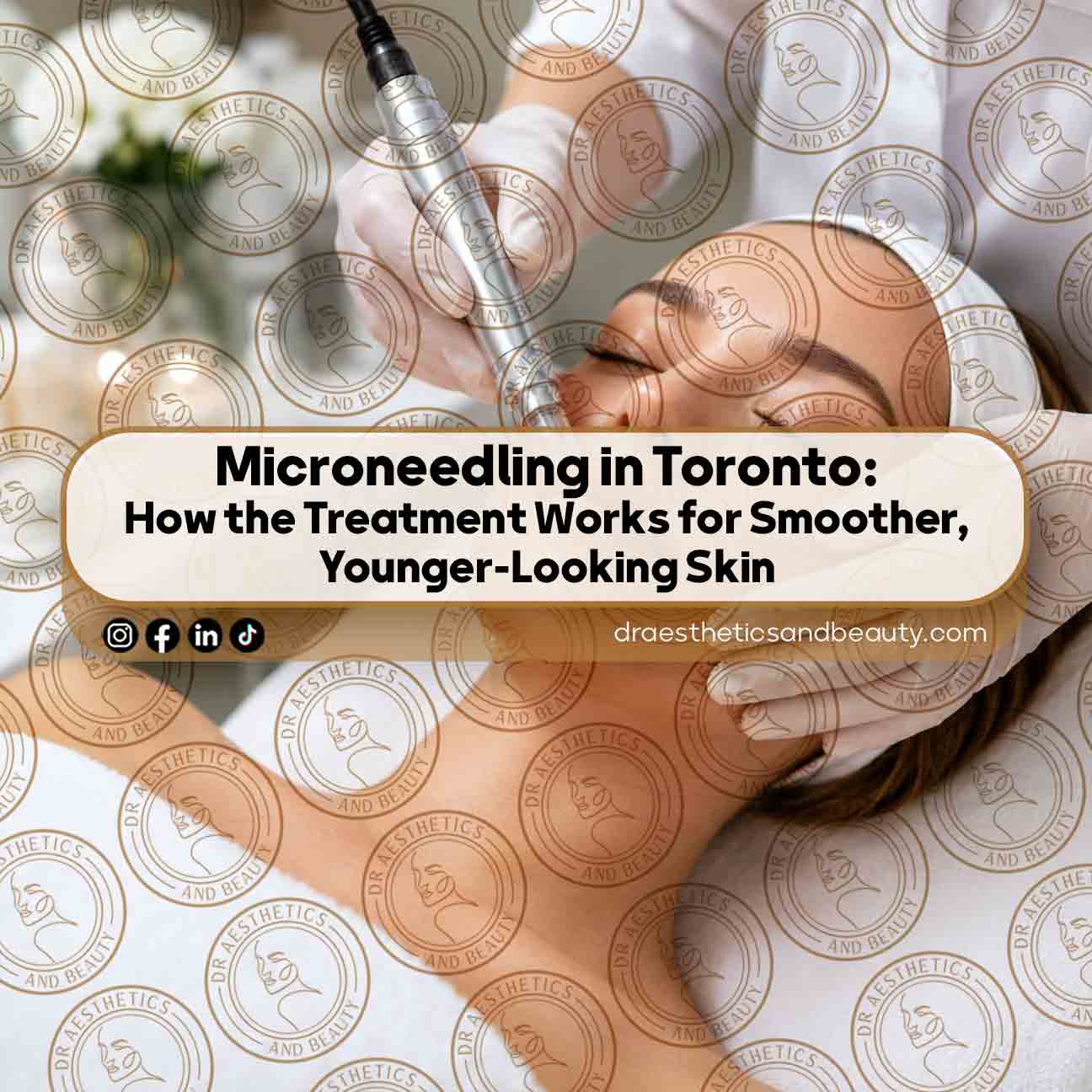
Microneedling, also known as collagen induction therapy, is a minimally invasive cosmetic treatment that uses fine, sterile needles to create controlled micro-injuries in the skin. This process triggers the body’s natural wound-healing response, stimulating the production of collagen and elastin the proteins responsible for firm, smooth, and youthful skin. In Toronto, microneedling is widely available at medical aesthetics clinics and is used to address a variety of concerns, including fine lines, wrinkles, acne scars, enlarged pores, uneven skin texture, and stretch marks. The treatment typically requires 3 to 6 sessions spaced 4 to 6 weeks apart for optimal results, with minimal downtime of 24 to 72 hours. This comprehensive guide explains how microneedling works, what to expect during and after treatment, how it compares to other skin rejuvenation procedures, and why Toronto residents are choosing this innovative approach to achieve radiant, healthy skin.
1. Introduction: The Rise of Microneedling in Toronto
Toronto has emerged as a hub for medical aesthetics, with a growing number of clinics offering advanced skin rejuvenation treatments. Among these, microneedling has gained significant popularity as a safe, effective, and minimally invasive solution for a wide range of skin concerns. From busy professionals in the Financial District to residents in Vaughan and Scarborough, people are turning to microneedling to achieve smoother, firmer, and more radiant skin without the downtime associated with more aggressive procedures.
Microneedling, also called collagen induction therapy, works by harnessing the skin’s natural healing capabilities. The treatment uses a device equipped with ultra-fine, sterile needles to create thousands of microscopic channels in the skin’s surface. These controlled micro-injuries trigger the body’s repair response, stimulating the production of new collagen and elastin fibers. The result is skin that looks smoother, firmer, and more even over time.
This guide provides a comprehensive overview of microneedling in Toronto, explaining how the treatment works, what benefits it offers, what to expect during and after your session, and how to choose the right provider for your needs. Whether you’re considering microneedling for the first time or looking to enhance your current skincare routine, this article will equip you with the knowledge you need to make an informed decision.
2. What Is Microneedling? Understanding the Science
Microneedling is a medical-grade aesthetic treatment that uses a specialized device with fine needles to create controlled micro-punctures in the skin. These micro-injuries are invisible to the naked eye but significant at the cellular level. They trigger the release of growth factors and stimulate fibroblasts the cells responsible for producing collagen and elastin.
Collagen is the structural protein that gives skin its firmness and elasticity, while elastin allows skin to stretch and bounce back. As we age, collagen and elastin production naturally declines, leading to fine lines, wrinkles, sagging, and loss of volume. Microneedling effectively reverses this process by jumpstarting the body’s natural production of these essential proteins.
The treatment is suitable for almost all skin types and tones, making it an inclusive option for diverse populations. Unlike some laser treatments that carry a risk of hyperpigmentation on darker skin tones, microneedling is generally safe and effective across the Fitzpatrick skin type scale.
2.1 The Collagen Induction Process
The science behind microneedling is rooted in the body’s natural wound-healing cascade. When the skin is punctured, it responds by sending healing factors to the area. This process involves several key steps:
- Platelet activation: Blood platelets release growth factors that signal the body to begin repair.
- Fibroblast stimulation: Fibroblasts are activated to produce new collagen and elastin fibers.
- Neocollagenesis: New collagen is formed over the following weeks and months, gradually improving skin texture and firmness.
- Remodeling: The newly formed collagen reorganizes and matures, leading to long-lasting improvements in skin quality.
Clinical studies have reported significant improvements in acne scar appearance, wrinkle reduction, and pore size reduction following microneedling treatments. The cumulative effects of multiple sessions produce the most dramatic and lasting results.
3. Key Benefits of Microneedling
Microneedling offers a wide range of benefits for individuals seeking to improve their skin’s appearance and health. Here are the most notable advantages:
3.1 Reduction of Fine Lines and Wrinkles
By stimulating collagen and elastin production, microneedling effectively reduces the appearance of fine lines and wrinkles. The treatment is particularly effective for forehead lines, crow’s feet, and nasolabial folds.
3.2 Improvement of Acne Scars
Microneedling is one of the most effective non-surgical treatments for acne scars. The micro-injuries break down dense scar tissue and promote the growth of new, healthier skin. It is effective for various types of acne scars, including rolling, boxcar, and ice-pick scars.
3.3 Minimization of Enlarged Pores
Enlarged pores can be a source of frustration for many individuals. Microneedling helps refine pore size by stimulating collagen production around the pore walls, making them appear smaller and less noticeable.
3.4 Even Skin Tone and Texture
Microneedling addresses uneven skin texture and tone, including roughness and discoloration. The treatment promotes cell turnover and the development of a smoother, more refined skin surface.
3.5 Reduction of Stretch Marks
Stretch marks can be effectively treated with microneedling. The procedure stimulates collagen and elastin in the affected areas, reducing the texture and color of stretch marks over time.
3.6 Enhanced Product Absorption
The micro-channels created during treatment allow for deeper penetration of topical skincare products. This means that serums and moisturizers applied immediately after treatment are absorbed more effectively, maximizing their benefits.
3.7 Suitable for All Skin Types
One of the most significant advantages of microneedling is its suitability for all skin types and tones. Unlike some laser treatments that carry risks for darker skin, microneedling is generally safe and effective across the Fitzpatrick scale.
4. The Microneedling Treatment Process: Step by Step
Understanding what happens during a microneedling session can help alleviate any anxiety and ensure you are fully prepared for your treatment. Here is a step-by-step breakdown of the typical microneedling process at a Toronto medical aesthetics clinic:
4.1 Step 1: Consultation and Skin Assessment
Your microneedling journey begins with a private consultation with a qualified medical aesthetician or physician. During this appointment, the provider will:
- Examine your skin and treatment areas
- Review your medical history and any contraindications
- Discuss your cosmetic goals and expectations
- Recommend a personalized treatment plan, including the number of sessions needed
Many Toronto clinics use advanced skin analysis tools to visualize your skin profile and predict treatment outcomes. This technology helps ensure that your treatment plan is tailored to your specific needs.
4.2 Step 2: Skin Preparation
On the day of your treatment, the provider will cleanse and disinfect the treatment area to create a sterile environment. A topical numbing cream containing lidocaine is then applied to the skin and left on for approximately 30 to 45 minutes to ensure your comfort during the procedure.
4.3 Step 3: The Microneedling Procedure
Once the numbing cream has taken effect, the provider will begin the microneedling procedure. Using a medical-grade device equipped with sterile, single-use needle cartridges, the provider will gently glide the device across the treatment area. The needles create controlled micro-punctures at a depth ranging from 0.25 mm to 2.5 mm, depending on your skin concerns and the area being treated.
The procedure typically takes 30 to 60 minutes, depending on the size of the treatment area. Most patients describe the sensation as a mild vibration or tapping, with minimal discomfort thanks to the numbing cream.
4.4 Step 4: Post-Treatment Care
After the microneedling is complete, the provider will apply a soothing serum or healing gel to calm the skin and promote recovery. Sunscreen is also applied to protect the newly treated skin from UV damage. You will receive detailed aftercare instructions to follow during the recovery period.
5. Recovery and Aftercare: What to Expect
One of the reasons microneedling is so popular is its minimal downtime. However, understanding what to expect during the recovery period will help you plan accordingly and achieve the best possible results.
5.1 Immediate Post-Treatment Effects
Immediately following your microneedling session, your skin will appear pink or red, similar to a mild to moderate sunburn. You may also experience mild swelling and sensitivity. These effects are normal and indicate that the skin’s healing process has been activated.
5.2 The First 24 to 72 Hours
During the first 24 to 72 hours after treatment, the redness and swelling will gradually subside. Your skin may feel tight, dry, or slightly rough—a sensation often described as “sandpaper skin.” It is essential to follow your provider’s aftercare instructions during this time.
5.3 Aftercare Guidelines
To ensure optimal healing and results, adhere to these aftercare guidelines:
- Avoid makeup: Do not apply makeup for at least 24 hours after treatment.
- Skip harsh products: Avoid retinoids, exfoliating acids, and other active ingredients for several days.
- Protect from sun: Keep your skin out of direct sunlight and apply a broad-spectrum sunscreen daily.
- Use gentle skincare: Stick to mild cleansers and hydrating serums recommended by your provider.
- Avoid sweating: Refrain from intense exercise and activities that cause excessive sweating for 2 to 3 days.
5.4 Long-Term Recovery and Results
While you may notice an immediate glow after your treatment, the most significant results develop over time. Collagen production peaks at approximately 6 to 12 weeks after treatment. You can expect to see continued improvement in skin texture, firmness, and tone over the following months. Most patients require 3 to 6 sessions spaced 4 to 6 weeks apart for optimal results.
6. Microneedling vs. Other Skin Rejuvenation Treatments
Toronto offers a wide array of skin rejuvenation treatments, and it can be challenging to determine which option is right for you. Here is how microneedling compares to other popular procedures:
6.1 Microneedling vs. Chemical Peels
Chemical peels use acids to exfoliate the outer layers of the skin, improving surface-level concerns such as pigmentation and dullness. Microneedling, on the other hand, works deeper to stimulate structural changes in the skin. While chemical peels typically involve noticeable peeling and flaking, microneedling results in redness that resolves within a few days. Microneedling is generally preferred for texture improvement and collagen induction, while chemical peels are better suited for superficial resurfacing.
6.2 Microneedling vs. Laser Therapy
Laser therapy uses concentrated light energy to treat various skin concerns. It can be highly effective for pigmentation, vascular lesions, and deep wrinkles. However, laser treatments often involve longer downtime typically 1 to 2 weeks and carry a higher risk of side effects, particularly on darker skin tones. Microneedling offers a safer alternative with minimal downtime and is suitable for all skin types. For deeper texture changes, laser may be more effective, while microneedling is often preferred for milder scarring and lower downtime.
6.3 Microneedling vs. Radiofrequency (RF) Microneedling
RF microneedling, such as Morpheus8, combines traditional microneedling with radiofrequency energy. The RF energy heats the deeper layers of the skin, enhancing collagen contraction and remodeling. This makes RF microneedling more effective for skin laxity, deep wrinkles, and significant scarring. However, RF microneedling is typically more expensive and may involve slightly more downtime than traditional microneedling.
7. Microneedling Cost in Toronto
The cost of microneedling in Toronto varies depending on several factors, including the device used, the size of the treatment area, and whether add-ons such as PRP or exosomes are included. Here is a general overview of pricing:
| Treatment Type | Device / Method | Typical Cost (Per Session) | Best For |
|---|---|---|---|
| Traditional Microneedling | SkinPen, DermaPen, ProCell | $300 – $500 | Fine lines, mild scars, texture improvement |
| Microneedling with PRP (Vampire Facial) | SkinPen + Platelet-Rich Plasma | $700 – $1,250 | Acne scars, deep wrinkles, enhanced rejuvenation |
| Microneedling with Exosomes / PDRN | SkinPen + Growth Factors | $600 – $750 | Advanced skin regeneration, accelerated healing |
| RF Microneedling (Morpheus8) | Microneedling + Radiofrequency | $600 – $1,400+ | Skin laxity, deep wrinkles, significant scarring |
It is important to note that most patients require a series of 3 to 6 sessions for optimal results. Many Toronto clinics offer package pricing for multiple sessions, which can reduce the overall cost. Additionally, some clinics provide financing options to make treatment more accessible.
8. Choosing the Right Microneedling Provider in Toronto
Selecting a qualified and experienced provider is essential for achieving safe and effective results. Here are key factors to consider when choosing a microneedling clinic in Toronto:
8.1 Credentials and Experience
Look for a clinic staffed by qualified medical professionals, such as registered nurses, medical aestheticians, or physicians with specialized training in aesthetic medicine. Providers should have experience performing microneedling on various skin types and concerns.
8.2 Device Quality
Reputable clinics use medical-grade devices with single-use, sterile needle cartridges. The SkinPen is the only microneedling device with full FDA clearance for treating facial acne scars and is Health Canada Class II licensed. Ask your provider which device they use and ensure it meets safety standards.
8.3 Hygiene and Safety Protocols
The clinic should maintain strict hygiene standards, including the use of sterile, single-use needle cartridges and proper disinfection of treatment areas.
8.4 Before and After Photos
Reviewing before and after photos of previous patients can give you a realistic expectation of the results you can achieve. Look for photos of patients with similar skin concerns and skin types to yours.
8.5 Patient Reviews and Testimonials
Check online reviews and testimonials to gauge patient satisfaction. Positive reviews from real patients can provide valuable insight into the quality of care and results you can expect.
9. Frequently Asked Questions (FAQ)
Q1: What is microneedling?
Microneedling, also known as collagen induction therapy, is a minimally invasive cosmetic treatment that uses fine, sterile needles to create controlled micro-injuries in the skin. This process stimulates the body’s natural production of collagen and elastin, improving skin texture, firmness, and tone.
Q2: How does microneedling work?
The treatment creates thousands of microscopic channels in the skin, triggering the body’s wound-healing response. This response stimulates the production of new collagen and elastin fibers, which gradually improve the skin’s appearance over time.
Q3: What skin concerns can microneedling treat?
Microneedling effectively treats fine lines, wrinkles, acne scars, enlarged pores, uneven skin texture, stretch marks, and sun damage. It is suitable for almost all skin types and tones.
Q4: Is microneedling painful?
Most patients experience minimal discomfort during the procedure. A topical numbing cream is applied before treatment to ensure comfort. Many patients describe the sensation as a mild vibration or tapping.
Q5: How many microneedling sessions do I need?
Most patients require 3 to 6 sessions spaced 4 to 6 weeks apart for optimal results. The exact number depends on your skin concerns and treatment goals.
Q6: How long does it take to see results from microneedling?
You may notice an immediate glow after your first session. However, the most significant results develop over 6 to 12 weeks as new collagen forms. Continued improvement can be seen over several months.
Q7: What is the downtime after microneedling?
Downtime is minimal. You can expect redness and mild swelling for 24 to 72 hours, similar to a mild sunburn. Most patients can resume normal activities immediately after treatment.
Q8: Can microneedling be combined with other treatments?
Yes, microneedling is often combined with PRP (Vampire Facial), exosomes, or PDRN to enhance results. It can also be integrated into a comprehensive skincare routine that includes other rejuvenation treatments.
Q9: Is microneedling safe for all skin types?
Yes, microneedling is generally safe and effective for all skin types and tones. Unlike some laser treatments, it carries a lower risk of post-inflammatory hyperpigmentation.
Q10: How much does microneedling cost in Toronto?
The cost of microneedling in Toronto typically ranges from $300 to $500 per session for traditional microneedling. Treatments with PRP or exosomes range from $600 to $1,250, while RF microneedling such as Morpheus8 can cost $600 to $1,400 or more.
10. Conclusion
Microneedling has established itself as one of the most effective and accessible skin rejuvenation treatments available in Toronto. By harnessing the body’s natural healing abilities, this minimally invasive procedure stimulates collagen and elastin production to address a wide range of skin concerns—from fine lines and wrinkles to acne scars and enlarged pores. With minimal downtime, suitability for all skin types, and the ability to be combined with other advanced therapies, microneedling offers a versatile solution for individuals seeking to improve their skin’s health and appearance.
Whether you are new to medical aesthetics or looking to enhance your existing skincare routine, microneedling provides a safe, effective, and scientifically backed path to smoother, firmer, and more radiant skin. The key to achieving optimal results lies in choosing a qualified provider, following a personalized treatment plan, and adhering to proper aftercare guidelines.
If you are considering microneedling in Toronto, take the first step by scheduling a consultation with a trusted medical aesthetics clinic. A qualified provider can assess your skin, discuss your goals, and design a treatment plan tailored to your unique needs. With the right approach, you can enjoy the transformative benefits of microneedling and rediscover your skin’s natural vitality.
Ready to Transform Your Skin with Microneedling?
Discover the benefits of professional microneedling at Dr Aesthetics and Beauty. Our experienced team uses advanced medical-grade devices to deliver safe, effective, and personalized treatments tailored to your unique skin concerns.
Book your consultation today and take the first step toward smoother, firmer, and more radiant skin.