

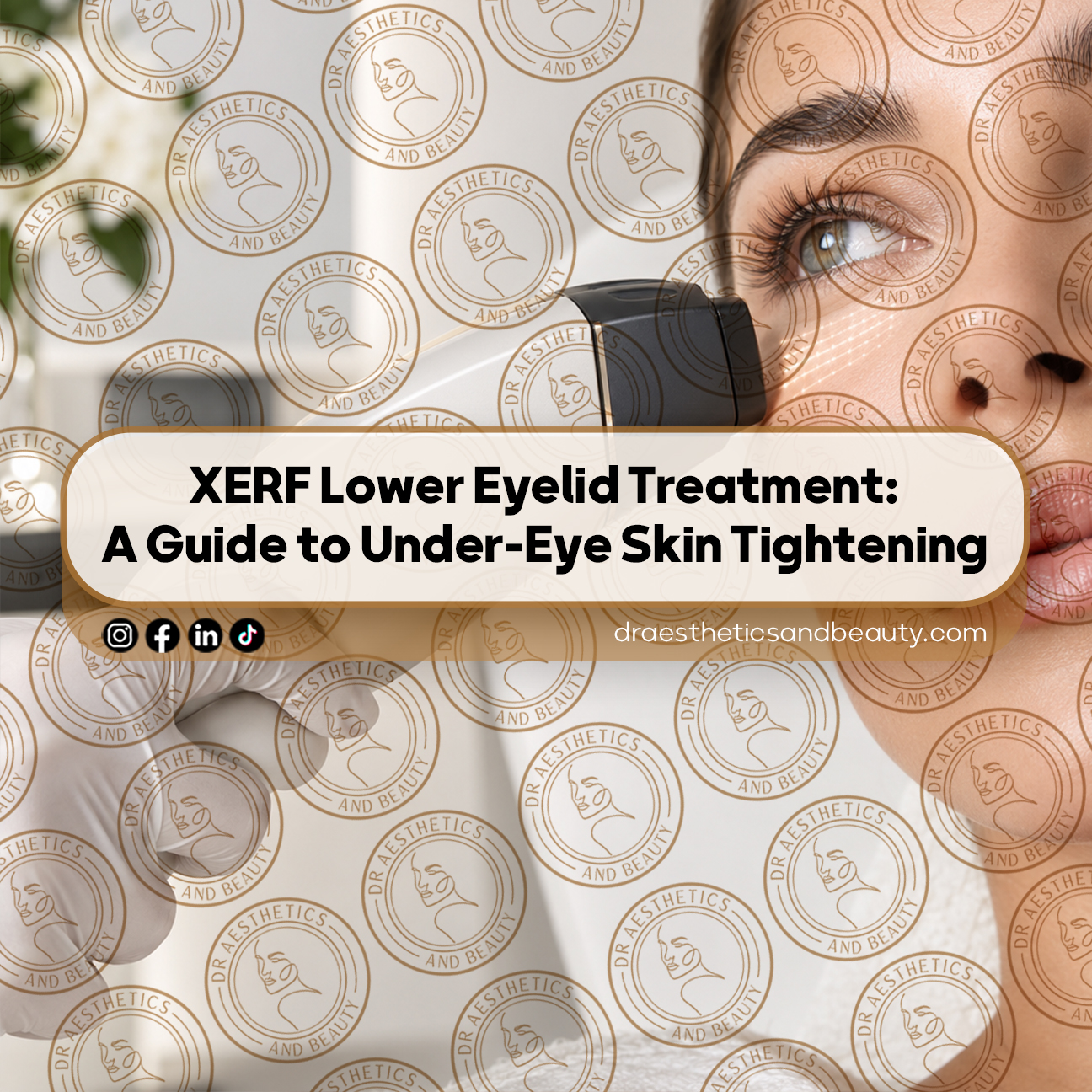
The delicate skin beneath the eyes is often one of the first areas to show changes in skin firmness, texture, and elasticity. If you are noticing fine lines, mild laxity, or a tired appearance despite maintaining a consistent skincare routine, XERF lower eyelid treatment may be an option worth discussing with a qualified aesthetic professional. This non-invasive radiofrequency technology is designed to deliver controlled energy into the skin, supporting tissue tightening and collagen remodeling.
Quick Summary: What You Should Know About XERF
- Technology: XERF uses multifrequency monopolar radiofrequency energy to heat targeted tissue and support skin tightening.
- Primary objective: It may help improve the appearance of mild skin laxity and fine lines when the treatment area and device protocol are appropriate.
- Candidate selection: Under-eye concerns should be assessed individually because loose skin, hollowing, pigmentation, and puffiness have different causes.
- Treatment experience: XERF is designed with integrated cooling and controlled energy delivery, although comfort varies between individuals.
- Results: Improvement is not guaranteed. Changes in skin appearance may develop over time as collagen remodeling occurs.
- Recovery: Some people resume routine activities quickly, but temporary redness, warmth, swelling, or tenderness can occur.
- Next step: A qualified provider should confirm whether treatment around the lower eyelids is appropriate for your anatomy, medical history, and expectations.
Your Three-Part Guide to Lower Eyelid Rejuvenation
1. Understand the technology: Learn how radiofrequency energy interacts with skin and why lower eyelid anatomy requires particular care.
2. Evaluate suitability and results: Discover which concerns may respond to skin tightening, which may require different treatments, and what realistic improvement looks like.
3. Plan for safety and maintenance: Understand consultation requirements, possible side effects, aftercare, and the questions to ask before proceeding.
1. What Is XERF Lower Eyelid Treatment?
XERF is an aesthetic radiofrequency platform developed for structural skin tightening. It uses multifrequency monopolar radiofrequency energy to deliver controlled heat to selected tissue depths. The treatment is designed to support collagen remodeling and improve the appearance of skin laxity without surgical incisions.
Unlike laser treatments, which use light energy, radiofrequency treatments use electrical energy to generate heat in tissue. XERF combines two radiofrequency frequencies and incorporates technologies intended to help manage energy delivery and surface cooling.
The lower eyelid is a particularly delicate treatment area. Its skin is thin, the underlying structures are complex, and the eye itself must be protected throughout any procedure. For this reason, a treatment protocol developed for the cheeks or jawline should not automatically be assumed appropriate for the immediate under-eye area.
How Does XERF Work?
Radiofrequency energy produces controlled heating within targeted tissue. This thermal effect can cause changes in existing collagen fibers and initiate biological processes associated with collagen remodeling. Collagen is an important structural protein that helps skin maintain its firmness and supportive properties.
XERF is designed to deliver energy at different tissue depths. Its multifrequency approach and integrated cooling technology are intended to help providers tailor treatment to the individual and the area being treated.
However, the response of the lower eyelid cannot be predicted precisely for every patient. Results depend on the treatment parameters, skin characteristics, the nature of the concern, and the provider’s technique. The presence of a collagen-stimulating mechanism does not guarantee a particular cosmetic outcome.
Why Is the Lower Eyelid a Specialized Treatment Area?
The skin beneath the eyes differs from the skin on many other areas of the face. It is thin and lies over delicate soft tissues close to the orbital structures. Even relatively small changes in skin texture, swelling, pigmentation, or volume can noticeably affect the appearance of the entire face.
Appropriate assessment must consider:
- The degree and location of lower eyelid skin laxity.
- The presence of fine lines or more established wrinkles.
- Under-eye hollowing and changes in facial volume.
- Puffiness that may be related to fat pads, fluid retention, allergies, or other causes.
- Skin pigmentation, vascular visibility, and overall skin condition.
- Previous cosmetic treatments, eye procedures, and relevant medical history.
A careful evaluation helps distinguish concerns that may respond to skin tightening from those that are unlikely to improve with radiofrequency alone.
2. What Under-Eye Concerns May XERF Help Address?
XERF may be considered when the primary concern is skin laxity rather than a problem involving substantial excess tissue, pronounced hollowing, or pigmentation. The suitability of the device for the exact lower eyelid treatment area must be confirmed by the treating professional and according to the device’s applicable instructions.
Mild Lower Eyelid Skin Laxity
As skin changes with age, environmental exposure, and individual biological factors, it may lose some of its firmness. Mild laxity can create a less smooth appearance beneath the eyes, particularly when the skin is examined in different lighting conditions.
For appropriately selected patients, radiofrequency-based skin tightening may help improve the appearance of mild laxity. The degree of improvement varies, and non-surgical treatment should not be presented as equivalent to removing substantial excess skin surgically.
Fine Under-Eye Lines
Fine lines can develop as a result of repeated facial movement, reduced skin elasticity, sun exposure, and changes in skin hydration. Some lines are visible mainly during facial expressions, while others remain visible when the face is at rest.
When fine lines are associated with skin texture and mild laxity, collagen remodeling may contribute to a smoother-looking appearance. Deep wrinkles, however, may require a different treatment strategy. A consultation should establish the type of lines present and the improvement that can reasonably be expected.
Loss of Skin Firmness
A reduction in skin firmness may make the under-eye area look less smooth or defined. Radiofrequency treatments are designed to target tissue changes associated with firmness, but their effect depends on the individual and the treatment protocol.
It is important to distinguish skin firmness from facial volume. A hollow under-eye contour caused by volume loss will not necessarily improve simply because the overlying skin becomes firmer.
Under-Eye Puffiness and Eye Bags
Puffiness is one of the most frequently misunderstood under-eye concerns. It can result from fluid retention, allergies, anatomical fat pads, sleep patterns, or other health-related factors.
XERF should not be assumed to eliminate prominent eye bags or treat the underlying cause of persistent swelling. Where puffiness is the primary concern, an assessment may indicate that a different approach is more suitable.
Sudden swelling, pain, redness, visual changes, or swelling affecting only one eye should be evaluated medically rather than treated as an ordinary cosmetic concern.
Dark Circles and Under-Eye Pigmentation
Dark circles can arise from several different mechanisms, including pigmentation, visible blood vessels, thin skin, shadowing, and volume loss. Because these causes are different, no single skin-tightening procedure should be expected to correct every type of dark circle.
XERF is primarily associated with radiofrequency-based skin tightening. If pigmentation or vascular visibility is the main concern, the appropriate treatment may involve a different assessment and treatment plan.
3. Who May Be a Suitable Candidate for XERF?
A suitable candidate is not identified by age alone. Skin condition, the type of under-eye concern, general health, previous treatments, and expectations all influence the decision.
A consultation may be useful for adults who:
- Notice mild skin laxity beneath the eyes.
- Want to explore a non-surgical approach to skin tightening.
- Prefer to discuss options that do not involve incisions.
- Understand that improvements may be subtle and variable.
- Can follow the provider’s treatment and aftercare instructions.
- Have realistic expectations about what energy-based treatments can achieve.
These characteristics do not automatically establish eligibility. A trained provider must determine whether XERF is appropriate for the proposed treatment area and whether any medical factors increase the risks.
Who May Need an Alternative Approach?
Patients with significant excess lower eyelid skin, prominent fat pads, marked hollowing, or complex eyelid anatomy may need an assessment for other treatment options. In some cases, a consultation with an ophthalmologist, oculoplastic specialist, or plastic surgeon may be appropriate.
People with active skin infections, wounds, or significant inflammation in the treatment area may need to postpone treatment. Pregnancy, breastfeeding, implanted electronic devices, metal near the treatment area, previous procedures, and certain medical conditions may also affect eligibility depending on the device instructions and clinical assessment.
Do not assume that every contraindication is identical across radiofrequency devices. The treating professional should review the specific XERF instructions, your medical history, and the intended treatment location before making a decision.
4. XERF Lower Eyelid Treatment Compared with Other Options
Choosing an under-eye treatment starts with identifying the underlying concern. A treatment designed to improve skin laxity may have limited value when the main issue is pigmentation, fluid retention, or loss of volume.
| Treatment option | Main purpose | Important consideration |
|---|---|---|
| XERF radiofrequency | Support skin tightening and collagen remodeling | Suitability for the precise lower eyelid area must be confirmed. |
| Medical-grade skincare | Support skin hydration, texture, and selected signs of photoaging | Results depend on ingredients, consistency, and individual tolerance. |
| Selected laser treatments | Address selected texture, pigmentation, or resurfacing concerns | The device and settings must be suitable for the skin type and treatment area. |
| Dermal fillers | Restore selected areas of volume or improve contour | The under-eye area has specific risks and requires an appropriately qualified injector. |
| Blepharoplasty | Surgically address selected excess skin or fat-related changes | Involves surgery, recovery, and risks that differ from non-invasive treatments. |
| Treatment for allergies or fluid retention | Address underlying causes of some types of puffiness | Persistent or unexplained symptoms may require medical evaluation. |
These options are not interchangeable. A qualified professional should explain the expected benefits, limitations, risks, and alternatives of each treatment that is relevant to your concern.
5. What Happens During a XERF Consultation and Treatment?
Step 1: Skin and Medical Assessment
The process should begin with a discussion of your concerns, medical history, medications, allergies, previous aesthetic procedures, and desired outcome. The provider should examine the under-eye area and identify whether the primary issue is skin laxity, wrinkles, hollowing, puffiness, or pigmentation.
Photographs may be used to document the starting appearance and support a more consistent follow-up comparison, with your consent and appropriate privacy safeguards.
Step 2: Confirming Treatment Suitability
Before proceeding, the provider should confirm whether the specific XERF system and its approved or applicable instructions support treatment of the proposed area. The discussion should cover alternatives, likely limitations, potential side effects, and the possibility of little or no visible improvement.
You should have an opportunity to ask questions and decide whether the potential benefits justify the risks and cost.
Step 3: Preparing the Treatment Area
Preparation depends on the treatment protocol. The skin may need to be clean and free from makeup or skincare residue. The provider should explain which products or procedures to avoid beforehand and whether any changes to your usual routine are necessary.
Eye protection and other safety measures should be selected according to the device instructions and the exact treatment being performed. Never assume that ordinary eye closure alone provides sufficient protection during an energy-based procedure near the eyes.
Step 4: Delivering Radiofrequency Energy
During treatment, the trained provider uses the appropriate applicator and individualized settings. XERF incorporates technologies intended to manage energy delivery and cooling, but these features do not eliminate the need for correct technique and careful monitoring.
Depending on the protocol, patients may experience warmth or temporary discomfort. Tell the provider immediately if you experience unexpected pain, excessive heat, or unusual sensations.
Step 5: Aftercare and Follow-Up
After the session, the provider should explain what reactions may occur, how to care for the skin, and when to seek assistance. A follow-up plan can help assess the response and determine whether additional treatment or an alternative approach should be considered.
Do not assume that more energy or more frequent sessions will produce better results. Treatment frequency and settings must be determined by the qualified professional according to the individual and the device protocol.
6. When Can You Expect to See Results?
The timing and extent of improvement following XERF vary. Some patients may notice an early sensation of firmness, while changes associated with collagen remodeling may develop over the following weeks or months.
An immediate sensation of tightness should not be confused with a final result. The appearance of the lower eyelid can also vary with lighting, facial expression, hydration, and temporary swelling.
For a meaningful assessment, photographs should be compared under similar lighting, camera distance, facial expression, and positioning. This reduces the risk of mistaking photographic differences for treatment-related improvement.
How Long Do Results Last?
There is no single duration that can be guaranteed for every patient. Longevity depends on the individual’s skin, the original concern, the treatment protocol, and ongoing biological changes associated with aging and environmental exposure.
Your provider should explain what is known about expected outcomes and whether maintenance might be considered. A maintenance schedule should not be assumed in advance or based solely on promotional claims.
Why Might Results Be Subtle?
Non-surgical skin tightening generally has different capabilities from procedures that remove excess skin or reposition deeper structures. If the under-eye concern is primarily caused by prominent fat pads, significant volume loss, or pigmentation, tightening the skin alone may not create the desired change.
Realistic expectations are an important part of a positive treatment experience. A responsible provider should be comfortable explaining when another option may be more appropriate.
7. Possible Side Effects and Safety Considerations
Although XERF is designed as a non-invasive treatment, non-invasive does not mean risk-free. Radiofrequency procedures intentionally generate heat, and inappropriate treatment parameters or technique can cause unwanted tissue effects.
Potential short-term reactions may include:
- Temporary redness.
- Warmth or tenderness.
- Mild swelling.
- Temporary skin sensitivity or discomfort.
- Dryness or irritation.
Less common but potentially more serious complications of energy-based procedures can include burns, blistering, pigment changes, altered sensation, or unwanted changes in tissue appearance. The specific risks depend on the device, treatment area, settings, and individual circumstances.
Because the lower eyelid lies close to the eye, proper patient selection, appropriate applicator use, correct technique, and device-specific protective measures are essential. Ask your provider how ocular safety is managed for the exact procedure being proposed.
Seek prompt medical advice if you develop severe or increasing pain, blistering, significant swelling, persistent skin changes, or any eye pain or visual disturbance after treatment. Sudden visual changes require urgent medical assessment.
Medical History and Contraindications
Before treatment, disclose relevant medical conditions, implanted devices, metal implants near the treatment area, pregnancy or breastfeeding, recent procedures, and any medications or skin products that may affect treatment planning.
The provider should review the manufacturer’s instructions and determine whether treatment should be avoided, postponed, or modified. Do not stop prescribed medication without guidance from the clinician responsible for your care.
8. Aftercare Following XERF Lower Eyelid Treatment
Aftercare should follow the instructions provided by your treating professional. Recommendations may differ according to the treatment protocol, your skin’s response, and any additional procedures performed.
Keep the Routine Gentle
Use gentle skincare products and avoid introducing strong active ingredients until your provider confirms that it is appropriate. If the skin feels irritated, avoid scrubbing or applying products that cause stinging.
Protect the Skin from Sun Exposure
Sun protection is an important part of maintaining skin health. Follow your provider’s advice regarding a suitable sunscreen and protective measures around the eyes. Avoid applying products too close to the eye if their instructions do not support that use.
Avoid Unapproved Treatments
Do not schedule additional energy-based treatments, aggressive exfoliation, or other procedures in the area until the treating professional confirms an appropriate interval. Combining treatments without a clear plan may increase irritation or complicate the assessment of side effects.
Monitor Your Recovery
Follow any recommended review schedule and report symptoms that are unexpected, worsening, or persistent. Although many people may return to routine activities quickly, recovery is individual and should not be guaranteed to be immediate.
9. XERF Lower Eyelid Treatment: Cost and Value
The cost of treatment depends on the clinic, location, treatment area, provider expertise, and the proposed protocol. A lower eyelid treatment may not be priced in the same way as a full-face session.
Rather than comparing prices alone, ask what the quoted fee includes and whether the proposed treatment is specifically appropriate for the lower eyelid area.
Questions to consider include:
- Does the consultation fee include a medical and skin assessment?
- Is the proposed treatment area clearly defined?
- Who will perform the procedure, and what training do they have?
- What safety measures are used around the eyes?
- What side effects and limitations have been explained?
- Is follow-up included in the quoted price?
- What alternatives are available if XERF is not suitable?
A lower initial price does not necessarily represent better value. Appropriate assessment, safe treatment planning, transparent information, and suitable follow-up are important parts of the overall experience.
10. How to Choose a Provider for Under-Eye Skin Tightening
The quality of the consultation and treatment plan is especially important when considering procedures close to the eyes.
Look for a provider who can explain the technology in understandable terms, assess the anatomy of the treatment area, review relevant medical history, and discuss the limitations of non-surgical treatment.
A responsible consultation should include:
- A clear explanation of the proposed procedure and its intended purpose.
- Confirmation that the device and protocol are appropriate for the treatment area.
- A discussion of potential risks, benefits, and alternatives.
- Realistic expectations rather than guaranteed results.
- Appropriate consent and safety procedures.
- Written aftercare instructions and a plan for addressing complications.
Be cautious of claims that promise permanent results, complete elimination of eye bags, or identical outcomes for every patient. Individual anatomy and the cause of the concern have a substantial influence on treatment outcomes.
11. Frequently Asked Questions About XERF Lower Eyelid Treatment
Is XERF suitable for the lower eyelids?
Suitability depends on the device instructions, the exact treatment area, the provider’s training, and the patient’s anatomy. Ask the treating professional to confirm that the proposed protocol is appropriate for the lower eyelids rather than assuming that all facial areas can be treated in the same way.
Can XERF remove under-eye bags?
XERF is designed for radiofrequency-based skin tightening. It should not be assumed to remove prominent fat pads or correct every cause of under-eye puffiness. An assessment can help determine whether the concern is related to laxity, fluid retention, fat distribution, or another factor.
Can XERF improve fine lines beneath the eyes?
It may help improve the appearance of selected fine lines when skin laxity and texture are contributing factors. Results vary, and deeper wrinkles may require a different approach.
Is XERF a laser treatment?
No. XERF uses radiofrequency energy rather than laser light. Both technologies can be used in aesthetic medicine, but they work differently and are selected according to the concern being treated.
Does XERF lower eyelid treatment hurt?
Comfort varies by individual, treatment settings, and area. The system incorporates technologies designed to manage energy delivery and cooling, but patients may still experience warmth or discomfort. Unexpected pain should be reported immediately.
Is there downtime after XERF?
Some patients may return to routine activities quickly, but temporary redness, warmth, tenderness, or swelling can occur. The expected recovery should be discussed during the consultation, and individual responses may differ.
How many XERF sessions will I need?
The appropriate number of sessions cannot be determined without an assessment. Treatment planning depends on your skin, the area being treated, your goals, and the applicable protocol. Do not assume that repeated sessions are necessary or that additional sessions will guarantee better results.
When will I see results?
The timing varies. Some people may notice an early change in skin firmness, while collagen remodeling may contribute to further changes over subsequent weeks or months. No specific outcome or timeline can be guaranteed.
How long do XERF results last?
Longevity varies with individual skin characteristics, the original concern, treatment parameters, and ongoing aging. Ask your provider what evidence and experience are relevant to the specific lower eyelid protocol being considered.
Can XERF treat dark circles?
Dark circles have several possible causes, including pigmentation, visible blood vessels, hollowing, and shadowing. XERF is not a universal treatment for these concerns. The cause should be identified before selecting a procedure.
Can XERF replace lower blepharoplasty?
No. Non-surgical skin tightening and lower blepharoplasty have different purposes. Surgery may be considered for selected cases involving substantial excess skin or fat-related changes, while XERF may be considered for appropriately selected skin-tightening concerns.
Who should I consult before treatment?
Consult a qualified aesthetic medical professional who can assess your concerns, review your medical history, confirm the suitability of the device and treatment area, and explain alternatives. More complex eyelid concerns may require assessment by an ophthalmologist or oculoplastic specialist.
12. Final Thoughts: Is XERF Lower Eyelid Treatment Right for You?
XERF lower eyelid treatment may be worth exploring if your primary concern is mild under-eye skin laxity and you want to understand non-surgical options for improving skin firmness. Its radiofrequency technology is designed to support collagen remodeling, but the degree of improvement depends on individual factors and the treatment protocol.
The most important step is identifying what is causing the change beneath your eyes. Fine lines, loose skin, pigmentation, hollowing, and puffiness may appear similar but do not necessarily respond to the same treatment. A careful assessment helps prevent unrealistic expectations and supports a more appropriate treatment decision.
At DRA Esthetics & Beauty, a thoughtful approach to aesthetic care begins with understanding your goals, reviewing relevant health information, and considering the available options. Before proceeding with any treatment near the eyes, make sure that the proposed device, applicator, and protocol are appropriate for that specific area.
Take the Next Step Toward Informed Under-Eye Care
If you are considering XERF for lower eyelid concerns, begin with a professional consultation. Discuss the appearance you would like to improve, ask whether your concern is likely to respond to radiofrequency treatment, and review the potential benefits, limitations, risks, and alternatives.
Your treatment plan should be based on your individual anatomy, medical history, and realistic goals not a one-size-fits-all promise.
Contact DRA Esthetics & Beauty to learn about available aesthetic services and determine which consultation options are appropriate for your needs.