
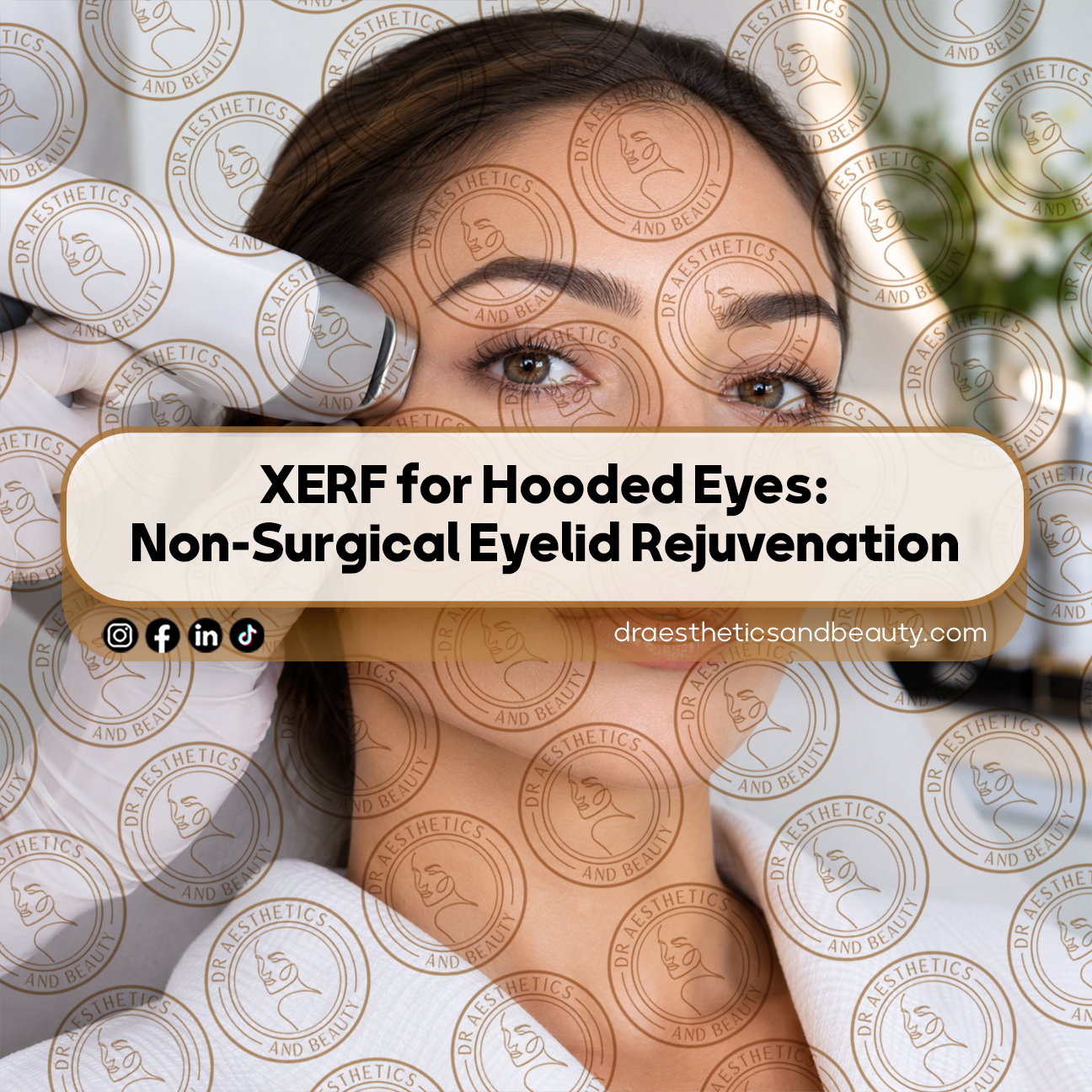
- XERF for hooded eyes is an emerging non-surgical approach that uses advanced monopolar radiofrequency technology to support skin tightening and collagen remodelling.
- Hooded eyes can develop because of loose upper eyelid skin, eyebrow descent, natural anatomy, age-related changes or a combination of factors.
- XERF may be worth discussing when mild skin laxity and changes in the surrounding forehead or brow area contribute to a heavier-looking upper eyelid.
- The treatment does not remove excess skin, reposition eyelid muscles surgically or correct every form of eyelid drooping.
- Results develop gradually as the skin responds to controlled thermal energy and collagen remodelling.
- Proper assessment of the eyelids, eyebrow position, eye health and medical history is essential before considering radiofrequency near the eyes.
- At DR Aesthetics and Beauty, a consultation can help determine whether XERF or another aesthetic or medical approach is more appropriate for your concerns.
Hooded eyes are a common aesthetic concern that can change the way the upper face looks. For some people, the upper eyelid naturally has limited visible space. For others, the appearance develops gradually as the skin loses firmness, the eyebrows descend, or the supporting structures around the eyes change with age. Although these changes are normal, they can make the eyes appear smaller, heavier or more tired than someone feels.
Interest in XERF for hooded eyes has grown as non-surgical aesthetic technologies continue to develop. Instead of relying on incisions or removing skin, XERF uses multifrequency monopolar radiofrequency energy to produce controlled heating within targeted tissue. This approach is designed to support tissue tightening and collagen remodelling.
However, understanding what XERF can realistically achieve is particularly important when treating the delicate upper-face area. Hooded eyes are not always caused by loose skin alone. Eyebrow position, eyelid muscle function, fat distribution and individual anatomy can all influence the appearance.
Before considering a treatment, there are three important questions to answer:
- What is causing your hooded eyes? Understanding whether the concern comes from skin laxity, brow descent or eyelid ptosis helps determine the appropriate approach.
- Can XERF address your particular concern? Radiofrequency may support mild tightening, but it cannot replace surgical correction when significant excess skin or muscle dysfunction is present.
- How can you achieve a natural-looking result safely? A personalised assessment, suitable treatment selection and realistic expectations are essential for the delicate eye area.
What Are Hooded Eyes?
Hooded eyes describe an eyelid appearance in which the skin beneath the eyebrow folds or hangs over part of the upper eyelid. This can partially cover the natural eyelid crease and reduce the visible space between the eyelashes and eyebrow.
The amount of hooding varies considerably. Some people have naturally hooded eyes from childhood, while others notice changes later in life as skin elasticity and the position of supporting tissues gradually change.
Hooded eyes are not a medical condition by themselves. They are an anatomical characteristic that may be entirely natural. However, when excess upper eyelid skin becomes pronounced, it can sometimes interfere with peripheral vision or create functional concerns that deserve medical assessment.
How Do Hooded Eyes Affect Facial Appearance?
The upper eyelids contribute significantly to facial expression. Their position influences how open, alert and balanced the eyes appear.
When the upper eyelid becomes more covered, several visible changes may occur:
- The natural eyelid crease becomes less noticeable.
- The upper eyelid appears heavier or fuller.
- The visible eyelid space becomes smaller.
- Eye makeup may transfer onto the skin above the crease.
- The eyes may appear tired even after adequate rest.
- The outer portion of the upper eyelid may look less defined.
- The overall balance between the eyebrows and eyes may change.
These changes do not necessarily mean that the skin needs tightening. The underlying cause must be understood before selecting an aesthetic treatment.
Are Hooded Eyes the Same as Droopy Eyelids?
Not necessarily. The terms are sometimes used interchangeably in everyday conversation, but they describe different anatomical situations.
Hooding generally refers to skin covering the upper eyelid. Droopy eyelids may refer to excess skin, a lowered eyebrow or a problem involving the muscles responsible for lifting the eyelid.
This distinction matters because each concern may require a different treatment strategy. A skin-tightening procedure may be considered for selected cases of mild laxity, but it cannot correct every cause of eyelid drooping.
What Causes Hooded Eyes?
There is no single explanation for hooded eyes. In many individuals, several anatomical and age-related factors contribute to the appearance at the same time.
1. Natural Genetics and Facial Anatomy
Genetics play an important role in determining eyelid shape, eyebrow position, skin distribution and the depth of the upper eyelid crease.
Some individuals naturally have more upper eyelid skin or a lower-set brow. They may have hooded eyes even when their skin is firm and their facial tissues are healthy.
In these cases, the appearance may remain relatively stable throughout adulthood. Radiofrequency treatment cannot fundamentally change inherited skeletal structure or permanently redesign the natural anatomy of the eyelids.
2. Age-Related Skin Laxity
Collagen and elastin are important components of the skin’s structural support system. They help maintain firmness, elasticity and resilience.
As people age, collagen production and the organisation of supporting skin structures change. The skin may gradually become thinner, less elastic and more susceptible to folding.
In the upper-face area, these changes can contribute to:
- Reduced skin firmness beneath the eyebrows.
- More noticeable upper eyelid folds.
- Changes in the appearance of the eyelid crease.
- Fine lines around the eyes.
- A heavier appearance around the upper eyelids.
This is one reason why non-surgical skin-tightening treatments are of interest to people with mild age-related changes.
3. Eyebrow Descent
The eyebrows are closely connected to the appearance of the upper eyelids. When the brow position gradually lowers, the tissue above the eyelids may appear heavier.
Even a relatively subtle change in eyebrow position can influence the amount of visible upper eyelid space.
For some patients, the main concern is not excess eyelid skin but rather a change in the position of the surrounding forehead and brow tissues.
In these situations, assessing the entire upper-face structure is more useful than examining the eyelid in isolation.
4. Changes in Upper Eyelid Fat Distribution
The upper eyelid contains natural fat compartments that contribute to its shape and fullness. Changes in the surrounding tissues can affect how these compartments appear.
Some individuals develop a fuller appearance above the eyelid crease, while others experience volume changes that make the upper eyelid look hollow or less supported.
These differences are important because skin tightening does not necessarily correct concerns caused primarily by fat distribution.
5. Eyelid Muscle Changes
The levator muscle and its supporting structures help elevate the upper eyelid. If the muscle or its attachment becomes weakened or stretched, the eyelid itself may sit lower than expected.
This condition is known as ptosis. It differs from ordinary skin hooding and may require an ophthalmological or oculoplastic assessment.
6. Environmental and Lifestyle Factors
Environmental exposure and daily habits can influence the long-term appearance of the skin.
Factors associated with premature skin ageing include:
- Repeated ultraviolet exposure without adequate protection.
- Smoking and exposure to tobacco smoke.
- Chronic sleep deprivation.
- Long-term environmental pollution.
- Repeated irritation or rubbing of the delicate eye area.
- Inadequate skincare and sun protection.
These factors do not independently explain every case of hooded eyes, but they can contribute to changes in skin quality over time.
What Is XERF Treatment?
XERF is a non-invasive skin-tightening technology that uses multifrequency monopolar radiofrequency energy. It was developed to deliver controlled thermal energy at different tissue depths, supporting the processes involved in skin firmness and collagen remodelling.
The system is associated with Cynosure and Lutronic and uses a combination of radiofrequency frequencies designed to influence different tissue layers.
Unlike procedures that rely on needles or surgical incisions, XERF delivers energy through an external treatment handpiece placed against the skin.
The objective is to produce controlled heating within targeted tissue while managing surface temperature and treatment delivery.
How Does XERF Work?
Radiofrequency energy generates heat within tissue through electrical resistance. In aesthetic treatments, controlled heating can influence collagen fibres and initiate biological processes associated with tissue remodelling.
Collagen is an essential structural protein that supports the skin. When controlled thermal energy reaches suitable tissue layers, several responses may occur.
- Controlled tissue heating: Radiofrequency energy produces heat within the targeted area.
- Immediate collagen response: Thermal exposure can cause changes in existing collagen fibres, contributing to an initial tightening effect.
- Remodelling response: The body’s repair processes may contribute to the reorganisation and production of collagen over time.
- Gradual visible changes: As remodelling progresses, skin firmness and texture may improve.
The extent of these changes varies according to individual anatomy, skin condition, treatment parameters and the biological response of the patient.
What Makes XERF Different From Traditional Radiofrequency?
XERF uses a multifrequency monopolar radiofrequency approach. Its design combines 6.78 MHz and 2 MHz energy delivery to address different tissue depths.
The system also incorporates adjustable treatment parameters and integrated cooling intended to support surface comfort during treatment.
These technological features are designed to make energy delivery more adaptable to the treatment area and the patient’s tissue characteristics.
However, the presence of advanced technology does not automatically mean that every anatomical area is suitable for treatment. The upper eyelid requires particular consideration because of the nearby eye structures and the limited thickness of the surrounding skin.
Can XERF Help With Hooded Eyes?
XERF may be worth considering for selected individuals with mild upper-face skin laxity contributing to the appearance of hooded eyes. Its radiofrequency technology is designed to support collagen remodelling and improve the appearance of skin firmness.
However, the important distinction is between improving the appearance of loose surrounding skin and correcting the actual anatomical cause of eyelid hooding.
For example, a person whose upper eyelid appears heavier because of mild skin laxity and brow-area changes may have different treatment options from someone whose eyelid is drooping because of muscle dysfunction or significant excess skin.
When Might XERF Be Worth Discussing?
A professional consultation may explore XERF when the patient’s concerns include:
- Mild loss of firmness around the upper face.
- Early changes in the skin beneath the eyebrows.
- Subtle skin laxity contributing to a heavier-looking eye area.
- Fine lines and age-related changes in surrounding skin.
- A preference for exploring non-surgical options before considering more invasive procedures.
These are possible reasons to discuss treatment, not automatic indications. Suitability depends on a detailed assessment and the exact treatment protocol available.
When Is XERF Less Likely to Be the Right Solution?
Some causes of hooded eyes are unlikely to respond adequately to skin tightening alone.
XERF should not be presented as a substitute for:
- Surgical removal of substantial excess upper eyelid skin.
- Correction of significant eyelid ptosis.
- Treatment of underlying neurological causes of eyelid drooping.
- Correction of pronounced structural or skeletal differences.
- Management of certain medical conditions affecting the eyelids.
If the upper eyelid is obstructing vision, the patient should seek an appropriate medical assessment rather than relying exclusively on an aesthetic treatment.
Understanding the Difference Between Hooded Eyes, Dermatochalasis and Ptosis
One of the most important steps in choosing an appropriate treatment is identifying what is actually causing the upper eyelid to look heavy.
Three conditions can create similar visual appearances but involve different anatomical structures.
Hooded Eyes
Hooded eyes describe the appearance of upper eyelid skin folding over the natural crease. This can be a normal genetic feature or develop as surrounding tissues change.
Dermatochalasis
Dermatochalasis refers to excess or redundant eyelid skin. It may develop as a consequence of ageing and changes in the supporting tissues.
When significant, it can sometimes extend over the eyelashes or interfere with the upper visual field.
Ptosis
Ptosis occurs when the upper eyelid margin sits lower than normal because of an issue involving the eyelid’s lifting mechanism or its nerve supply.
It can affect one or both eyes and may have different causes, including age-related changes, congenital conditions and neurological or muscular disorders.
| Feature | Hooded Eyes | Dermatochalasis | Ptosis |
|---|---|---|---|
| Main concern | Skin covers part of the upper eyelid crease. | Excess or redundant upper eyelid skin. | The eyelid margin sits too low. |
| Common causes | Genetics and facial anatomy. | Age-related tissue changes. | Muscle, tendon or nerve-related problems. |
| Possible visual impact | Usually cosmetic, depending on severity. | May obstruct the upper visual field. | May obstruct vision directly. |
| May respond to skin tightening? | Possibly, in selected cases involving mild laxity. | Limited benefit when excess skin is substantial. | No correction of the underlying muscle problem. |
| Possible treatment pathway | Individualised aesthetic assessment. | Medical or surgical assessment when indicated. | Ophthalmological or oculoplastic assessment. |
This distinction is particularly relevant when evaluating whether XERF is appropriate. A treatment intended to improve skin firmness should not be expected to correct a condition caused by a malfunctioning eyelid muscle.
How XERF May Influence the Appearance of the Upper Eye Area
The upper eye area is a complex anatomical region. Its appearance depends on the relationship between the forehead, eyebrows, eyelid skin, underlying muscles and supporting tissues.
Because these structures work together, changes in one area can influence the overall appearance of the eyes.
Supporting Skin Firmness
One potential objective of radiofrequency treatment is to improve the appearance of skin laxity.
When mild laxity contributes to a hooded appearance, improving surrounding skin firmness may help create a more refined upper-face appearance.
However, the degree of improvement cannot be predicted from the treatment technology alone.
Supporting Collagen Remodelling
Collagen provides structural support to the skin. Over time, collagen changes can contribute to a softer and less firm appearance.
XERF is designed to deliver controlled heat that may stimulate collagen remodelling. This is relevant to aesthetic concerns involving mild skin laxity and changes in skin quality.
It is important to understand that collagen remodelling is a gradual biological process rather than an immediate mechanical lifting of excess eyelid tissue.
Improving the Appearance of Fine Lines
Fine lines around the eyes may develop because of repeated facial movement, sun exposure, changes in collagen and reduced skin elasticity.
Radiofrequency treatments may improve certain aspects of skin texture and firmness. However, different types of wrinkles may respond differently, and other treatments may be more appropriate for specific concerns.
Supporting Upper-Face Rejuvenation
In some cases, the concern extends beyond the upper eyelid itself. The forehead, temples and brow region may all contribute to the overall appearance of the upper face.
A comprehensive assessment can help determine whether the concern is localised to the eyelid or involves a broader pattern of upper-face ageing.
Any treatment plan should respect anatomical boundaries and the specific safety requirements of the periorbital region.
What Happens During a XERF Consultation?
A consultation is not simply an opportunity to select a treatment. It is the stage where the underlying concern is evaluated and the most appropriate options are discussed.
At DR Aesthetics and Beauty, the approach to aesthetic treatment planning is based on understanding individual concerns and considering the available treatment options.
1. Discussing Your Concerns
The consultation should begin with a discussion about what bothers you most about your upper eyelids.
Some people are concerned about reduced eyelid visibility, while others notice fine lines, loose-looking skin or changes in eyebrow position.
Understanding your priorities helps distinguish the appearance you would like to improve from the anatomical changes that may be responsible.
2. Reviewing Your Medical and Treatment History
Your medical history is an important part of determining whether radiofrequency treatment is appropriate.
Information that may be relevant includes:
- Previous facial or eyelid surgery.
- Previous radiofrequency, ultrasound or laser treatments.
- History of eye or eyelid disorders.
- Previous cosmetic injections or filler treatments.
- Current medications and topical products.
- Implanted electronic devices or relevant metal implants.
- Pregnancy or breastfeeding.
- Skin conditions, inflammation or recent irritation.
Patients should disclose relevant health information rather than assuming that a non-invasive treatment is automatically suitable.
3. Assessing Eyelid and Brow Anatomy
The clinician should consider the relationship between the eyebrows and upper eyelids.
Relevant observations may include:
- Natural eyebrow height.
- Differences between the left and right sides.
- Upper eyelid skin thickness and laxity.
- Position of the eyelid crease.
- Degree of visible upper eyelid space.
- Signs of eyelid margin drooping.
- Changes in the surrounding forehead and temple areas.
When symptoms suggest ptosis or a functional vision problem, referral for an appropriate eye examination may be necessary.
4. Discussing Treatment Suitability
After the assessment, the provider can explain whether XERF is a reasonable option for the specific concern.
The discussion should cover expected benefits, limitations, possible adverse effects, treatment alternatives and the anticipated recovery process.
Patients should have enough information to make a decision without feeling pressured to proceed.
5. Establishing a Personalised Treatment Plan
If treatment is considered appropriate, the plan should reflect the patient’s anatomy and treatment goals.
It should also explain the areas that will be treated, the intended outcome, the number and timing of sessions if relevant, and how progress will be evaluated.
What Happens During a XERF Treatment Session?
The exact treatment experience depends on the selected treatment area, device settings and the clinician’s protocol.
A general treatment journey may involve several stages.
Before Treatment
- The treatment area is examined.
- The skin is assessed for irritation or other contraindications.
- Relevant treatment history is reviewed.
- The proposed treatment areas and expectations are discussed.
- Appropriate preparation and safety procedures are followed.
The patient should have an opportunity to ask questions before treatment begins.
During Treatment
The XERF handpiece is placed against the skin and delivers controlled radiofrequency energy according to the selected protocol.
Patients may experience a sensation of warmth or deep heat. Cooling technology is incorporated into the system to help manage surface temperature.
Comfort levels vary between individuals and can depend on the treatment area, settings and personal sensitivity.
For treatment involving the upper face, the provider must follow the device-specific instructions and appropriate anatomical safety precautions.
It should never be assumed that the mobile eyelid or any area close to the eye can be treated simply because the device is non-invasive. The exact approved applicator, treatment boundaries and protective measures must be established by the qualified provider.
After Treatment
Patients generally receive aftercare instructions based on the treatment performed and their individual response.
Temporary effects may include:
- Mild redness.
- Warmth or tenderness.
- Temporary swelling.
- Short-term skin sensitivity.
These effects vary and are not guaranteed to occur in every patient.
Persistent, worsening or unusual symptoms require medical review. New vision changes, eye pain or significant eye irritation should be assessed promptly.
How Long Does It Take to See Results From XERF?
One of the most important expectations to understand is that collagen remodelling does not happen instantly.
Although some patients may notice an early tightening effect, longer-term changes develop gradually as the tissue responds to treatment.
The timing and degree of improvement depend on several factors:
- Baseline skin firmness.
- Severity and cause of hooding.
- Age-related tissue changes.
- Individual collagen response.
- Treatment settings and technique.
- Previous aesthetic procedures.
- Overall skin health.
For this reason, it is more useful to evaluate the result over an appropriate follow-up period rather than judging the treatment immediately after the session.
Why Do Some People Notice More Improvement Than Others?
Two people can receive similar treatments and experience different outcomes.
This is partly because hooded eyes are not a single anatomical problem. A patient with mild skin laxity may have a different response from someone whose appearance is primarily determined by genetics, significant excess skin or eyebrow descent.
The starting condition matters as much as the treatment itself.
How Long Can the Results Last?
There is no universal duration that applies to every patient.
Skin continues to age after treatment. Changes in collagen, sun exposure, lifestyle and natural tissue movement can influence how long improvements remain noticeable.
Maintenance recommendations should be based on individual response and professional assessment rather than a fixed schedule advertised for everyone.
Who May Be a Suitable Candidate for XERF for Hooded Eyes?
Candidate selection should focus on the actual cause of the concern, the patient’s overall health and the treatment’s appropriate anatomical application.
People who may wish to discuss XERF include those who:
- Have mild age-related skin laxity around the upper face.
- Notice early changes in skin firmness.
- Want to explore a non-surgical approach to skin tightening.
- Understand that results are likely to be gradual and variable.
- Have realistic expectations about what radiofrequency can achieve.
- Are willing to undergo a professional assessment before treatment.
Who May Need Another Treatment Approach?
XERF may not be the most appropriate option for people with substantial upper eyelid skin excess, pronounced eyelid ptosis or a condition requiring medical or surgical correction.
People with functional visual concerns should not delay an eye examination in favour of cosmetic treatment.
Likewise, individuals with certain medical devices, relevant implants, active skin conditions or other contraindications may need to avoid treatment or receive additional medical clearance.
The final decision should always be made by an appropriately qualified healthcare professional following an individual assessment.
XERF vs. Upper Blepharoplasty: What Is the Difference?
Upper blepharoplasty and XERF are fundamentally different approaches to upper eyelid rejuvenation.
XERF is a non-invasive radiofrequency treatment designed to support skin tightening. Upper blepharoplasty is a surgical procedure that can remove selected excess eyelid skin and, when appropriate, address other anatomical structures.
Understanding the difference helps patients avoid choosing a treatment based only on whether it is non-surgical.
| Comparison | XERF | Upper Blepharoplasty |
|---|---|---|
| Approach | Non-invasive radiofrequency energy. | Surgical eyelid procedure. |
| Main objective | Support tissue tightening and collagen remodelling. | Remove selected excess skin and address appropriate structural concerns. |
| Incisions | No surgical incision. | Requires surgical incisions. |
| Excess skin removal | Does not physically remove skin. | Can remove excess skin. |
| Muscle correction | Does not surgically repair the eyelid lifting mechanism. | Additional correction may be considered when clinically indicated. |
| Recovery | Usually involves less recovery disruption, although temporary reactions are possible. | Requires postoperative healing and follow-up. |
| Best suited to | Selected cases of mild skin laxity. | Appropriate cases involving significant excess skin or other surgical indications. |
| Result expectations | Gradual and variable tightening. | More direct anatomical change. |
Neither approach is automatically better for everyone. The correct choice depends on the patient’s anatomy, the severity of the concern, medical suitability and desired outcome.
XERF vs. Other Non-Surgical Treatments for Hooded Eyes
Patients researching hooded eye treatments may encounter several technologies and procedures. Although some have overlapping goals, their mechanisms and appropriate applications differ.
XERF vs. HIFU
High-intensity focused ultrasound uses focused ultrasound energy to create thermal effects at selected tissue depths.
XERF uses multifrequency monopolar radiofrequency energy. Both technologies are used in aesthetic skin-tightening contexts, but they do not deliver energy in the same way.
The choice between them should depend on the treatment area, tissue characteristics, desired outcome and device-specific safety requirements.
XERF vs. RF Microneedling
RF microneedling uses small needles to deliver radiofrequency energy into the skin. It creates controlled treatment zones within the tissue.
XERF delivers monopolar radiofrequency energy through an external handpiece without microneedles.
These differences affect the treatment experience, skin response, aftercare and possible applications.
XERF vs. Laser Skin Resurfacing
Laser treatments use light energy to target specific skin structures. Depending on the laser and settings, treatment may focus on pigmentation, texture, fine lines or collagen stimulation.
Laser resurfacing and radiofrequency skin tightening are not interchangeable. One may be more appropriate for surface texture concerns, while another may be considered for certain forms of skin laxity.
XERF vs. Injectable Treatments
Injectable treatments address different aesthetic concerns. Neuromodulators influence selected muscle activity, while dermal fillers can restore or modify volume in appropriate anatomical areas.
Neither treatment should be assumed to correct significant excess upper eyelid skin or eyelid ptosis.
Combining treatments requires careful planning, especially around the eyes, because different products and technologies have different indications and risks.
| Treatment | Technology | Primary Aesthetic Focus | Important Limitation |
|---|---|---|---|
| XERF | Multifrequency monopolar RF | Skin firmness and tissue tightening. | Does not remove excess skin. |
| HIFU | Focused ultrasound | Selected tissue-tightening applications. | Not appropriate for every eyelid concern. |
| RF Microneedling | Needle-delivered RF | Skin texture and remodelling. | Involves needle penetration and specific treatment risks. |
| Laser Resurfacing | Light-based energy | Texture, fine lines and selected pigmentation concerns. | Results and recovery vary by laser type. |
| Neuromodulators | Targeted muscle relaxation | Dynamic expression lines. | Does not remove excess eyelid skin. |
| Upper Blepharoplasty | Surgery | Correction of selected excess eyelid skin. | Involves surgery, recovery and surgical risks. |
Is XERF Safe Around the Eyes?
Safety is especially important when considering any energy-based procedure near the eyes.
The periorbital region contains delicate skin and structures that are essential for normal vision and eyelid function. The proximity of the eyeball, cornea, nerves and surrounding tissues means that treatment must follow appropriate device-specific protocols.
XERF’s non-invasive design does not eliminate the possibility of complications. Nor does it mean that every applicator or energy setting is suitable for every area around the eyes.
Why Does the Eye Area Require Special Care?
The skin around the eyes is thinner than skin in many other facial regions. The tissue also has a complex anatomical relationship with the orbital structures.
Excessive or incorrectly delivered thermal energy can cause tissue injury. Treatment must therefore be performed only within the manufacturer’s applicable instructions and the provider’s scope of practice.
Patients should specifically ask whether the proposed treatment area and applicator are appropriate for their concern.
Possible Temporary Side Effects
Potential short-term reactions associated with radiofrequency skin-tightening procedures may include:
- Temporary redness.
- Mild swelling.
- Warmth or tenderness.
- Temporary sensitivity.
- Short-lived discomfort.
More significant complications are possible with improperly selected or delivered energy-based treatments. These can include burns, prolonged inflammation, changes in tissue texture and other treatment-related injuries.
Any eye pain, visual disturbance, unusual swelling or worsening symptoms should be evaluated promptly by an appropriate healthcare professional.
Important Safety Questions to Ask Before Treatment
Before proceeding, patients should feel comfortable asking:
- Is the specific treatment area suitable for this XERF protocol?
- Which applicator is intended to be used?
- Are the proposed treatment boundaries appropriate?
- What eye-protection or other safety measures are required?
- What are the possible risks for my anatomy?
- What symptoms should prompt medical attention after treatment?
- What alternatives are available if I am not a suitable candidate?
What Is the Recovery Process After XERF?
One reason patients explore non-invasive skin-tightening treatments is that they generally involve less recovery disruption than surgical procedures.
However, recovery should not be described as identical for everyone. The response depends on the treated area, treatment intensity, skin sensitivity and individual healing characteristics.
Immediately After Treatment
The treated skin may feel warm or appear mildly red. Some people experience temporary tenderness or swelling.
These reactions may settle over a short period, but the provider should explain what is expected for the specific protocol used.
During the Following Days
Patients should follow the aftercare instructions provided by their clinician.
Depending on the treatment and skin response, recommendations may include:
- Using gentle skincare products.
- Avoiding unnecessary rubbing of the treated area.
- Protecting the skin from excessive sun exposure.
- Using sunscreen when appropriate.
- Temporarily avoiding irritating topical products if advised.
- Contacting the clinic if unexpected symptoms develop.
Returning to Normal Activities
Many non-invasive radiofrequency treatments are designed to minimise interruption to daily activities.
Nevertheless, the appropriate time to resume makeup, exercise, skincare actives or other cosmetic treatments should be determined by the provider according to the patient’s response.
Patients should not assume that the absence of visible marks means that all tissues have fully recovered.
How to Maintain Healthy-Looking Skin Around the Eyes
Professional treatments are only one part of a long-term skin-care strategy.
The eye area benefits from a consistent routine that supports the skin barrier and reduces unnecessary environmental stress.
Daily Sun Protection
Ultraviolet exposure contributes to premature skin ageing and changes in skin texture.
Using broad-spectrum sunscreen, wearing sunglasses and seeking shade can help protect the delicate skin around the eyes.
Gentle Skincare
The skin around the eyes can be easily irritated by aggressive exfoliation, unsuitable products or repeated rubbing.
Choose skincare that is appropriate for your skin type and follow product instructions carefully.
Consistent Hydration
Moisturising products can support the skin barrier and improve the appearance of surface dryness.
Hydration does not remove excess eyelid skin or reverse structural changes, but it can contribute to healthier-looking skin.
Healthy Lifestyle Habits
Sleep, nutrition, hydration and avoiding smoking all contribute to general skin health.
Although lifestyle changes cannot eliminate genetically determined hooded eyes, they can support overall skin quality and wellbeing.
Common Misconceptions About XERF and Hooded Eyes
Because interest in non-surgical rejuvenation continues to increase, patients may encounter exaggerated claims about what energy-based treatments can achieve.
Understanding the difference between a realistic treatment benefit and an unsupported promise is essential.
Myth 1: XERF Completely Removes Hooded Eyelids
Fact: XERF is designed to support skin tightening. It does not surgically remove redundant skin or correct every anatomical cause of hooding.
Myth 2: Non-Invasive Means Completely Risk-Free
Fact: Non-invasive procedures can still cause adverse effects. Energy delivery near the eyes requires appropriate training, treatment selection and safety protocols.
Myth 3: Everyone Gets the Same Results
Fact: Results vary according to anatomy, baseline skin quality, treatment parameters and individual response.
Myth 4: Results Are Always Immediate
Fact: An early tightening sensation or visible change does not represent the full remodelling process. Longer-term changes develop over time.
Myth 5: XERF Can Correct Eyelid Muscle Problems
Fact: Radiofrequency skin tightening does not surgically repair the levator muscle or correct neurological causes of ptosis.
Myth 6: Stronger Energy Always Produces Better Results
Fact: Appropriate treatment parameters depend on anatomy, safety and the intended outcome. Higher energy is not automatically more effective or safer.
Myth 7: A Non-Surgical Treatment Is Always Better Than Surgery
Fact: The best option depends on the underlying concern. Surgery may be more appropriate when significant excess skin or structural correction is required.
How to Evaluate XERF Results for Hooded Eyes
Assessing treatment outcomes requires more than looking at a single photograph or judging whether the eyelids appear different immediately after a session.
A consistent evaluation process can help distinguish genuine changes from temporary swelling, lighting differences and variations in facial expression.
Use Standardised Before-and-After Photographs
Photographs should ideally be taken under consistent conditions.
Important factors include:
- Similar lighting and camera position.
- Consistent facial expression.
- Neutral eyebrow positioning.
- Comparable head position.
- Similar camera distance.
- Clear views of both upper eyelids.
Photographs taken with raised eyebrows should not be compared with photographs taken while the forehead is relaxed. This can create the impression of improvement even when the underlying eyelid anatomy has not changed.
Evaluate More Than One Feature
Relevant observations may include:
- Visible upper eyelid space.
- Position of the natural eyelid crease.
- Appearance of the skin beneath the eyebrow.
- Symmetry between the eyes.
- Skin texture and fine lines.
- Overall balance of the upper face.
A successful aesthetic result should be evaluated in the context of the patient’s original concerns, not simply according to how dramatic the change appears.
Understand the Difference Between Improvement and Perfection
Natural facial asymmetry is common. One eyebrow may naturally sit higher than the other, and the upper eyelids may have different degrees of skin coverage.
The goal of an appropriate aesthetic plan should be realistic improvement rather than forcing the face into an artificial or perfectly symmetrical appearance.
Why Choose a Personalised Approach at DR Aesthetics and Beauty?
Choosing an aesthetic treatment should involve more than selecting a popular device. The provider should understand the patient’s concerns, assess the relevant anatomy and explain whether the proposed procedure is suitable.
DR Aesthetics and Beauty offers a range of aesthetic services, including skin treatments, injectables, laser procedures and energy-based treatments.
This broader treatment environment allows patients to discuss their aesthetic concerns and explore whether a particular technology fits their goals.
A Consultation Based on Individual Concerns
Not every patient with hooded eyes needs the same treatment.
One person may be concerned about early skin laxity, while another may have naturally hooded eyes or noticeable eyebrow descent.
A personalised discussion helps identify these differences before a treatment recommendation is made.
Understanding Treatment Limitations
A responsible aesthetic consultation should explain not only what a treatment may improve but also what it cannot correct.
For example, patients should understand that skin tightening cannot remove substantial excess eyelid skin or replace the assessment of true ptosis.
Exploring the Wider Aesthetic Treatment Landscape
DR Aesthetics and Beauty provides different aesthetic services, making it possible to discuss concerns within the wider context of skin quality, facial balance and individual treatment goals.
Depending on the assessment, the most appropriate recommendation may involve XERF, another aesthetic treatment or referral for a medical or surgical opinion.
Questions to Ask Before Booking XERF for Hooded Eyes
Patients can make more informed decisions by preparing questions before their consultation.
Consider discussing the following:
- What is the main anatomical cause of my hooded eyes?
- Is my concern related to skin laxity, eyebrow descent or eyelid ptosis?
- Is XERF appropriate for my specific treatment area?
- Which applicator and treatment protocol are being considered?
- What degree of improvement is realistic for my anatomy?
- What are the possible side effects and complications?
- How will the result be evaluated?
- Are there alternative non-surgical options?
- Would an ophthalmological or surgical assessment be more appropriate?
- What aftercare and follow-up will I need?
Clear answers to these questions help establish realistic expectations and ensure that treatment decisions are based on individual needs.
Frequently Asked Questions About XERF for Hooded Eyes
1. Can XERF get rid of hooded eyes?
XERF may help improve the appearance of mild skin laxity contributing to a hooded appearance in selected patients. However, it does not remove excess eyelid skin or correct all causes of hooded eyes. The outcome depends on whether the concern is related to skin firmness, eyebrow position or another anatomical factor.
2. Is XERF effective for upper eyelid tightening?
XERF is designed to support tissue tightening through controlled radiofrequency heating and collagen remodelling. Its potential application to the upper-face area depends on the device-specific protocol, suitable applicators and the patient’s anatomy. An individual assessment is necessary before treatment.
3. Can XERF lift the eyebrows?
XERF is designed to improve skin firmness and may influence the appearance of the surrounding upper-face tissues. However, it should not be described as a guaranteed eyebrow-lifting procedure. Any expected change in brow position should be discussed realistically during consultation.
4. Does XERF replace upper blepharoplasty?
No. XERF and upper blepharoplasty are different procedures. XERF uses radiofrequency energy to support tissue tightening, while blepharoplasty is a surgical procedure that can remove selected excess eyelid skin. Significant skin redundancy may require surgical assessment.
5. Can XERF correct ptosis?
No. True eyelid ptosis involves the structures responsible for lifting the eyelid. XERF does not surgically repair the levator muscle or correct neurological causes. Suspected ptosis should be assessed by an appropriate eye-care professional.
6. Is XERF painful?
Patients may experience warmth or deep heat during radiofrequency treatment. Comfort varies according to the treatment area, settings and individual sensitivity. The provider should explain the expected sensations before the procedure.
7. Does XERF require needles?
XERF is a non-invasive monopolar radiofrequency treatment delivered through an external handpiece. It does not use microneedles to deliver its energy.
8. How long does a XERF treatment take?
Treatment duration depends on the selected area, treatment plan and protocol. The provider can give an appropriate estimate during consultation rather than relying on a single time estimate for every patient.
9. How many XERF sessions are needed for hooded eyes?
The recommended treatment schedule depends on the patient’s skin condition, treatment goals and response. There is no universal session count that applies to everyone. A personalised plan should be discussed before starting treatment.
10. When will I see results from XERF?
Some early tightening changes may be noticeable, but collagen remodelling develops gradually. The timing and extent of visible improvement vary from person to person. Follow-up assessment provides a more reliable way to evaluate the outcome.
11. How long do XERF results last?
Results vary according to individual skin quality, age-related changes, lifestyle and treatment response. The skin continues to age after treatment, so improvements are not permanent. Maintenance recommendations should be based on individual assessment.
12. Is there downtime after XERF?
XERF is designed as a non-invasive treatment and generally involves less recovery disruption than surgery. Temporary redness, warmth, swelling or tenderness may occur. Individual recovery instructions depend on the treatment performed and the patient’s response.
13. Can XERF be used on the mobile upper eyelid?
Patients should not assume that the mobile eyelid is suitable for treatment. The exact treatment boundaries, applicator, device instructions and safety requirements must be confirmed by the qualified provider. Treatment near the eye requires particular anatomical and safety considerations.
14. Is XERF suitable for naturally hooded eyes?
People with naturally hooded eyes may have a different underlying anatomy from those who develop skin laxity with age. Radiofrequency may not significantly change genetically determined eyelid structure. A consultation can help establish whether any treatment is likely to offer meaningful improvement.
15. Can younger patients have XERF for hooded eyes?
Age alone does not determine treatment suitability. The underlying concern, skin condition, medical history and device-specific requirements must all be considered. Younger individuals with naturally hooded eyelids may not benefit from skin tightening if there is no relevant laxity.
16. Can XERF improve asymmetrical hooded eyes?
XERF may be discussed when mild skin laxity contributes to asymmetry, but facial asymmetry can have several causes. Differences in eyebrow height, eyelid anatomy, muscle function and fat distribution may require other approaches. Expectations should be established through individual assessment.
17. Is XERF better than HIFU for hooded eyes?
Neither technology is automatically better for every patient. They use different energy-delivery mechanisms, and their suitability depends on the treatment area, device protocol and underlying concern. A qualified provider should compare the available options based on individual anatomy.
18. Can XERF be combined with other aesthetic treatments?
Combination treatments may be considered in some aesthetic plans, but compatibility and timing depend on the specific procedures, treatment areas and patient history. Previous fillers, injectables, energy-based procedures and surgery should be disclosed during consultation.
19. What are the possible side effects of XERF?
Temporary redness, warmth, tenderness and swelling may occur. Energy-based procedures can also carry more significant risks, including burns or tissue injury. Treatment near the eyes requires careful attention to the device instructions and appropriate safety measures.
20. Can XERF improve wrinkles around the eyes?
XERF may support improvements in certain aspects of skin firmness and texture. However, different types of wrinkles have different causes and may require different treatments. Fine lines caused by skin changes should be distinguished from dynamic wrinkles caused by muscle movement.
21. Who should avoid XERF?
Suitability depends on the device instructions and medical history. Certain implanted electronic devices, relevant metal implants, pregnancy, breastfeeding, active skin conditions and other clinical factors may affect eligibility. Patients should disclose all relevant information before treatment.
22. Can XERF improve vision affected by hooded eyes?
XERF should not be relied upon to treat visual obstruction. If excess eyelid skin or ptosis affects peripheral vision, an appropriate medical or ophthalmological examination is necessary. Functional concerns should be evaluated separately from cosmetic goals.
23. What is the difference between hooded eyes and excess eyelid skin?
Hooded eyes describe the appearance of skin covering the upper eyelid crease. Excess eyelid skin, also known as dermatochalasis, refers to redundant skin tissue. The two can overlap, but they are not identical and may require different treatment approaches.
24. Can skincare products treat hooded eyes?
Skincare can support hydration, skin-barrier function and overall skin quality. However, creams cannot physically remove significant excess eyelid skin or correct ptosis. Their role is supportive rather than a replacement for appropriate medical or aesthetic treatment.
25. Where can I discuss XERF treatment in Vaughan?
Patients interested in exploring XERF and other aesthetic services can contact DR Aesthetics and Beauty in Vaughan. A consultation can help clarify treatment goals, suitability, potential benefits and alternatives before making a decision.
Final Thoughts: Is XERF Worth Considering for Hooded Eyes?
Hooded eyes can result from several different anatomical and age-related factors. While some individuals have naturally hooded eyelids, others develop a heavier appearance as skin firmness changes or the eyebrows gradually descend.
XERF introduces a non-invasive radiofrequency approach that may be relevant to selected patients interested in improving mild skin laxity and supporting collagen remodelling.
However, the treatment should be considered within the context of the patient’s anatomy rather than as a universal solution for upper eyelid concerns. It does not remove substantial excess skin, correct true ptosis or replace appropriate surgical assessment when needed.
The most important step is understanding the cause of the hooded appearance and choosing a treatment that matches the patient’s needs.
A thoughtful consultation helps establish realistic expectations, identify potential risks and determine whether XERF or another approach is more suitable.
Explore Your XERF Treatment Options at DR Aesthetics and Beauty
Interested in improving the appearance of hooded eyes and learning whether non-surgical skin tightening may suit your aesthetic goals?
At DRAesthetics and Beauty, personalised aesthetic consultations help you explore available treatments and understand the options that may be appropriate for your skin and facial concerns.
Discuss your concerns, learn about XERF technology and receive guidance on realistic outcomes, treatment suitability and possible alternatives.