
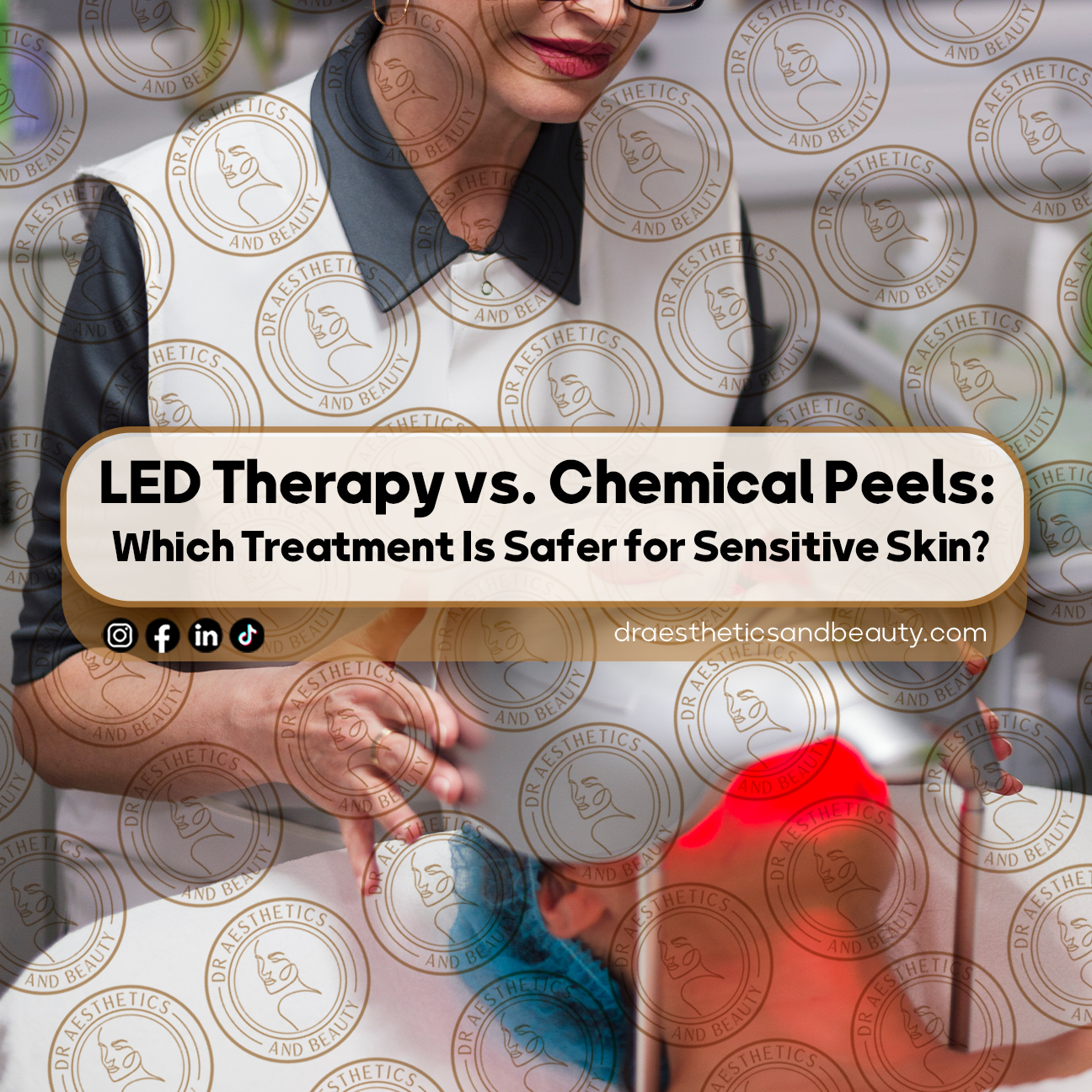
LED Therapy vs. Chemical Peels A Critical Question for Sensitive Skin
If you have sensitive skin, you already know the struggle: one wrong skincare treatment can lead to redness, burning, irritation, or weeks of inflammation. For this reason, choosing between LED Therapy and chemical peels is a big decision especially when your skin reacts to almost everything. Both treatments claim to rejuvenate skin, reduce acne, improve texture, and fight inflammation, but they work through very different mechanisms. And most importantly, not all treatments are equally safe for reactive or delicate skin.
In recent years, LED Therapy has become a popular alternative to harsher exfoliating procedures because of its non-invasive nature, zero downtime, and strong calming properties. Meanwhile, chemical peels remain one of the most effective ways to brighten skin, treat acne marks, and stimulate collagen but they can also trigger irritation if not chosen correctly.
This in-depth guide compares LED Therapy and chemical peels specifically for sensitive skin. We’ll examine benefits, risks, expert opinions, treatment limitations, case studies, costs, FAQs, and finally what dermatologists and medical aestheticians recommend for the safest possible results.
Let’s dive in.
What Is LED Therapy?
Understanding LED Light Technology
LED Therapy (Light Emitting Diode therapy) is a non-invasive skincare treatment that uses wavelengths of light to stimulate biological processes in the skin. These wavelengths include:
-
Red light (630–700 nm) → boosts collagen, reduces inflammation, supports healing
-
Blue light (405–420 nm) → kills acne-causing bacteria
-
Near-infrared light (700–1200 nm) → targets deeper layers, reduces pain and redness
-
Yellow light (570–590 nm) → improves circulation and reduces flushing
Unlike lasers, LED does not generate heat strong enough to damage the skin, making it extremely gentle and suitable for those with:
-
Sensitive skin
-
Rosacea
-
Eczema-prone skin
-
Thin or aging skin
-
Post-procedure inflammation
How LED Therapy Works
LED Therapy delivers low-level light energy that triggers cells to perform specific actions:
-
Increasing ATP production (cell energy)
-
Reducing inflammatory markers
-
Improving microcirculation
-
Regulating oil production
-
Encouraging collagen synthesis
This gentle stimulation leads to healthier, more resilient skin over time without exfoliation or disruption of the skin barrier.
What Are Chemical Peels?
Overview of Chemical Exfoliation
Chemical peels use acids to exfoliate the skin, increase cell turnover, and remove dead skin cells. Peels vary in depth and strength:
1. Superficial Peels
Mild acids such as lactic acid, mandelic acid, or low-strength glycolic acid.
Best for: minor dullness, mild acne, surface pigmentation.
2. Medium Peels
Typically trichloroacetic acid (TCA) or stronger AHAs.
Best for: deeper pigmentation, acne scars, wrinkles.
3. Deep Peels
Phenol-based solutions.
Best for: severe wrinkles, sun damage.
Not recommended for sensitive skin under any circumstances.
Chemical peels can deliver impressive results but because they intentionally remove layers of skin, they can also trigger irritation, especially in reactive skin types.
LED Therapy vs. Chemical Peels: Which Treatment Is Safer for Sensitive Skin?
Comparing Mechanisms
| Treatment | Mechanism | Impact on Sensitive Skin |
|---|---|---|
| LED Therapy | Stimulates cellular repair without damaging skin | Highly safe, soothing, non-irritating |
| Chemical Peels | Exfoliates by dissolving surface layers of skin | Higher risk of redness, burning, sensitivity flare-ups |
Key Takeaway:
LED Therapy is dramatically safer for sensitive skin because it strengthens not disrupts the skin barrier.
Benefits of LED Therapy for Sensitive Skin
1. No Exfoliation or Barrier Damage
Sensitive skin often has a compromised or thin barrier.
LED Therapy supports healing without removing anything from the skin.
2. Reduces Redness and Inflammation
Red light and yellow light significantly reduce:
-
Rosacea flare-ups
-
Redness from eczema
-
Post-acne irritation
-
General sensitivity
Studies show up to 40% reduction in inflammatory markers after consistent LED sessions.
3. Calms Active Acne Without Irritation
Blue LED light kills acne bacteria without drying the skin making it perfect for people who cannot tolerate benzoyl peroxide or chemical exfoliants.
4. Supports Healing After Other Procedures
LED is commonly used after:
-
Microneedling
-
Lasers
-
Peels
-
Extractions
Because it accelerates healing while soothing the skin.
5. Safe for All Skin Types and Tones
Unlike chemical peels, LED does not pose a risk of:
-
Hyperpigmentation
-
Burns
-
Scarring
-
Downtime
Drawbacks of LED Therapy
Even though LED Therapy is extremely safe, it does have limitations.
1. Slower Results
LED requires multiple sessions (usually 6–12) to see full results.
2. Not ideal for deep scars or intense pigmentation
Chemical peels or laser therapy may be needed for:
-
Deep acne scars
-
Melasma
-
Heavy sun damage
3. Requires consistency
Skipping sessions reduces effectiveness.
Benefits of Chemical Peels for Sensitive Skin (When Used Correctly)
While not all peels are suitable, some gentle formulations can benefit sensitive skin.
1. Lactic Acid Peels
Lactic acid is hydrating, softening, and the gentlest member of the AHA family.
2. Mandelic Acid Peels
Great for redness-prone, acne-prone, or darker skin tones.
3. Enzyme Peels
Papaya or pumpkin enzymes provide extremely mild exfoliation.
Risks of Chemical Peels for Sensitive Skin
Chemical peels can cause:
-
Burning sensation
-
Stinging
-
Peeling
-
Prolonged redness
-
Post-inflammatory hyperpigmentation
-
Increased sensitivity
-
Breakouts
-
Skin thinning over time
Medium and deep peels are strongly discouraged for sensitive skin.
Why Sensitive Skin Reacts Poorly to Peels
Sensitive skin often has:
-
Weaker lipid barrier
-
Higher nerve responsiveness
-
More prone to redness
-
Less tolerance for exfoliation
Thus, peels must be approached with great caution.
Expert Comparison: LED Therapy vs. Chemical Peels for Sensitive Skin
Safety Comparison
| Factor | LED Therapy | Chemical Peels |
|---|---|---|
| Redness | ❌ Minimal | ✔️ Common |
| Irritation | ❌ None | ✔️ Frequent |
| Downtime | ❌ None | ✔️ 1–7 days |
| Breakout risk | ❌ Low | ✔️ Medium |
| Hyperpigmentation risk | ❌ None | ✔️ Medium–high |
| Suitable for rosacea | ✔️ Yes | ❌ Usually no |
Winner: LED Therapy
Effectiveness Comparison
LED Therapy excels at:
-
Reducing inflammation
-
Improving mild acne
-
Promoting healing
-
Strengthening the skin barrier
-
Supporting collagen production
Chemical peels excel at:
-
Removing dead skin
-
Improving texture quickly
-
Treating pigmentation
-
Fading acne scars
Winner: Depends on the goal, but for sensitive skin, LED remains safer.
Case Studies: Sensitive Skin Outcomes
Case Study 1: Rosacea Patient
Treatment: Red and yellow LED Therapy
Result:
-
60% reduction in redness in 4 sessions
-
No irritation
-
Improved hydration
Case Study 2: Sensitive Acne-Prone Skin
Treatment: Blue LED + occasional enzyme peels
Result:
-
Acne reduced
-
No inflammation
-
Skin barrier restored
Case Study 3: Sensitive Skin Using Chemical Peels Only
Treatment: Lactic acid peels
Result:
-
Brightness improved
-
Mild redness lasting 2–3 days
-
Occasional irritation flare-ups
Pattern: LED Therapy consistently delivers safe and calm results.
Cost Comparison
LED Therapy Cost
| Session Type | Price |
|---|---|
| Single treatment | $50–$120 |
| Package of 6 | $250–$500 |
| Add-on to facial | $20–$40 |
Affordable and accessible.
Chemical Peel Cost
| Peel Type | Price |
|---|---|
| Enzyme peel | $80–$120 |
| Light AHA peel | $100–$180 |
| Medium peel (not for sensitive skin) | $150–$350 |
Over time, peels may cost more due to maintenance sessions.
Who Should Choose LED Therapy? (Best Candidates)
You should choose LED Therapy if you have:
-
Sensitive or reactive skin
-
Rosacea
-
Redness
-
Eczema-prone skin
-
Acne that worsens from harsh products
-
Thin or damaged skin barrier
-
A low tolerance for chemical exfoliants
-
Post-laser or post-microneedling irritation
Who Should Choose Chemical Peels?
Chemical peels may be better if you have:
-
Mild pigmentation
-
Mild acne scars
-
Dullness that doesn’t respond to LED alone
-
Normal or oily skin with low sensitivity
Can You Combine LED Therapy and Chemical Peels?
Yes—many medical aestheticians recommend pairing:
-
A gentle peel
-
Followed by LED Therapy
LED helps soothe redness and accelerate healing after a peel, making the process much more comfortable for sensitive skin.
LED Therapy Treatment Steps
-
Cleanse skin
-
Apply protective eyewear
-
Choose correct wavelength
-
LED exposure for 10–20 minutes
-
Apply hydrating serum or moisturizer
No downtime, no irritation.
Chemical Peel Treatment Steps
-
Cleanse skin
-
Degrease skin with prep solution
-
Apply acid peel
-
Wait 1–7 minutes depending on type
-
Neutralize (if required)
-
Apply soothing products
Expect mild redness or peeling afterward.
(FAQ)
1. Is LED Therapy safe for very sensitive skin?
Yes. LED Therapy is one of the safest treatments for sensitive, rosacea-prone, or easily irritated skin.
2. Which peel is safest for sensitive skin?
Lactic acid, mandelic acid, and enzyme peels are the gentlest options.
3. Can sensitive skin handle glycolic acid?
Usually not. Glycolic acid is small-molecule and may penetrate too deeply.
4. How fast does LED Therapy work?
You may see improvements after 2–3 sessions, but full results take 6–12 treatments.
5. Can I combine LED Therapy with peels?
Yes. LED after a peel reduces irritation and speeds healing.
6. Does LED Therapy hurt?
Not at all. No burning, stinging, or discomfort.
7. Is LED Therapy good for acne?
Yes. Blue light kills bacteria, while red light reduces inflammation.
8. Are chemical peels safe long-term for sensitive skin?
Only very gentle peels. Overuse can weaken the skin barrier.
9. Can LED Therapy replace chemical peels?
For sensitive skin, often yes—especially for inflammation control and mild acne.
Conclusion: LED Therapy Is the Clear Winner for Sensitive Skin
When choosing between LED Therapy and chemical peels, the safest and most effective option for sensitive skin is clear:
LED Therapy delivers healing, anti-inflammatory, collagen-boosting results without irritation, burning, or downtime.
Chemical peels still have their place but only gentle, carefully selected peels should be used on reactive skin, and they must be approached with caution.
If your priority is:
-
Reducing irritation
-
Calming inflammation
-
Healing the skin
-
Avoiding reactions
-
Strengthening the skin barrier
Then LED Therapy is the superior—and safest—choice.