
Quick Summary: XERF Eyes Before and After
- XERF is a non-surgical radiofrequency treatment designed to support skin tightening and improve the appearance of skin laxity.
- When treatment around the eyes is appropriate, the goal may be to achieve a firmer-looking, smoother, or more refreshed appearance.
- Before-and-after changes depend on skin quality, the degree of laxity, facial anatomy, treatment settings, and individual response.
- Some people may notice an early change, while improvements associated with tissue remodeling can develop gradually over time.
- XERF is not a guaranteed substitute for eyelid surgery and cannot address every cause of under-eye bags, dark circles, or eyelid heaviness.
- Because the eye area is delicate, treatment suitability, device-specific protocols, and eye protection must be assessed by a qualified provider.
- A professional consultation is the best way to establish realistic expectations, discuss risks, and determine whether another treatment may be more appropriate.
Understanding XERF Treatment Around the Eyes
XERF is a radiofrequency-based aesthetic technology used for non-surgical skin tightening. Radiofrequency energy produces controlled heat within targeted tissue. Depending on the device, treatment protocol, and individual anatomy, this thermal effect is intended to support changes in the appearance and firmness of the skin.
The skin around the eyes is thinner and more delicate than skin in many other facial areas. It is also affected by natural aging, repetitive facial expressions, sun exposure, genetics, and changes in the tissues that support the eyelids. These factors can contribute to fine lines, crepey texture, and a gradual loss of firmness.
When a provider considers XERF for the eye area, the first step is not choosing a setting or promising a particular result. It is determining what is causing the concern and whether the device has an appropriate, manufacturer-supported protocol for that specific area.
How radiofrequency may support skin firmness
Collagen is a structural protein that helps skin maintain its strength and resilience. With age, collagen production and organization change, and the skin may gradually become less firm. Radiofrequency treatments use controlled thermal energy to interact with tissue and may stimulate biological processes associated with collagen remodeling.
These processes do not create identical results in every person. The degree of improvement depends on several factors, including the condition of the skin, the treatment method, the energy delivered, and the body’s response over time. A treatment description should therefore explain the intended mechanism without implying that a specific degree of tightening is guaranteed.
Why the eye area requires a different approach
Not every concern near the eyes originates in the skin. Under-eye fullness may be related to fat pads, fluid retention, allergies, or anatomical features. Upper-eyelid heaviness may involve excess skin, brow position, or changes in the deeper supporting structures.
Radiofrequency skin tightening may be relevant to selected skin-quality concerns, but it does not correct every anatomical issue. A qualified provider should distinguish between skin laxity, volume changes, pigmentation, swelling, and structural concerns before recommending treatment.
XERF Eyes Before and After: What Changes Might You Notice?
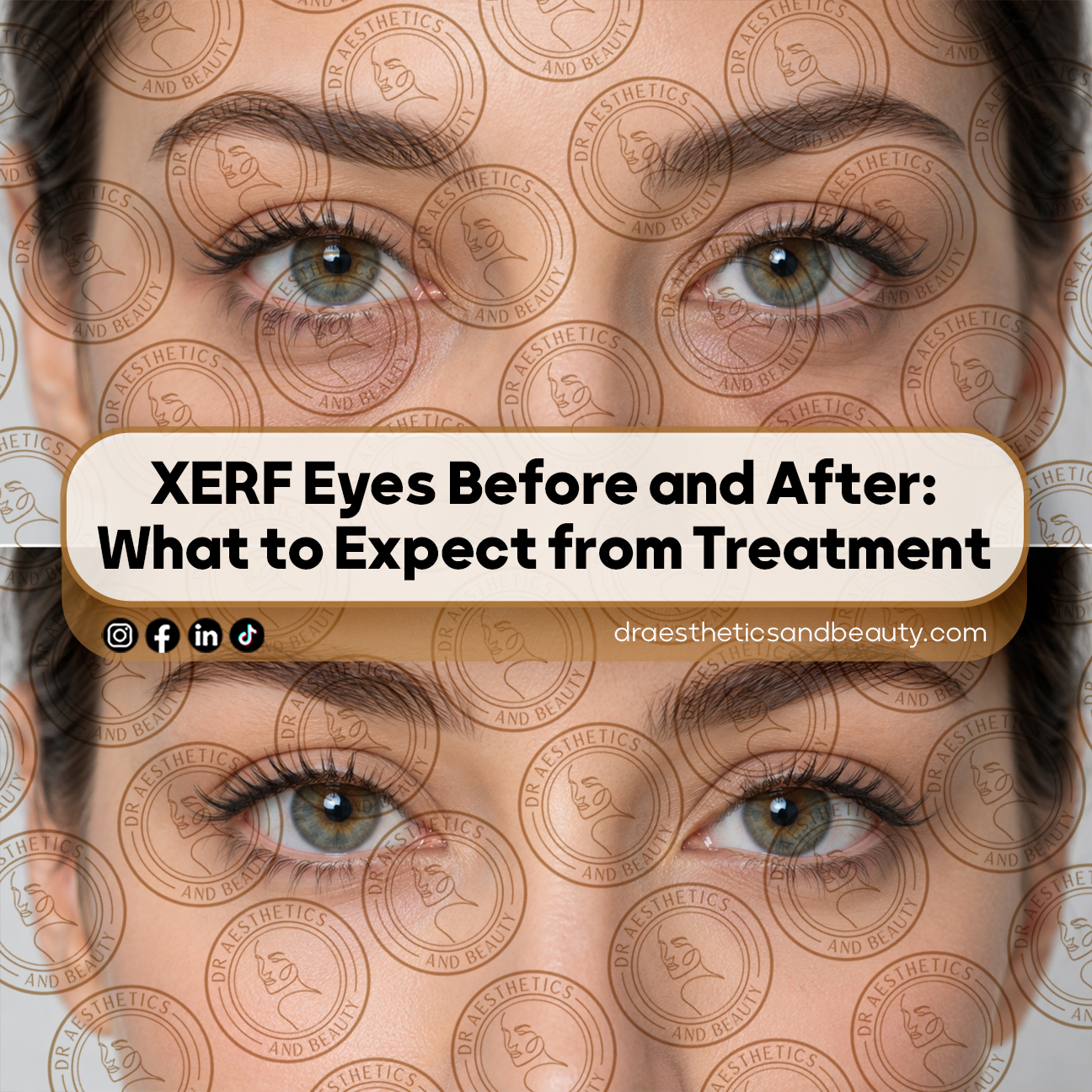
People searching for XERF eyes before and after photographs generally want to understand whether the treatment can make their eyes look smoother, firmer, or less tired. The most useful way to assess potential outcomes is to connect each visible concern with what a non-surgical skin-tightening treatment may reasonably address.
1. A firmer-looking appearance
When mild skin laxity is the main concern and treatment is clinically appropriate, the intended outcome may be a firmer-looking appearance around the treated area. The extent of any visible change varies, and subtle improvement may be more realistic than a dramatic lift.
Significant excess eyelid skin or pronounced tissue descent may require a different assessment. If the concern affects vision or creates substantial upper-eyelid overhang, an evaluation by an appropriately qualified medical professional is particularly important.
2. Smoother-looking skin texture
Fine lines and crepey texture can become more noticeable as the skin loses elasticity and moisture. A treatment intended to support skin firmness may improve the overall appearance of selected texture concerns, but results are not uniform.
Deep wrinkles, strong expression lines, and lines caused by repeated muscle movement may respond differently from fine lines associated with skin laxity. Your provider should explain which concerns are likely to be affected and which may need a different approach.
3. A more refreshed appearance
Some people describe their aesthetic goal as looking less tired rather than changing the shape of their eyes. If mild laxity contributes to that appearance, a suitable tightening treatment may help improve the impression of skin firmness.
However, dark circles, hollow tear troughs, prominent under-eye bags, and pigmentation can have different causes. Skin tightening alone should not be expected to eliminate them. Correctly identifying the underlying concern is essential to avoiding disappointment.
4. Gradual rather than dramatic changes
Any improvement related to tissue remodeling may take time to become apparent. An immediate difference, if noticed, does not necessarily represent the final result. Early swelling, redness, hydration changes, or lighting differences can also influence how the area looks in the first days after treatment.
For this reason, a fair assessment compares standardized photographs taken under similar conditions and at appropriate follow-up intervals. It should not rely on a single photograph taken immediately before and after a procedure.
Before and After Comparison: What to Evaluate
Before-and-after photographs can help illustrate a treatment experience, but they are most informative when the images are authentic, consistently captured, and accompanied by context. A photograph alone cannot establish that a treatment caused every visible difference.
| Feature to assess | Before treatment | Potential after-treatment observation |
|---|---|---|
| Skin laxity | Mild looseness or reduced firmness | A potentially firmer-looking appearance if the concern is suitable for treatment |
| Fine lines | Small lines or crepey texture | Possible improvement in the appearance of selected texture concerns |
| Upper eyelid appearance | Mild skin laxity or a heavy-looking area | Outcome depends on whether skin laxity is the main cause and whether treatment is appropriate for the area |
| Under-eye bags | Fullness, puffiness, or protruding tissue | May show little change if the cause is fat protrusion, fluid retention, or anatomy rather than skin laxity |
| Dark circles | Pigmentation, visible vessels, or shadowing | Improvement is not guaranteed because causes differ and may require another treatment strategy |
Important: The table describes possible observations, not guaranteed clinical outcomes. Actual results should be assessed individually and documented with genuine clinical photographs where available.
What Influences XERF Eye Treatment Results?
Two people can receive the same type of treatment and experience different outcomes. This is especially relevant around the eyes, where small differences in skin thickness, tissue structure, and anatomy can influence both suitability and visible change.
Skin quality and degree of laxity
Mild skin laxity may be a more appropriate target for a non-surgical tightening approach than substantial excess skin. Skin quality, hydration, elasticity, and the presence of fine lines also influence how the treated area looks.
Age and individual anatomy
Age can influence collagen structure and skin resilience, but age alone does not determine candidacy. Brow position, eyelid anatomy, under-eye volume, and previous aesthetic procedures may be equally important when deciding whether XERF is suitable.
Treatment protocol and provider assessment
Outcomes depend on whether the device is appropriate for the area being treated and whether its manufacturer-supported protocol is followed. The provider should select an approach based on an individual assessment rather than applying a standard plan to every patient.
Lifestyle and skin care
Sun exposure, smoking, sleep patterns, and general skin-care habits can influence the appearance of the eye area over time. Daily sun protection and gentle skin care support skin health, although they cannot guarantee or replace a treatment result.
Consistency of photographic documentation
Lighting, camera distance, facial expression, head angle, makeup, and image editing can create the impression of improvement even when the underlying change is limited. Reliable before-and-after comparisons should minimize these variables and clearly state the time between photographs.
Who May Be a Candidate for XERF Around the Eyes?
Potential candidates are generally people who want to address selected signs of skin laxity and understand the limitations of non-surgical treatment. Whether XERF is appropriate depends on the device’s approved indications, the proposed treatment area, the person’s medical history, and the provider’s clinical assessment.
A consultation may be useful if you:
- Notice mild skin laxity or fine lines around the eyes.
- Prefer to explore non-surgical options before considering an invasive procedure.
- Have realistic expectations about gradual and potentially subtle improvement.
- Can follow pre-treatment instructions and aftercare recommendations.
- Understand that more than one treatment or an alternative approach may be recommended depending on the assessment.
When another treatment or assessment may be more appropriate
XERF may not be the best option when the main concern is substantial excess eyelid skin, pronounced fat-pad protrusion, significant hollowness, persistent swelling, or dark circles primarily caused by pigmentation or vascular visibility.
People with new or unexplained swelling, eye pain, visual changes, active infection in the proposed treatment area, or other concerning symptoms should seek appropriate medical evaluation before pursuing a cosmetic procedure. A history of eye conditions, recent procedures, implanted electronic devices, or other relevant medical factors should be disclosed during consultation.
Pregnancy, certain medical conditions, and specific implants or medications may affect treatment eligibility depending on the device instructions and clinical circumstances. The provider should review these factors rather than assuming that the treatment is suitable for everyone.
What Happens During an XERF Consultation?
A thorough consultation helps establish whether the treatment matches your concerns and whether the expected benefit justifies the cost, time, and potential risks. It should include an assessment of the skin around the eyes and a clear discussion of alternatives.
Step 1: Discuss your concerns and goals
Explain what you would like to improve. For example, you may be concerned about fine lines, mild laxity, or a tired appearance. Be specific about whether your concern is above the eyelid, below the eye, or around the outer corners.
Step 2: Review your medical and aesthetic history
The provider should ask about relevant medical conditions, eye problems, allergies, medications, previous cosmetic treatments, and any implants or devices that could affect treatment safety. Share details about recent procedures even if they were performed elsewhere.
Step 3: Assess the cause of the visible concern
The consultation should distinguish skin laxity from fat protrusion, hollowing, pigmentation, fluid retention, or brow position. This distinction helps prevent the use of a tightening procedure for a problem it is unlikely to correct.
Step 4: Confirm treatment suitability and safety measures
Ask whether the specific XERF device and protocol are intended for the proposed area. The provider should explain the treatment plan, expected sensations, necessary protective measures, possible adverse effects, and any reasons to postpone treatment.
Step 5: Establish a realistic follow-up plan
Discuss when progress will be reviewed, how photographs will be taken, and what signs should prompt you to contact the clinic. You should understand what outcome is realistic before deciding to proceed.
What to Expect During and After Treatment
During the procedure
The experience depends on the device, treatment area, protocol, and individual sensitivity. Radiofrequency procedures may involve a warming sensation or temporary discomfort. The provider should explain what sensations are expected and should not continue if a concerning reaction occurs.
The eye area requires particular care. Treatment should only be performed when the device instructions and clinical protocol support its use in the intended location. Appropriate eye protection and other safety measures must be followed as specified by the manufacturer and the treating professional.
Immediately after treatment
Temporary redness, warmth, tenderness, or swelling may occur with energy-based aesthetic procedures. The intensity and duration vary, and not every patient experiences the same response. Your provider should explain which reactions are expected for the specific protocol used.
Do not judge the final outcome based solely on the first few hours or days. Early tissue changes can influence appearance, and a visible early difference does not necessarily predict the longer-term result.
During the following weeks
If the treatment produces changes associated with tissue remodeling, they may develop progressively. Follow-up timing should be based on the provider’s protocol rather than an arbitrary universal schedule.
Take photographs under consistent conditions and compare them at the recommended review point. If there is no noticeable improvement, discuss this with the provider before assuming that more energy or additional sessions are necessary.
When to contact a medical professional
Seek prompt medical advice if you experience severe or increasing pain, blistering, unusual skin changes, significant or worsening swelling, or symptoms involving the eye itself. Any visual disturbance or eye pain after treatment warrants urgent medical assessment.
Recovery and Aftercare for the Eye Area
Aftercare should follow the instructions provided for the specific device and treatment protocol. Because the eye area is delicate, avoid adding aggressive products or procedures without professional guidance.
- Follow your provider’s instructions: Use the recommended cleansing and skin-care routine and ask before changing it.
- Protect your skin from the sun: Use suitable broad-spectrum sun protection and physical protection, such as a hat or sunglasses, when appropriate.
- Avoid unnecessary irritation: Do not rub, scrub, or aggressively massage the treated area unless your provider specifically advises it.
- Ask before restarting active products: Retinoids, exfoliating acids, and other potentially irritating products may need temporary adjustment depending on the treatment.
- Do not conceal a concerning reaction: Contact the clinic if redness, pain, swelling, or skin changes are unusual or worsening.
- Attend the recommended follow-up: A review allows the provider to assess healing, discuss progress, and determine whether further treatment is appropriate.
There is no single recovery timeline that applies to everyone. The expected downtime should be explained before treatment, including how soon you can return to work, exercise, makeup, and your usual skin-care routine.
XERF Compared with Other Options for Eye Rejuvenation
People researching XERF may also be considering other approaches. The right option depends on the cause of the concern rather than the popularity of a particular treatment.
| Option | Main purpose | Important limitation |
|---|---|---|
| XERF radiofrequency treatment | Non-surgical skin tightening where appropriate for the device and area | Suitability and outcomes vary; it does not correct every structural concern |
| Other energy-based skin treatments | May target selected concerns involving skin texture or laxity | Technology, depth, indications, risks, and recovery differ by device |
| Injectable treatments | May address selected volume or expression-related concerns | Not interchangeable with skin tightening; the eye area has specific risks |
| Medical-grade skin care | Supports skin health and may improve selected surface concerns | Cannot reliably correct substantial laxity or structural under-eye bags |
| Eyelid surgery | May address significant excess skin or selected structural changes | Invasive, with surgical risks and a different recovery process |
This comparison is general educational information, not a recommendation for an individual. Different treatments have different indications, contraindications, and evidence bases. A qualified professional should explain why a particular option is suitable for your concern and whether referral to another specialist is needed.
Safety, Risks, and Questions to Ask Before Booking
Non-surgical does not mean risk-free. Energy-based procedures can cause unwanted skin reactions, and the risks depend on the device, settings, treatment area, and operator. The eye region deserves special attention because of its anatomy and proximity to delicate ocular structures.
Before booking, ask the provider:
- Is this specific XERF device intended for the exact area I want treated?
- What qualifications and training do you have for this procedure?
- What eye-protection measures are required by the device instructions?
- What benefits are realistic for my particular concern?
- What side effects and complications should I understand before consenting?
- What is the expected recovery process, and which activities or products should I avoid?
- How will you document my baseline appearance and assess my progress?
- What alternatives would you recommend if XERF is unlikely to address the cause of my concern?
- Who should I contact if I have a reaction after treatment?
- What is the full anticipated cost, including follow-up visits or any additional sessions?
A responsible provider should answer these questions clearly and should not pressure you into treatment. Be cautious of guarantees, claims that results are identical for every patient, or photographs that lack context about timing and treatment history.
How to Evaluate XERF Eyes Before and After Photos
Authentic clinical photographs can help you understand the range of outcomes, but they should be interpreted carefully. A useful image set should represent the actual patient, show the relevant area clearly, and avoid edits that change the appearance of the skin or eye contour.
Look for consistent conditions
Before-and-after photographs should use similar lighting, camera distance, head position, facial expression, and makeup conditions. Images taken from different angles can make the eyelids appear more or less lifted even without a meaningful treatment-related change.
Check the time between images
Ask when the follow-up photograph was taken. Images captured immediately after a procedure may show temporary redness or swelling rather than the eventual result. A clearly stated follow-up interval makes the comparison more informative.
Understand the treatment history
Ask whether the patient received XERF alone or also had other treatments, skin-care changes, or procedures. If several interventions occurred, it may be difficult to attribute the visible change to XERF alone.
Compare similar concerns
A person with mild crepey skin is not a reliable predictor of the result for someone with prominent under-eye bags or substantial upper-eyelid skin excess. Choose examples that resemble your own concern, while remembering that even similar cases can respond differently.
For ethical and trustworthy presentation, clinics should obtain appropriate consent before publishing patient photographs, protect patient privacy, and avoid implying that a single example represents a typical or guaranteed result.
Content Gap: What a Helpful XERF Eye Guide Should Explain
Many aesthetic-treatment articles focus mainly on attractive before-and-after photographs, a short description of the technology, and a general promise of smoother-looking skin. Those elements may introduce the topic, but they do not provide enough information for someone deciding whether to book a procedure.
A more useful guide should also cover the following areas:
- Cause-specific expectations: It should distinguish skin laxity from dark circles, hollowing, swelling, and fat-pad protrusion.
- Photographic reliability: It should explain how lighting, angles, editing, and follow-up timing can affect apparent results.
- Eye-area safety: It should emphasize device-specific indications, appropriate protection, practitioner training, and when medical evaluation is necessary.
- Recovery and follow-up: It should explain that aftercare and recovery depend on the protocol rather than promising the same downtime for everyone.
- Alternative treatments: It should help readers understand when skin tightening may not be the most appropriate option.
- Transparent expectations: It should avoid guaranteed outcomes and clarify that individual results vary.
- Practical booking questions: It should equip readers to discuss suitability, risks, costs, and follow-up before making a decision.
These considerations make educational content more useful because they help readers understand both the potential benefits and the limits of treatment. They also support a more transparent consultation process and help prevent unrealistic expectations.
How to Prepare for Your XERF Consultation
Preparation begins with identifying the change you want to see. Instead of saying only that your eyes look tired, consider whether you are most concerned about fine lines, loose skin, under-eye fullness, or pigmentation. Clear goals help the provider assess the cause and discuss suitable options.
- Write down your main concerns and when you first noticed them.
- Prepare a list of medications, supplements, allergies, relevant medical conditions, and previous aesthetic treatments.
- Bring questions about the device, treatment area, expected benefits, risks, and recovery.
- Ask whether the provider recommends baseline photographs and a specific follow-up interval.
- Discuss the full treatment cost and whether additional sessions could be considered.
- Take time to review the consent information and do not proceed if important questions remain unanswered.
Do not stop prescribed medication or change a medical treatment plan in preparation for a cosmetic procedure unless the clinician responsible for your care has advised you to do so. Follow the clinic’s specific instructions and disclose any new symptoms or changes in your health before the appointment.
Frequently Asked Questions About XERF Eyes Before and After
1. What is XERF eye treatment?
XERF is a radiofrequency-based aesthetic treatment intended to support non-surgical skin tightening. Whether it is appropriate around the eyes depends on the specific device instructions, treatment protocol, and an individual clinical assessment.
2. What results can I expect from XERF eyes before and after?
Potential outcomes may include a firmer-looking appearance or improvement in selected skin-texture concerns when treatment is suitable. The degree of change varies, and no specific result can be guaranteed. Structural concerns such as prominent fat pads may not respond as expected to skin tightening.
3. How soon will I see results?
The timing depends on the protocol and the individual’s response. An early appearance change, if present, may not represent the final result. Changes associated with tissue remodeling can develop gradually, so follow the review schedule recommended by your provider.
4. Can XERF remove under-eye bags?
Not necessarily. Under-eye bags may result from fat protrusion, fluid retention, anatomy, or skin laxity. A skin-tightening treatment cannot be expected to correct every cause. A consultation should identify the source of the fullness before a treatment plan is chosen.
5. Can XERF improve dark circles?
Dark circles have several causes, including pigmentation, visible blood vessels, thin skin, and shadowing from under-eye hollows. XERF should not be presented as a universal solution for dark circles. The appropriate approach depends on the cause.
6. Is XERF a replacement for eyelid surgery?
No. Non-surgical skin tightening and eyelid surgery have different purposes. Surgery may be considered for significant excess skin or selected structural concerns, while a non-surgical procedure may be suitable for certain milder concerns. A qualified clinician can discuss the options relevant to your anatomy.
7. Is XERF treatment around the eyes safe?
Safety depends on the device’s indications, the treatment protocol, practitioner training, patient selection, and appropriate protective measures. Because the eyes are delicate, confirm that the exact proposed treatment area is supported by the manufacturer’s instructions and that the provider can explain the relevant risks.
8. Does XERF treatment hurt?
Sensation varies according to the individual and the protocol. Radiofrequency procedures may cause warmth or discomfort. Ask your provider what sensations are expected, how comfort is managed, and what should happen if you experience unusual pain.
9. Is there downtime after XERF?
Recovery varies with the treatment protocol and individual response. Temporary redness, warmth, tenderness, or swelling may occur. Your provider should explain the likely recovery period and give specific instructions about skin care, exercise, makeup, and other activities.
10. How many XERF sessions will I need?
There is no universal session count that applies to everyone. The recommended plan depends on the device protocol, the treatment area, the concern being addressed, and the response to treatment. Ask for a personalized plan rather than relying on a fixed number advertised for all patients.
11. How long do XERF eye results last?
Longevity can vary according to individual factors, the treatment protocol, and ongoing changes associated with aging. A provider should avoid promising a fixed duration unless it is supported by appropriate evidence for the specific treatment. Ask how results will be monitored and whether maintenance may be discussed.
12. How can I tell whether before-and-after photos are reliable?
Look for consistent lighting, camera position, facial expression, and image quality. Check whether the follow-up timing is stated and whether other treatments were performed. Authentic photographs should not be altered in ways that exaggerate the outcome.
13. Who should avoid or postpone treatment?
Eligibility depends on the specific device instructions and medical circumstances. Certain eye conditions, active infections, recent procedures, implants, medications, or other health factors may require additional assessment or postponement. Disclose your complete relevant history and follow the treating professional’s advice.
14. What should I ask before booking?
Ask whether the device is appropriate for the intended area, what outcome is realistic, which risks apply to you, what protection is required, what recovery involves, and how follow-up will be managed. You should also understand the total cost and available alternatives before consenting.
15. Is XERF suitable for every type of eye-area concern?
No. Skin laxity, deep hollows, fat protrusion, pigmentation, and swelling have different causes. XERF may be considered for selected skin-quality concerns when appropriate, but an individualized assessment is necessary to determine whether it is likely to help.
Conclusion: Making an Informed Decision About XERF Eyes
Researching XERF eyes before and after is a useful first step if you are considering a non-surgical approach to selected signs of aging around the eyes. Understanding what the treatment is designed to do, how results may develop, and which concerns may need another approach can help you make a more informed decision.
The most important consideration is whether your concern is actually related to skin laxity and whether the specific device and protocol are appropriate for the proposed area. Reliable photographs, a detailed consultation, realistic expectations, and a clear discussion of safety are more useful than promises of dramatic or guaranteed results.
Every face is different. A personalized assessment can help establish your priorities, explain the available options, and determine whether XERF or another treatment is the most suitable path toward your aesthetic goals.