

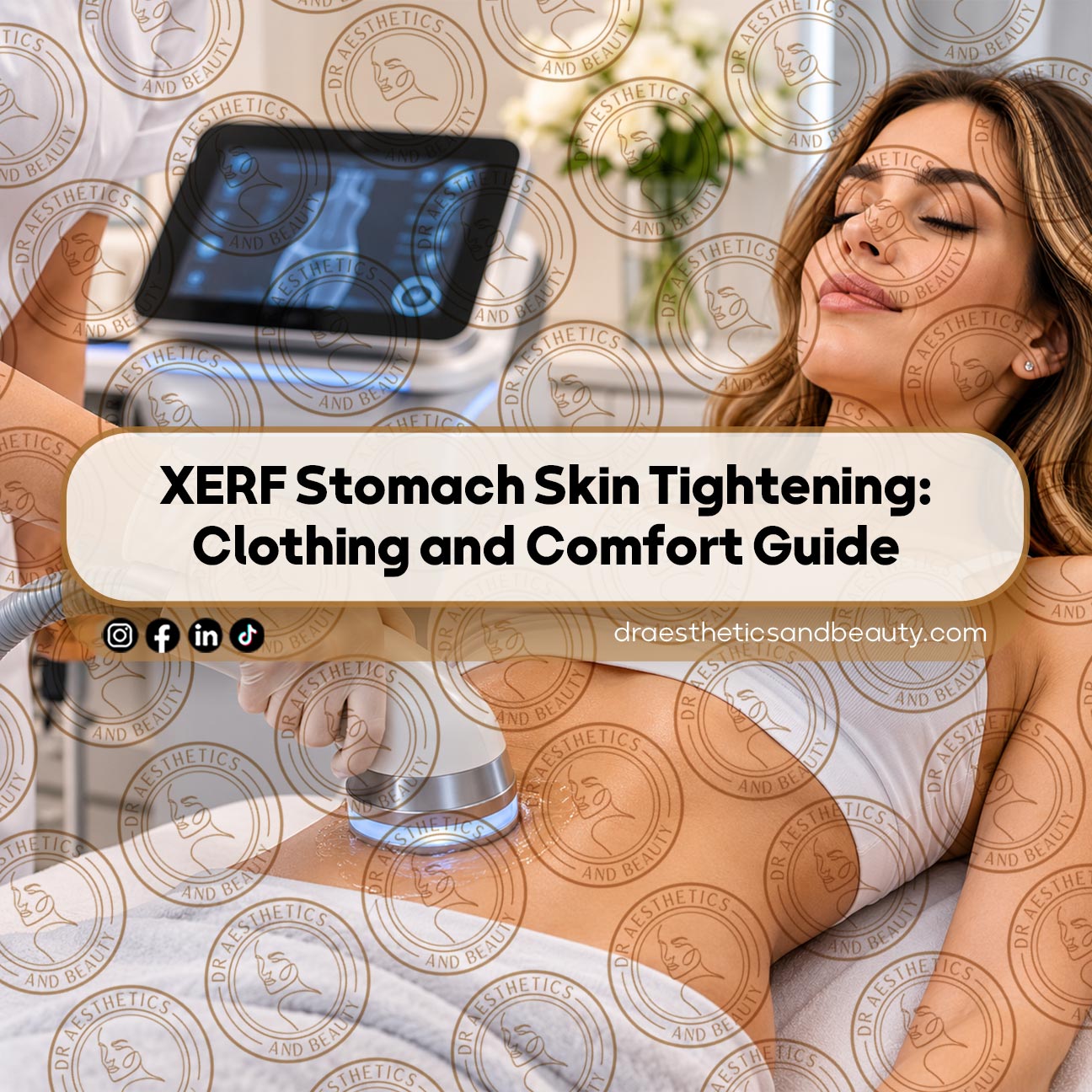
XERF stomach skin tightening may come to mind when clothing highlights a change in your midsection.
A waistband, swimsuit or fitted top can make skin folding more noticeable.
The skin above the navel may behave differently from the skin below it.
Clothing fit alone cannot tell you whether tightening is the right approach.
D&R Aesthetics and Beauty describes XERF as radiofrequency treatment for skin laxity.
Abdominal availability, suitability and realistic timing require a personal consultation.
We will explore three practical themes: what clothing reveals and conceals, why upper and lower stomach skin need separate attention, and how to plan around a season or event without unrealistic deadlines.
When an outfit becomes the moment you notice
A favourite pair of trousers may sit differently after a change in body size, or a fitted fabric may emphasise a fold you rarely notice otherwise. That experience can make a skin concern feel suddenly important.
Yet the garment is part of the picture. Waistband height, fabric tension and compression can change the outline of the abdomen. A seam pressing into skin can create a line even when there is little laxity.
One outfit is not a diagnostic test.
Before deciding that your stomach skin needs treatment, look at the concern in ordinary clothing and without pressure from a waistband. Ask yourself what actually bothers you: a skin fold, overall fullness, discomfort or the cut of the garment.
Those answers lead to different next steps.
XERF stomach skin tightening: establish the service first
D&R Aesthetics and Beauty explains XERF as non-invasive radiofrequency delivered through a handpiece on the skin. Its intended role is to support collagen remodelling and improve the appearance of skin laxity, without microneedles.
The clinic describes adjustable settings, multifrequency delivery and surface cooling. These features do not establish that every body region is treated or that clothing will fit differently after a procedure.
There is a scope distinction to clarify. The homepage includes a XERF-linked “Non-Surgical Tummy Tuck” invitation, while the dedicated service page discusses the face, jawline and neck.
Confirm whether abdominal XERF is offered for your particular skin concern. A search for stomach tightening should lead to an assessment, not an assumption that an event-ready result is available on demand.
Above the navel: a different visual concern
The upper abdominal surface can look different when you sit, reach overhead or lean forward. A fitted top may create shadows that emphasise fine folding. The concern may be about surface quality rather than a large amount of excess tissue.
A practitioner should assess how the skin behaves in normal positions and what lies beneath it. The upper abdomen’s appearance is influenced by posture and underlying shape as well as skin resilience.
A surface treatment would not be expected to control all those factors.
Be specific about the feature you want reviewed. If a line appears only when the torso compresses, ask whether it represents normal movement. Avoid translating “I notice this in one top” into a demand for a permanently smooth upper abdomen.
Below the navel: folding and waistband placement
Lower stomach skin may collect differently above or beneath a waistband. The amount of compression and the rise of the garment can alter the apparent prominence of a fold. A higher rise can conceal one feature while emphasising another.
That does not mean the concern is imaginary. It means assessment should separate the skin’s behaviour from the effect of the clothes. Ask whether the main issue is laxity, underlying fullness or the interaction of both.
If the goal is to remove a substantial overhang, energy-based tightening should not be presented as equivalent to surgical removal.
If the goal is a modest change in firmness, ask how realistic that would be and whether the expected benefit would matter in daily life. The two goals require different expectations.
Clothing fit is personal, but not a precise outcome measure
A looser waistband after treatment would not, by itself, prove a skin-tightening effect. Weight variation, laundering, fabric stretch and changes in posture can all influence fit. Conversely, a garment may fit the same even if the skin’s appearance changes slightly.
Use clothing as context for your priorities, not as a promised endpoint. Explain that you want to feel more comfortable in a particular type of outfit, then ask which part of that goal a proposed procedure could reasonably affect.
No specific clothing size should be guaranteed. Skin tightening is not the same as a weight-loss intervention or a predictable reduction in abdominal circumference. A careful consultation keeps those meanings separate, even when fashion is what first prompted the enquiry.
Seasonal concerns do not need rushed decisions
Warmer weather, a holiday or a beach invitation can make the midsection feel more visible. That is a familiar reason to seek information, but it should not create pressure to commit quickly.
The clinic says XERF changes may develop over weeks and months, with variable timing and extent. That means a calendar date cannot guarantee a result.
Treatment also needs room for suitability review, aftercare and follow-up rather than being scheduled solely around a swimsuit purchase.
For people planning from Vaughan or elsewhere in York Region, practical travel and review arrangements matter too. Ask how the plan would fit your schedule, but remain prepared for the recommendation to be “not now” or “another option is more appropriate”.
A holiday deadline should not override clinical judgement.
A consultation that respects comfort and body autonomy
You can want a cosmetic change without needing to justify it to anyone. You can also decide that a normal fold is not worth treating.
Neither choice should be driven by the idea that certain clothing is only for a particular body type.
A useful consultation asks what matters to you and explains what is realistic. It should not turn a seasonal concern into a list of additional areas that need correction. Start with the one skin feature you came to discuss.
The Vaughan, Ontario clinic describes an individual review of concerns, medical history and previous treatment.
For a stomach-skin enquiry, ask the provider to explain the area-specific recommendation in plain language and distinguish a possible firmness benefit from a larger change in body shape.
What to disclose before any treatment plan
Share information about medical devices or implants, pregnancy, medications, skin conditions and recent procedures, as requested in the clinic’s XERF guidance. Previous abdominal operations, scars and relevant health changes should also be mentioned.
Tell the provider if the concern includes pain, a new bulge or ongoing digestive symptoms. A skin procedure is not a substitute for investigating those issues. An assessment may identify a need for medical advice before cosmetic care.
If treatment is proposed, request clear details:
- The exact upper or lower abdominal area involved.
- The intended skin-related benefit and its limitations.
- The session schedule and review timing.
- Potential adverse effects and individual restrictions.
- Instructions relevant to clothing, activity and travel.
These details are more useful than an assumed package based on someone else’s experience.
Planning for sensations, aftercare and review
D&R Aesthetics and Beauty says warmth may be felt during XERF and that comfort varies. Surface cooling supports comfort, but should not be interpreted as a promise of painless treatment.
Temporary redness, warmth, swelling or tenderness may occur. Ask whether pressure from fitted clothes would be uncomfortable or restricted in your case, and what the provider recommends. Do not invent your own aftercare based on a generic RF article.
Agree on how progress will be reviewed. If photographs are used, similar posture, lighting and camera position help make them interpretable. Comparing a compressed waistband photograph with a later image in loose clothing would be misleading.
Outcomes vary, ageing continues and a permanent result should not be promised.
<
| Clothing cue | What it may highlight | What to check without the garment |
|---|---|---|
| Waistband line | A groove or fold at the band | See whether the fold remains after the band is removed |
| Fitted top | Midsection outline under closer fabric | Separate fabric tension from true skin laxity |
| Swimwear | Upper and lower stomach may show unevenly | Look at above-navel and below-navel skin on their own |
| Event deadline | A date that creates urgency | Ask what timing is realistic rather than forcing a date |
Frequently asked questions
Can treatment guarantee that my jeans fit better?
No. Clothing fit depends on several factors beyond skin firmness. Explain the concern, but do not use a promised clothing size as the treatment goal. Ask what observable skin change is realistically being attempted.
Should above-navel and below-navel skin have the same plan?
Not necessarily. The pattern of laxity and the amount of loose tissue may differ. The provider should assess the actual concern and confirm whether the proposed XERF application is appropriate rather than treating the whole abdomen by default.
Can I arrange treatment just before a beach holiday?
Ask about suitability, expected timing, possible side effects and travel-related aftercare first. The clinic describes gradual and variable change, so treatment should not be sold as a guaranteed last-minute solution for a holiday or event.
Is stomach skin tightening a treatment for bloating?
No. XERF is described as a skin-laxity treatment, not a digestive intervention. Persistent or concerning bloating deserves appropriate healthcare advice. It should not be confused with looseness in the skin envelope.
Can I decide that treatment is not worth it?
Absolutely. A modest possible benefit may not match your priorities, budget or tolerance for uncertainty. Consultation should help you reach an informed choice, including waiting, considering an alternative or having no procedure.
Conclusion: plan around the skin, not the swimsuit
Clothing can reveal a concern, but it should not dictate a clinical recommendation. Separate upper and lower stomach skin, recognise the influence of garments and discuss realistic goals before making plans around an event.
XERF’s stated radiofrequency approach requires individual suitability assessment, including confirmation of abdominal use. A thoughtful decision leaves room for normal skin movement and your own preferences.
Contact D&R Aesthetics and Beauty in Vaughan at 905-470-1101 to discuss your stomach skin concerns and confirm whether XERF is an appropriate option for assessment.