
Quick summary
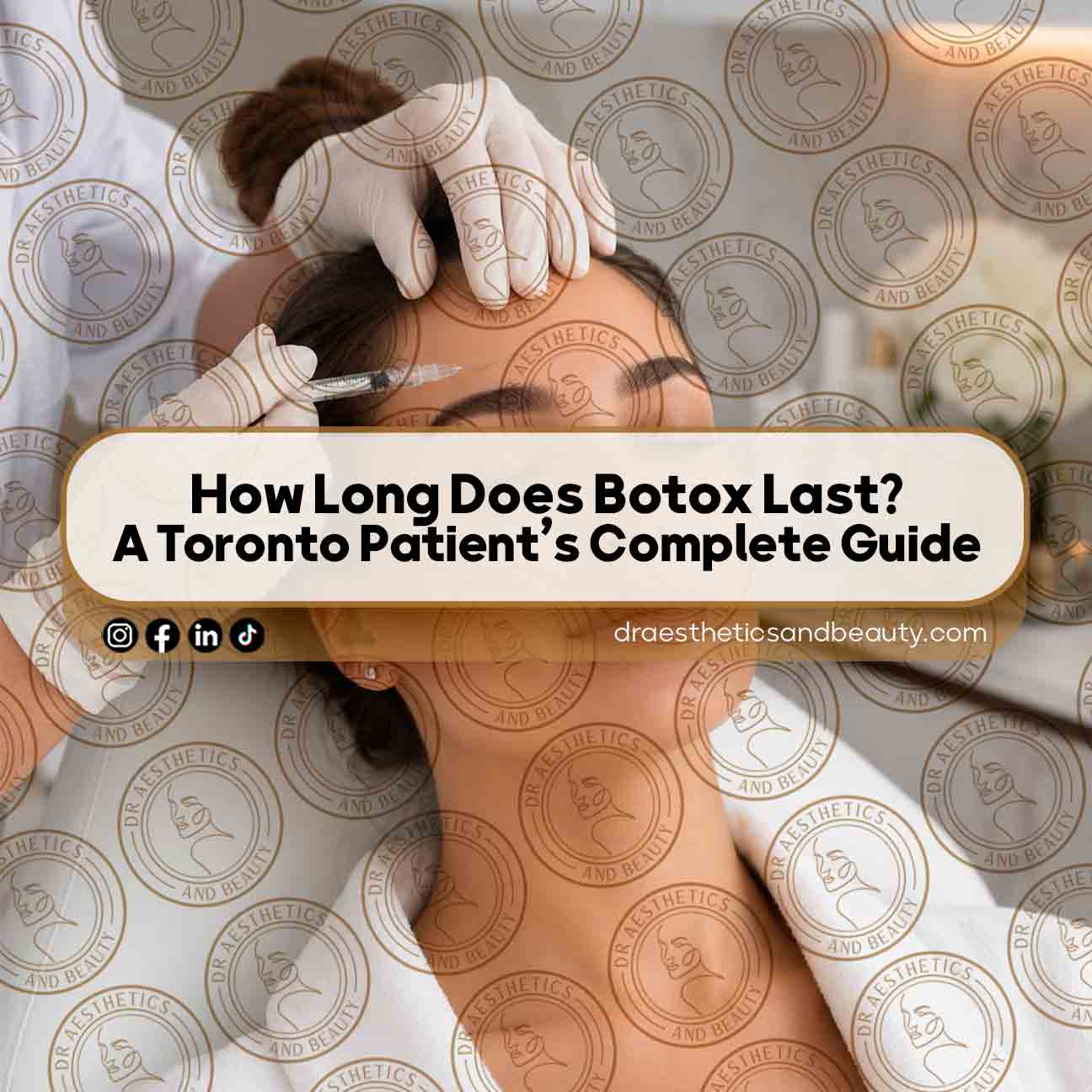
Botox results typically last 3 to 4 months for most Toronto patients, though some enjoy effects up to 6 months.
The timeline depends on your metabolism, the treatment area, dosage, and the injector’s technique.
With consistent, high-quality treatments, many patients gradually extend the duration between sessions.
This guide breaks down what to expect week by week, compares Botox with other neuromodulators, and gives you
science-backed aftercare tips to maximise your results. Whether you are a first-timer or a regular,
understanding the longevity of Botox helps you plan smarter and get the most value from every visit.
What you’ll learn in this guide
- Typical Botox duration & timeline
- Factors that shorten or extend results
- Area‑by‑area longevity (forehead, crow’s feet, etc.)
- Botox vs. Dysport vs. Xeomin – which lasts longer?
- Aftercare do’s and don’ts
- When to book your next appointment
What Is the Average Botox Duration?
For the vast majority of patients, Botox lasts between three and four months.
Some individuals notice the smoothing effect beginning to fade around the 10‑ to 12‑week mark, while others enjoy
a full five or even six months of relaxation.
The average Toronto patient can expect the visible benefits to peak at about two weeks after injection
and then gradually diminish as the body metabolises the neurotoxin.
It is important to understand that “Botox” is a brand name for botulinum toxin type A, but other
neuromodulators such as Dysport® and Xeomin® are also widely used in Toronto. All three are Health Canada‑approved
and have similar duration profiles, though subtle differences in formulation can affect onset and longevity for
some patients.
Dr. Aesthetics and Beauty offers all major neuromodulator brands, allowing your provider to tailor the choice to your unique anatomy and goals.
Why Does Botox Last Longer for Some People?
The longevity of Botox is highly individual. Two patients receiving the same dose in the same area
can have very different experiences. Below are the key factors that influence how long your results will last.
1. Metabolic rate and physical activity
People with faster metabolisms break down the neurotoxin more quickly.
Regular high‑intensity exercise (four or more sessions per week) can shorten the duration, sometimes bringing it
closer to three months rather than four. This does not mean you should avoid exercise –
simply be aware that your lifestyle plays a role.
2. Muscle strength and treatment area
Larger or more frequently used muscles – such as the masseter (jaw) or the corrugator muscles
responsible for frown lines – tend to metabolise Botox faster.
Conversely, smaller muscles like those around the eyes (crow’s feet) often retain the effect for longer,
sometimes up to four months or more.
3. Dosage and injection technique
Adequate dosing is critical. Under‑treating to “test” the result almost guarantees a shorter
duration. An experienced injector knows exactly how many units to place in each muscle to achieve the desired effect while maximising longevity. Precise placement matters just as much as the
dose – even a slight deviation can alter the outcome.
At Dr. Aesthetics and Beauty, all injections are performed by skilled practitioners who understand facial anatomy in detail.
4. Previous treatment history
Consistent, long‑term use of Botox often leads to progressively longer intervals between
treatments. The targeted muscles become weaker over time, so they require less
neurotoxin to stay relaxed. Many Toronto patients who have been on a regular schedule for a year or more
find they can stretch their appointments to five or six months.
5. Immune response and antibody formation
In a small percentage of patients, the body develops neutralising antibodies against botulinum
toxin, which can shorten the duration of effect or even render the treatment ineffective.
This risk increases with frequent, low‑dose exposures.
Switching between different brands (e.g., Botox, Dysport, Xeomin) every few cycles can help mitigate this
issue.
How Long Does Botox Last in Different Facial Areas?
Not all wrinkles are created equal. The table below gives you a clear, evidence‑based overview of typical
duration per treatment zone for Toronto patients.
| Treatment area | Typical duration | Notes |
|---|---|---|
| Forehead lines | 3 – 4 months | Bulkier muscles; may require higher dose |
| Frown lines (11s) | 3 – 4 months | Strong muscles; often wears off faster in heavy frowners |
| Crow’s feet | 4 months or more | Smaller muscles; often longer‑lasting |
| Masseter (jaw slimming / TMJ) | 3 – 4 months | Very strong muscle; may need higher doses |
| Bunny lines (nose) | 3 – 4 months | Small area; similar to crow’s feet |
Botox vs. Dysport vs. Xeomin – Which One Lasts the Longest?
All three are botulinum toxin type A injectables, and their duration is broadly similar:
3 to 4 months for most patients. However, there are clinically relevant differences
in onset, spread, and formulation that may make one brand more suitable for you than another.
- Botox® (Allergan): The original and most studied. Has a slightly smaller diffusion radius,
which makes it ideal for precise, targeted areas like crow’s feet. - Dysport® (Galderma): Tends to spread more than Botox, which can be
advantageous for larger areas like the forehead. Some patients report a faster onset
(2–3 days vs. 3–5 days). - Xeomin® (Merz): A “naked” toxin without accessory proteins, which may reduce the
risk of antibody formation in patients who develop resistance to other brands.
At Dr. Aesthetics and Beauty, your practitioner will help you choose the right product based on your facial anatomy, treatment goals,
and previous response to neuromodulators.
The Botox Timeline: What to Expect Week by Week
Knowing the typical progression helps you set realistic expectations and avoid unnecessary worry.
- Days 1–2: No visible change. You may notice mild redness or tiny bumps at the injection sites –
this is normal and subsides within an hour. - Days 3–5: Initial softening begins. The muscle activity starts to reduce.
- Days 7–10: Noticeable improvement in dynamic wrinkles.
- Day 14 (2 weeks): Full effect is achieved. This is when your results
are at their peak. - Weeks 3–10: The “plateau” phase – your results remain stable and consistent.
- Weeks 12–16 (months 3–4): Gradual fading begins as the neurotoxin is metabolised.
- Month 4+: Most patients are ready for a touch‑up. Some may stretch to month 5 or 6
with consistent treatment history.
Aftercare Do’s and Don’ts – Maximise Your Botox Longevity
What you do in the first 24–48 hours after your appointment can significantly influence how
long your Botox lasts. Follow these evidence‑based guidelines.
Do:
- Stay upright for at least 4 hours after injections.
- Gently move your facial muscles (make expressions) to help the product distribute evenly.
- Apply a cold compress to reduce swelling if needed.
- Use sunscreen daily – UV exposure breaks down collagen and can make wrinkles return faster.
- Book your next appointment at month 3.5 to avoid a full “reset” of the muscles.
Don’t:
- Rub, massage, or apply pressure to the treated areas for 24–48 hours – this can cause
the toxin to migrate. - Vigorous exercise or heavy lifting for the remainder of the day.
- Lie flat or bend over excessively for 4 hours post‑treatment.
- Consume alcohol or blood‑thinning medications (aspirin, ibuprofen) 24 hours before and after,
as they increase bruising risk. - Expose yourself to extreme heat (saunas, steam rooms, hot yoga) for 48 hours.
What Other Guides Don’t Tell You – The Content Gap
While most Toronto clinics cover the basics (3–4 months, avoid exercise, etc.), few address the deeper
clinical and lifestyle factors that truly determine longevity. This guide fills those gaps.
- Antibody resistance – most guides ignore this, but it is a real phenomenon that affects
a subset of patients. We explain how switching products can help. - GLP‑1 medications – emerging evidence suggests that drugs like Ozempic may shorten
Botox duration. If you are on a GLP‑1 receptor agonist, discuss this with your injector. - Dosing precision – many clinics do not emphasise that under‑dosing is
one of the biggest causes of short‑lived results. We give you the knowledge to ask the right questions. - Long‑term muscle training – consistent treatment does not just maintain results; it
re‑trains the muscle, leading to longer intervals over time. - Comparative product analysis – we go beyond “they are all the same” and show you
when to choose Botox, Dysport, or Xeomin based on your specific needs.
Frequently Asked Questions About Botox Duration
Does Botox last longer the more you get it?
Yes. With consistent treatments, the targeted muscles weaken over time,
and many patients eventually stretch to 5–6 months between sessions.
Will my wrinkles look worse when Botox wears off?
No. Your skin simply returns to its natural state. There is
no “rebound” effect – wrinkles gradually reappear as they were before treatment.
Can I exercise after Botox?
Avoid strenuous exercise for the remainder of the day.
Light activity is fine after 24 hours.
How much does Botox cost in Toronto?
Most reputable clinics charge $10–$15 per unit,
with first‑time treatments typically using 20–40 units. Beware of prices below $8/unit –
they often indicate diluted or counterfeit product.
How soon should I book my next appointment?
We recommend booking at 3.5 months to maintain
continuous results. Waiting until effects are completely gone means starting from scratch.
Does Botox work for excessive sweating (hyperhidrosis)?
Yes. Botox is FDA‑ and Health Canada‑approved for underarm sweating,
and results typically last 6 to 12 months in that indication.
The Bottom Line – Plan Smarter, Enjoy Longer Results
Botox is one of the most effective, safe, and convenient non‑surgical treatments available in Toronto.
While the average duration is 3 to 4 months, your individual experience can be influenced by
metabolism, muscle strength, dosage, and aftercare. The key to maximising longevity is choosing
an expert injector who understands facial anatomy, using the right product for your needs, and
following post‑treatment guidelines carefully.
At Dr. Aesthetics and Beauty, we believe in transparent, patient‑centred care. Our practitioners take the time to assess your
unique anatomy, discuss your goals, and design a personalised treatment plan that gives you natural,
long‑lasting results. Whether you are new to Botox or looking to optimise your current regimen,
we are here to guide you every step of the way.
Ready to experience the difference?
Book your consultation at Dr. Aesthetics and Beauty today and let our expert team help you achieve smooth, natural, and long‑lasting results.
Visit Dr. Aesthetics and Beauty
Serving Toronto, Vaughan, and surrounding areas