
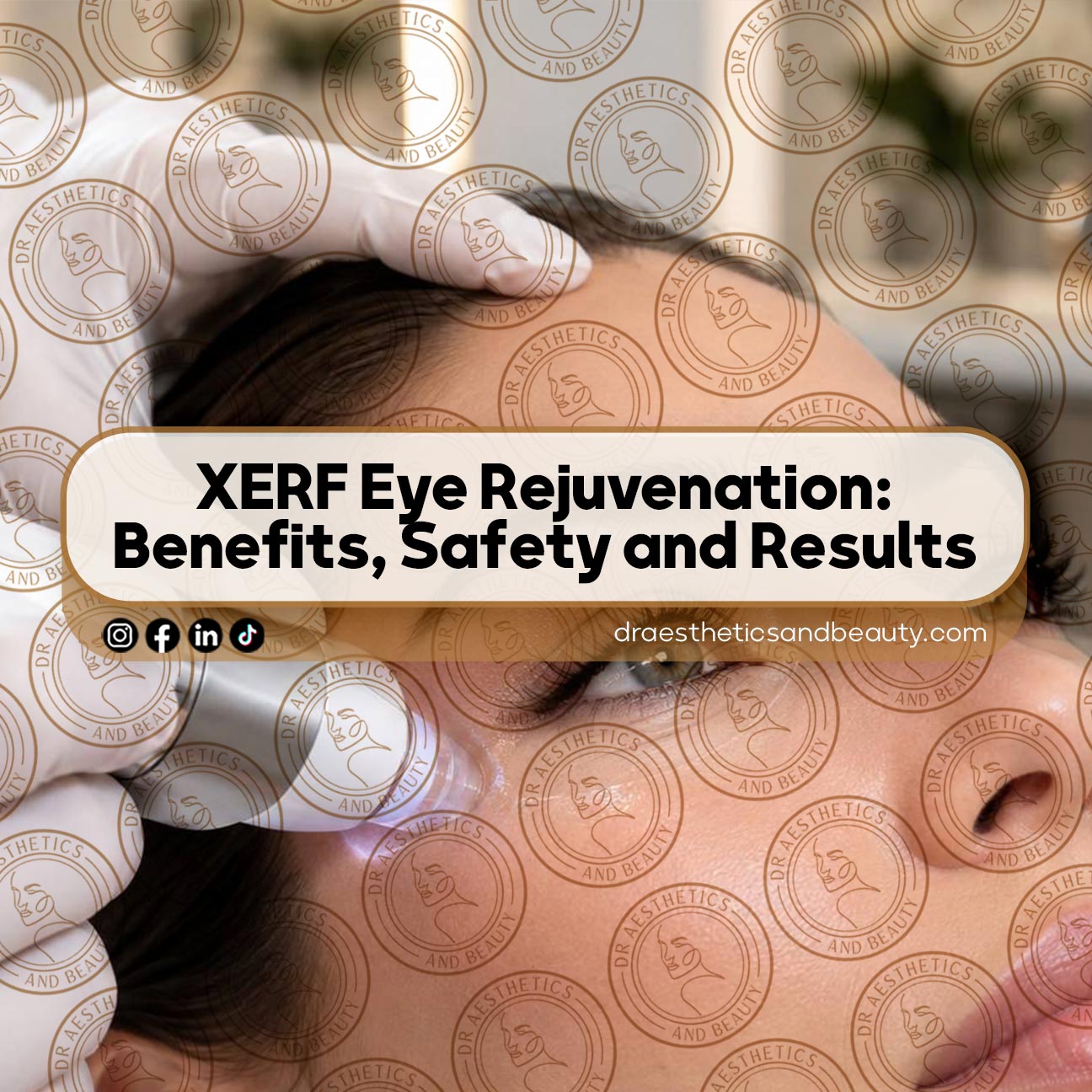
- XERF is a radiofrequency-based aesthetic technology designed to support non-invasive skin tightening and facial rejuvenation.
- XERF eye rejuvenation focuses on the delicate eye area, where fine lines, skin laxity, and changes in skin texture may become more noticeable over time.
- Radiofrequency energy interacts with tissue and may support collagen-related skin remodeling, depending on the device, settings, and treatment protocol.
- The suitability of XERF for the eyelids and under-eye region must be confirmed for the specific device and applicator being used.
- Results vary according to skin quality, anatomy, age, treatment settings, and individual healing responses.
- A professional assessment helps determine whether radiofrequency treatment or another approach is more appropriate for the concern being treated.
- Safe treatment planning prioritizes realistic expectations, appropriate eye-area precautions, and qualified clinical supervision.
Changes around the eyes are often among the first facial signs of aging that people notice. Fine lines, crepey skin, mild laxity, and a tired-looking appearance can develop gradually as collagen levels, skin elasticity, and facial volume change over time. For people interested in refreshing the eye area without immediately considering surgery, energy-based aesthetic treatments may be worth exploring.
XERF eye rejuvenation is a treatment topic attracting attention because of its connection with radiofrequency technology and non-surgical skin tightening. However, understanding what the technology can realistically achieve is essential before choosing a procedure for the delicate skin surrounding the eyes.
This guide explains the principles behind XERF, the concerns that may be considered during an eye-rejuvenation consultation, the factors that influence treatment suitability, and the questions patients should ask before proceeding. It also explains how a qualified aesthetic professional can help distinguish skin laxity from concerns such as volume loss, pigmentation, and under-eye puffiness.
The objective is not to promise a particular result. It is to help patients make an informed decision based on anatomy, available clinical evidence, device-specific instructions, and an individualized treatment plan.
What This Guide Will Help You Understand
- How XERF works: Understand the principles of radiofrequency technology and its potential role in skin tightening.
- Who may benefit: Learn how skin laxity, fine lines, under-eye hollows, and puffiness differ and why those differences matter.
- How to make a safe decision: Explore consultation questions, treatment considerations, possible risks, recovery expectations, and alternative approaches.
What Is XERF Eye Rejuvenation?
XERF eye rejuvenation refers to the consideration of XERF radiofrequency technology for improving the appearance of the skin around the eyes, where treatment is appropriate for the specific device and its approved instructions.
The XERF platform is associated with non-invasive radiofrequency skin-tightening technology. Radiofrequency treatments use electrical energy to generate heat within targeted tissue. Depending on the technology and treatment protocol, this controlled thermal effect may influence collagen structures and the biological processes involved in skin remodeling.
In aesthetic medicine, radiofrequency treatments are used to address selected concerns related to skin firmness and texture. However, not every radiofrequency device is designed for every facial area. The skin surrounding the eyes is particularly delicate, and the suitability of a particular XERF handpiece, energy setting, and technique must be established before treating this region.
Patients should therefore distinguish between the general concept of radiofrequency skin rejuvenation and a specific, clinically appropriate XERF treatment around the eyes. A device’s use on the cheeks or lower face does not automatically mean that it is suitable for the eyelids or directly beneath the eyes.
What Does Eye Rejuvenation Mean?
Eye rejuvenation is an umbrella term for treatments intended to improve selected features around the eyes. The objective may be to create a smoother appearance, improve the look of mild skin laxity, soften the appearance of fine lines, or address other concerns identified during a professional assessment.
It does not refer to one universal procedure. Different concerns originate in different anatomical structures, and they may require different treatments.
- Fine lines: Small creases that become visible as the skin moves or as skin texture changes.
- Skin laxity: A reduction in firmness that can make the skin appear less taut.
- Crepey texture: Thin-looking skin with numerous small wrinkles or a delicate, crinkled appearance.
- Under-eye hollows: Depressions caused by facial anatomy or changes in soft-tissue volume.
- Dark circles: Discoloration influenced by pigmentation, visible blood vessels, shadows, or a combination of factors.
- Puffiness: A fuller appearance that may be related to fluid retention, fat compartments, allergies, or other causes.
Understanding the difference between these concerns is essential because a treatment designed to improve skin firmness cannot necessarily correct a deep hollow, persistent pigmentation, or a prominent fat pad.
How Does XERF Radiofrequency Technology Work?
Radiofrequency technology is used in aesthetic medicine to deliver energy that produces a controlled thermal effect in selected tissues. The intended response depends on the device’s engineering, energy delivery system, treatment depth, temperature management, and clinical protocol.
Collagen is an important structural protein that contributes to the strength and organization of the skin. Elastin and other components of the extracellular matrix also contribute to the skin’s ability to maintain its shape and respond to movement.
As skin ages, changes in collagen organization, elasticity, cumulative sun exposure, and tissue support can contribute to visible wrinkles and laxity. Certain energy-based treatments are designed to create controlled thermal effects that may influence existing collagen structures and subsequent remodeling processes.
The Role of Controlled Heating
In radiofrequency procedures, electrical energy is converted into heat within tissue. The amount and distribution of heating depend on the technology and the way the treatment is performed.
When appropriately delivered, thermal energy may contribute to changes in collagen structure and stimulate tissue responses associated with remodeling. These processes do not occur identically in every patient, and the visible outcome cannot be predicted from the technology alone.
Excessive or improperly delivered heat can damage tissue. This is particularly important around the eyes, where the skin is thin and important anatomical structures are nearby.
For this reason, the aim of an appropriate treatment protocol is not to maximize heat or energy. It is to use a device-specific approach that balances the intended aesthetic effect with tissue safety.
Does XERF Stimulate Collagen?
Collagen-related remodeling is a central concept in radiofrequency skin tightening. Nevertheless, claims about the magnitude, depth, timing, or clinical significance of collagen changes should be supported by evidence for the specific device and treatment area.
It is important not to assume that findings from one radiofrequency platform apply automatically to XERF, or that results observed on the lower face necessarily apply to the eye area.
Patients should ask their provider what clinical evidence is available for the exact device, applicator, and anatomical area being considered. Before-and-after photographs can be useful when they are standardized and representative, but photographs alone do not establish safety or prove that the same outcome will occur in another patient.
What Makes the Eye Area Different?
The periocular region includes the eyelids, the skin beneath the eyes, the outer corners, and the surrounding tissues. Its anatomy differs from that of the cheeks and jawline.
The skin may be thinner, the underlying support structures differ, and the eyes themselves require protection from inappropriate energy exposure. Small differences in treatment placement can have important implications for safety.
Before recommending XERF eye rejuvenation, a qualified professional should confirm whether the particular device and applicator are intended for the proposed location and follow the manufacturer’s instructions and applicable professional standards.
What Eye-Area Concerns Might Be Evaluated?
The potential role of XERF depends on the primary concern. A careful assessment should identify whether the visible issue originates mainly in the skin, soft-tissue volume, muscle activity, pigmentation, fluid retention, or deeper anatomical structures.
1. Mild Skin Laxity
Mild skin laxity may appear as a gradual loss of firmness or a less defined transition between the lower eyelid and the cheek. In selected areas, energy-based treatments may be considered when the goal is to improve the appearance of skin firmness.
However, the presence of loose skin does not automatically make someone a suitable candidate for XERF. The amount of laxity, the position of the eyelid, skin thickness, and the device’s permitted treatment area must all be evaluated.
More pronounced excess skin may require a different approach. A consultation should establish whether a non-surgical treatment is likely to address the patient’s actual concern or whether another option should be discussed.
2. Fine Lines Around the Eyes
Fine lines can develop from repeated facial movement, changes in skin hydration, sun exposure, and gradual alterations in skin structure.
Some lines are visible mainly when smiling or squinting, while others remain visible when the face is at rest. These patterns can help a practitioner determine which structures contribute most to the concern.
Radiofrequency-based approaches may be considered for selected skin-texture concerns when appropriate, but they should not be presented as a guaranteed solution for every type of wrinkle.
Lines caused predominantly by muscle activity may respond differently from lines associated with skin texture or laxity. A treatment plan should reflect that distinction.
3. Crepey Under-Eye Skin
Crepey skin has a fine, crinkled appearance that may become more noticeable under certain lighting conditions. Contributing factors can include skin dryness, cumulative ultraviolet exposure, aging, and changes in the skin’s supporting structures.
The appearance of crepey skin can sometimes be improved through appropriate skincare and selected professional treatments. However, the suitability of radiofrequency for this concern depends on the treatment area, the device’s characteristics, and the patient’s individual anatomy.
Because the lower eyelid is particularly delicate, a provider should avoid assuming that a procedure suitable for thicker facial skin can be applied safely in the same way beneath the eyes.
4. Under-Eye Hollows and Volume Loss
Under-eye hollows create a depression between the lower eyelid and the cheek. They may be associated with natural facial anatomy, changes in fat compartments, or age-related volume loss.
Hollows can create shadows that make the area look darker or more tired, even when the skin itself is relatively healthy.
A skin-tightening treatment does not replace lost volume. If volume deficiency is the principal cause, a provider may discuss alternative options or explain why a device-based treatment alone is unlikely to achieve the desired contour.
Injectable treatments may be considered in selected patients, but the under-eye region has important vascular and anatomical risks. Any discussion of fillers should involve a suitably qualified practitioner who can explain the benefits, limitations, and potential complications.
5. Dark Circles and Uneven Skin Tone
Dark circles are not a single condition. Their appearance may be influenced by inherited pigmentation, visible blood vessels, thin skin, shadows from hollows, allergies, or a combination of factors.
A treatment aimed at skin tightening should not be assumed to remove pigment or resolve every cause of under-eye darkness.
For pigmentation-related concerns, a practitioner may discuss appropriate skincare, sun protection, or other treatments suited to the underlying cause. If the darkness results mainly from shadowing, addressing the contour may be more relevant than treating pigmentation alone.
Accurate assessment helps avoid selecting a treatment simply because it is marketed as an eye-rejuvenation procedure.
6. Under-Eye Puffiness
Puffiness may be associated with fluid retention, allergies, sleep patterns, anatomical fat pads, or other medical and lifestyle factors.
Persistent fullness caused by prominent fat pads is different from mild skin laxity. A non-surgical skin-tightening procedure should not be presented as a reliable way to remove excess fat or correct every form of under-eye swelling.
Sudden, painful, one-sided, or otherwise unexplained swelling requires appropriate medical evaluation rather than an elective aesthetic treatment.
Potential Benefits of XERF Eye Rejuvenation
When a specific XERF device is appropriate for the proposed treatment area, its potential role should be evaluated in the context of the patient’s goals and the evidence available for that application.
Potential benefits associated with appropriately selected radiofrequency skin-tightening treatments may include the following:
- A non-surgical treatment approach: Radiofrequency procedures may offer an option for selected patients who prefer to explore non-surgical approaches before considering an operation.
- Attention to skin firmness: Certain radiofrequency treatments are intended to improve the appearance of mild skin laxity.
- Support for skin-texture goals: Depending on the device and protocol, some treatments may be considered for selected textural concerns.
- A personalized treatment plan: A consultation can help determine whether radiofrequency fits into a broader skin-rejuvenation strategy.
- Potential integration with other care: When clinically appropriate, a provider may recommend a combination of skincare, sun protection, and other treatments that address different causes of aging around the eyes.
These are potential considerations rather than guaranteed XERF-specific outcomes. The evidence for the precise device and periocular application should guide any claims about effectiveness.
What XERF Should Not Be Promised to Do
Responsible treatment planning includes a clear explanation of limitations. Patients should be cautious about claims that suggest a device can address every concern around the eyes.
- It should not be described as a guaranteed replacement for eyelid surgery.
- It should not be assumed to eliminate deep under-eye hollows caused by volume loss.
- It should not be promoted as a universal solution for dark circles or pigmentation.
- It should not be described as removing prominent fat pads without appropriate evidence.
- It should not be claimed to produce identical results in every patient.
- It should not be assumed safe for direct eyelid treatment without confirmation of the device-specific instructions.
A trustworthy consultation explains what may be achievable, what remains uncertain, and which concerns may require another treatment or a referral.
Who May Be a Candidate for XERF Eye Rejuvenation?
Candidate selection should begin with the patient’s goals rather than the name of a particular technology. Someone concerned about mild skin laxity may need a different plan from someone whose main concern is pigmentation, under-eye bags, or significant excess skin.
Potential candidates for a radiofrequency-based skin-rejuvenation approach may include adults who:
- Want to discuss non-surgical approaches to selected signs of facial aging.
- Have concerns related to skin firmness or texture that may be appropriate for the specific technology.
- Understand that improvements, if achieved, may be subtle or variable.
- Can follow the provider’s preparation and aftercare instructions.
- Are willing to undergo an assessment to determine whether the proposed treatment area is appropriate.
- Have realistic expectations and understand that more than one treatment strategy may be needed to address different concerns.
Who May Need Another Approach?
XERF may not be the most appropriate option when the main concern is unrelated to the type of tissue response the device is intended to produce.
For example, substantial excess eyelid skin, prominent fat pads, marked volume loss, or a significant change in eyelid position may require assessment by a medical professional with relevant expertise.
Patients with active skin infections, open wounds, unexplained swelling, or other conditions affecting the treatment area should disclose these issues before an elective procedure is considered.
People with implanted electronic devices, relevant metal implants, bleeding disorders, impaired sensation, recent procedures, or conditions that may affect healing should provide a complete medical history. The relevance of each issue depends on the device instructions and the individual’s circumstances.
Pregnancy, breastfeeding, medications, and recent cosmetic treatments should also be discussed with the provider. The appropriate decision may be to postpone treatment or select a different option.
XERF Eye Rejuvenation vs. Other Eye-Area Treatments
Several aesthetic treatments may be considered for concerns around the eyes, but they do not work in the same way. A useful comparison focuses on the underlying concern, the intended mechanism, the limitations, and the associated risks.
| Treatment Approach | Primary Focus | Important Limitations | Key Consideration |
|---|---|---|---|
| XERF radiofrequency technology | Potential non-surgical skin tightening, subject to device-specific suitability | Periocular effectiveness and suitability must be established for the specific device and protocol | Confirm the permitted treatment area, clinical evidence, and safety requirements |
| Other radiofrequency treatments | Selected skin-firmness and texture concerns | Technologies differ in energy delivery, depth, applicators, and evidence | Results from one device cannot automatically be applied to another |
| Neuromodulator injections | Selected dynamic wrinkles caused by muscle activity | Does not replace lost volume or treat every skin-texture concern | Requires an appropriately qualified injector and careful anatomical assessment |
| Dermal fillers | Selected volume deficits and contour concerns | Not suitable for every type of dark circle or under-eye bag | The under-eye area carries important vascular risks |
| Laser treatments | Selected pigmentation, texture, and resurfacing concerns | Risks and suitability vary by laser type, skin tone, and treatment area | Eye protection and careful patient selection are essential |
| Medical-grade skincare | Skin hydration, sun protection, and selected superficial concerns | Cannot correct substantial structural laxity or volume loss | Products should be chosen for the sensitive eye area and individual skin tolerance |
| Blepharoplasty | Surgical correction of selected excess eyelid skin or fat-related concerns | Involves surgery, recovery, and operative risks | Requires assessment by a qualified surgical specialist |
This comparison is intended to explain the differences between treatment categories. It does not establish that XERF is superior to another treatment or that every option is suitable for the eye area.
How Should You Choose Between These Options?
The most appropriate treatment depends on the main cause of the concern. A patient with mild skin laxity may have different options from a patient with deep tear-trough hollows or pronounced expression lines.
A consultation should establish the intended outcome, explain the evidence and limitations of the proposed procedure, and consider whether a non-invasive treatment, skincare, an injectable procedure, or a surgical assessment is more suitable.
What Happens During an XERF Consultation?
A consultation is an important part of responsible aesthetic care. It provides an opportunity to assess the eye area, review relevant medical history, clarify expectations, and determine whether the proposed procedure is appropriate.
Step 1: Discuss Your Main Concerns
The provider should ask what you would most like to improve. This may include fine lines, skin texture, mild laxity, puffiness, dark circles, or a tired-looking appearance.
It is useful to identify whether the concern appears at rest, during facial expression, or under particular lighting conditions. These details can help distinguish skin changes from shadows, muscle activity, and structural features.
Step 2: Review Medical and Cosmetic History
Your provider should review medical conditions, medications, allergies, previous cosmetic treatments, skin reactions, and any factors that may influence healing or treatment safety.
Recent injectables, resurfacing procedures, or surgery may affect the timing of a new treatment. The appropriate interval should be determined by the treating professional according to the procedure involved and the device instructions.
Step 3: Assess the Eye-Area Anatomy
An examination may consider skin thickness, laxity, pigmentation, volume distribution, eyelid position, and the presence of swelling or other features that affect treatment selection.
Where appropriate and with consent, standardized photographs may be used to document the baseline appearance. Photographs should be taken under consistent lighting, positioning, and camera conditions if they are intended for later comparison.
Step 4: Confirm Device and Treatment-Area Suitability
The provider should confirm the exact XERF device and applicator, the manufacturer’s instructions, the permitted treatment area, and the relevant precautions.
If the proposed use around the eyes is not supported by the device instructions or the provider cannot establish appropriate safety requirements, treatment should not proceed on the assumption that all radiofrequency technologies are interchangeable.
Step 5: Establish a Realistic Plan
The final plan should explain the expected goals, relevant uncertainties, possible adverse effects, alternatives, and the anticipated follow-up process.
It should also explain how progress will be assessed and what the next step would be if the treatment does not achieve the intended outcome.
How to Prepare for Treatment
Preparation depends on the specific device, the treatment area, and the patient’s medical history. Patients should follow the instructions provided by their treating professional rather than relying on a generic preparation routine.
Before the appointment, consider the following:
- Provide a complete and accurate medical history.
- Disclose all medications, supplements, allergies, and previous reactions to aesthetic procedures.
- Explain any recent cosmetic injections, laser treatments, peels, surgery, or other procedures around the eyes.
- Inform the provider about active irritation, infection, wounds, or unexplained swelling.
- Ask whether any skincare products should be paused before treatment.
- Follow the clinic’s guidance regarding cleansing, makeup, and preparation of the treatment area.
- Ask what protective measures are required for the eyes and surrounding tissues.
- Clarify expected recovery, follow-up arrangements, and whom to contact if a problem occurs.
Do not stop prescribed medication or discontinue a medically necessary treatment without advice from the relevant healthcare professional.
Questions to Ask Before Booking
- Is this specific XERF device intended for the exact area I want treated?
- What evidence supports its use for my particular concern?
- What results are realistic for my skin and anatomy?
- What are the possible risks and adverse effects?
- What eye-protection measures are required?
- Who will perform the treatment, and what relevant qualifications and training do they have?
- What alternatives should I consider?
- How will results be documented and evaluated?
- What happens if I experience an unexpected reaction?
What Happens During the Procedure?
The exact treatment process depends on the XERF platform, the applicator, the proposed anatomical area, and the clinician’s protocol. The following outline describes general considerations for an energy-based aesthetic procedure rather than a guaranteed step-by-step XERF protocol.
Before Energy Delivery
The provider should confirm the treatment plan, review consent, inspect the skin, and verify that the required safety precautions are in place.
The treatment area may be cleansed, and any device-specific preparation should be completed according to the manufacturer’s instructions. Appropriate eye protection is especially important when required for the selected procedure.
During Treatment
For radiofrequency procedures, sensations can vary depending on the device, energy delivery, treatment location, and individual sensitivity. Some radiofrequency treatments produce a sensation of warmth, but a specific sensation should not be used as proof that treatment is effective or safe.
The practitioner should monitor the patient’s response and follow the applicable treatment protocol. Unexpected or severe discomfort should be communicated immediately so that the provider can assess whether treatment should be adjusted or stopped.
Immediately After Treatment
The provider should inspect the treated area and explain any expected short-term reactions, aftercare requirements, and warning signs that need medical attention.
Do not assume that the absence of visible redness means there is no risk, or that a more intense reaction indicates a better outcome. Follow the individualized instructions supplied by the treating professional.
Recovery and Aftercare Following XERF Eye Rejuvenation
Recovery varies according to the technology, treatment area, energy settings, skin sensitivity, and individual response. The recovery profile of a specific XERF eye treatment should be explained by the provider using the applicable device instructions and clinical experience.
Patients should not assume that every radiofrequency treatment has no downtime or that the same recovery timeline applies to all devices.
Protect the Skin Barrier
Use only the cleansing and moisturizing products recommended for the treated area. Avoid introducing strong active ingredients or exfoliating products until the provider confirms that they can be safely resumed.
The skin around the eyes can be sensitive, and products that are tolerated elsewhere on the face may cause irritation when used too close to the eyelids.
Use Appropriate Sun Protection
Sun protection helps limit cumulative ultraviolet damage, which contributes to premature skin aging. Follow the provider’s advice about when and how to use sunscreen around the treated area, and consider additional protection such as shade and sunglasses.
Choose products suitable for the eye area and discontinue any product that causes significant irritation.
Avoid Unapproved Treatments During Recovery
Do not combine the procedure with aggressive exfoliation, additional energy-based treatments, or other cosmetic interventions without professional guidance.
The appropriate interval between procedures depends on the treatment performed, the condition of the skin, and the recommendations of the treating professional.
Know When to Seek Help
Ask the clinic which reactions are expected and which require prompt evaluation. Increasing pain, blistering, burns, significant swelling, skin discoloration, or signs of infection should not be ignored.
Eye pain, changes in vision, or other visual symptoms following a procedure require urgent medical assessment. Do not wait for a routine follow-up appointment if these symptoms occur.
When Will You See Results?
The timing of visible improvement depends on the treatment used, the biological response of the skin, and the concern being addressed. Some energy-based procedures may produce an early change in appearance, while other changes associated with tissue remodeling can take longer to develop.
However, a general radiofrequency timeline should not be presented as a confirmed XERF-specific timeline for the eye area without supporting evidence.
During consultation, ask the provider to explain:
- When an initial change might reasonably be assessed.
- When the result should be reviewed under consistent photographic conditions.
- How long the provider recommends waiting before judging the outcome.
- Whether additional sessions are supported by the treatment protocol.
- What degree of improvement is realistic for the concern being treated.
Why Results Differ Between Patients
Two people receiving the same procedure may experience different outcomes. Relevant factors include age, baseline skin quality, skin thickness, degree of laxity, underlying facial anatomy, lifestyle, cumulative sun exposure, and healing characteristics.
Results can also differ according to the clinician’s assessment, the device settings, the applicator, and adherence to the recommended protocol.
Standardized photographs and documented follow-up assessments can help distinguish meaningful changes from differences in lighting, facial expression, or camera angle.
How Long Can XERF Eye Rejuvenation Results Last?
The longevity of results should be discussed cautiously because it depends on the specific treatment, the evidence available, and the patient’s individual circumstances.
It would be inappropriate to promise that XERF eye rejuvenation will last a fixed number of months or years without reliable evidence for the exact device and treatment area.
Skin continues to age after an aesthetic procedure. Changes in collagen, ultraviolet exposure, facial movement, lifestyle, and other biological processes can influence the appearance of the treated area over time.
Can Results Be Maintained?
A consistent skincare routine and appropriate sun protection can support general skin health. These measures do not guarantee that the results of a device-based procedure will be preserved, but they help address some of the factors that contribute to visible skin aging.
If maintenance treatments are proposed, ask why they are recommended, whether the schedule is supported by the device’s treatment protocol, and what risks may arise from repeated treatment around the eyes.
Maintenance should not be automatic. The decision should depend on the observed result, the patient’s goals, the safety profile, and the provider’s clinical assessment.
Safety, Risks, and Possible Side Effects
Every aesthetic procedure requires a discussion of potential risks. The safety profile of a particular XERF treatment depends on the exact device, applicator, treatment area, energy settings, patient selection, and the training of the person performing the procedure.
General possible reactions associated with energy-based skin treatments can include temporary redness, swelling, tenderness, or discomfort. Other complications may occur, and their likelihood depends on the technology and how it is used.
Potential thermal injury, burns, pigmentary changes, blistering, or scarring should be considered when discussing energy-based procedures. These outcomes are not inevitable, but they demonstrate why appropriate device selection and careful technique matter.
Why Eye Protection Matters
The eyes and surrounding structures require particular care during aesthetic procedures. Eye-protection requirements vary by device and energy-delivery method, so the provider must follow the manufacturer’s specific instructions.
Patients should not assume that closing the eyes alone provides sufficient protection. Ask the provider to explain the appropriate protective measures before treatment begins.
Who Should Delay Treatment?
Treatment may need to be postponed if there is an active infection, significant skin irritation, an open wound, unexplained swelling, or another issue affecting the proposed treatment area.
A history of eye conditions, recent surgery, previous adverse reactions, implanted devices, relevant medications, or conditions affecting healing should be reviewed before treatment.
These factors do not all create the same level of risk for every technology. The provider should assess each factor against the device instructions and the patient’s clinical circumstances.
What to Do If a Complication Occurs
Contact the treating clinic promptly if you develop an unexpected or worsening reaction. If you experience eye pain, visual changes, severe swelling, or another potentially urgent symptom, seek immediate medical care.
Do not attempt to treat a suspected burn, infection, or eye injury with unapproved home remedies or additional cosmetic products.
XERF Eye Rejuvenation Cost: What Influences Pricing?
The cost of XERF eye rejuvenation can vary according to the clinic, location, treatment area, consultation requirements, and the details of the proposed treatment plan.
There is no single price that can responsibly be applied to every patient without knowing which service is being offered and whether the specific eye-area application is appropriate.
Factors That May Affect the Cost
- Clinical assessment: The consultation may involve a separate fee or be included in a treatment package.
- Treatment area: The proposed area and the protocol permitted for the device may influence pricing.
- Provider qualifications: Clinical expertise, training, and the setting in which treatment is performed can affect the overall service cost.
- Number of sessions: If a series is recommended, the total cost may differ from the price of one appointment.
- Additional care: Follow-up appointments or other treatments may be discussed if clinically appropriate.
How to Evaluate a Treatment Quote
When comparing quotes, ask what the fee includes, which device and applicator will be used, who will perform the treatment, and what follow-up support is available.
It is also important to establish whether the proposed treatment is appropriate for the concern you want to address. A lower price is not necessarily better value if the service does not match your needs or if important safety information is missing.
Do not feel pressured to purchase a package before your suitability, treatment options, risks, and expected outcomes have been explained.
How to Assess the Quality of an Aesthetic Provider
Choosing an aesthetic provider is an important part of treatment planning, especially for procedures involving the delicate eye area. A professional service should emphasize informed consent, suitable patient selection, appropriate training, and realistic communication.
Look for Clear Clinical Communication
A qualified provider should be able to explain the proposed treatment in understandable language, including the mechanism of the technology, the evidence supporting its use, its limitations, and the alternatives available.
Be cautious of claims that guarantee a particular outcome, promise permanent results, or suggest that a non-surgical procedure is completely risk-free.
Ask About Relevant Training
Ask who will perform the procedure and what training and experience they have with the specific device and treatment area. The qualifications required to perform aesthetic procedures vary by jurisdiction, so patients should also consider applicable local professional standards.
Understand the Follow-Up Process
Responsible care should include clear instructions about expected reactions, follow-up arrangements, and how to obtain assistance if an unexpected problem develops.
Before-and-after photographs may be helpful when they are genuine, consistently captured, and accompanied by an explanation of the treatment provided. They should not be treated as a guarantee of individual results.
A Personalized Eye-Rejuvenation Plan: A Practical Example
Consider two patients who both describe their eyes as looking tired. Although their concerns sound similar, the causes may be quite different.
Patient A: Mild Skin Laxity
Patient A notices a gradual change in skin firmness and fine texture around the outer eye area. There is no significant hollowing or persistent swelling.
After an assessment, a practitioner may consider whether an appropriate non-surgical skin-rejuvenation treatment is suitable. If XERF is being considered, the provider must first confirm that the specific device and applicator can be used safely in the intended area.
The plan should define a realistic goal, document the baseline appearance where appropriate, and explain when progress can be assessed.
Patient B: Under-Eye Hollows and Dark Shadows
Patient B has relatively firm skin but notices a deep depression beneath the eyes. The hollow creates a shadow that appears like a dark circle.
In this situation, skin tightening alone may not address the primary cause. The practitioner may discuss the anatomical origin of the hollow and explain whether another treatment approach or specialist assessment is more appropriate.
These examples illustrate why the same procedure should not be recommended automatically to everyone who wants eye rejuvenation. The diagnosis of the aesthetic concern should guide the treatment plan.
Content Gap Analysis: What a More Complete XERF Guide Should Explain
General articles about radiofrequency skin tightening often focus on the technology’s proposed benefits, the possibility of non-surgical rejuvenation, and broad expectations about treatment. Those topics are useful, but they may not answer the more specific questions patients have about the delicate eye area.
The following areas deserve particular attention in a comprehensive XERF eye-rejuvenation guide.
1. The Difference Between Device Technology and a Specific Treatment Indication
Explaining how radiofrequency works is not enough to establish that a particular device is suitable for the eyelids or under-eye region. A complete guide should distinguish general technology principles from evidence and instructions applicable to the exact device and anatomical area.
2. Identifying the Cause of the Concern
Fine lines, skin laxity, volume loss, pigmentation, and puffiness may look similar in casual photographs but can require different treatment strategies. A detailed assessment framework helps patients understand why a consultation is necessary.
3. Eye-Specific Safety Considerations
Because the eyes are delicate structures, a useful guide should address device-specific eye protection, treatment-area restrictions, practitioner training, possible adverse effects, and appropriate responses to unexpected symptoms.
4. Realistic Expectations and Outcome Assessment
Claims about the speed, degree, and longevity of improvement should be based on relevant evidence. Standardized photographs, clear treatment goals, and scheduled follow-up can provide a more meaningful assessment than subjective impressions alone.
5. Alternative Treatments and Reasons to Choose Another Option
A patient-centered guide should explain when skincare, treatment of pigmentation, injectable procedures, or surgical assessment may be more relevant than a skin-tightening device.
6. Transparent Pricing and Informed Consent
Patients benefit from knowing which factors influence pricing, what is included in a treatment quote, and which questions to ask before committing to a procedure.
Addressing these areas makes the article more useful because it supports informed decision-making instead of relying exclusively on promotional descriptions of a technology.
Frequently Asked Questions About XERF Eye Rejuvenation
1. What is XERF eye rejuvenation?
XERF eye rejuvenation refers to considering XERF radiofrequency technology for selected concerns around the eyes when the specific device and applicator are appropriate for that area. A professional assessment is necessary to establish suitability and realistic expectations.
2. How does XERF work?
XERF is associated with radiofrequency technology, which uses electrical energy to produce a controlled thermal effect in tissue. Radiofrequency treatments may influence collagen-related remodeling, but specific claims about results around the eyes should be supported by evidence for the device and treatment protocol being used.
3. Can XERF treat under-eye wrinkles?
The suitability of XERF for under-eye wrinkles depends on the device, the permitted treatment area, and the cause of the wrinkles. A practitioner should distinguish skin-texture concerns from lines caused mainly by muscle movement or structural changes before recommending treatment.
4. Is XERF suitable for the upper and lower eyelids?
Suitability cannot be assumed. The upper and lower eyelids are delicate anatomical areas, and treatment must follow the exact device instructions and relevant safety requirements. A provider should confirm whether the specific XERF device and applicator are intended for the proposed area.
5. Can XERF reduce dark circles?
Dark circles can result from pigmentation, visible blood vessels, thin skin, or shadows caused by under-eye hollows. A skin-tightening treatment should not be expected to correct every cause of dark circles. Identifying the underlying cause is essential when choosing a treatment.
6. Can XERF remove under-eye bags?
Under-eye bags may be related to fluid retention, prominent fat pads, or other anatomical factors. Radiofrequency skin tightening should not be presented as a guaranteed way to remove these structures. Persistent or pronounced bags may require a different treatment approach or specialist assessment.
7. Is XERF eye rejuvenation painful?
Sensation varies according to the device, treatment settings, location, and individual sensitivity. The provider should explain what to expect for the specific procedure and should assess unexpected or severe discomfort rather than treating it as a normal sign of effectiveness.
8. Is there downtime after XERF?
Recovery depends on the exact device, protocol, and individual response. Ask the treating professional about expected short-term reactions, restrictions on skincare, and when normal activities can be resumed. Do not assume that every treatment has no downtime.
9. How many XERF sessions are needed?
The appropriate number of sessions depends on the device-specific protocol, the concern being treated, and the patient’s response. A fixed number should not be promised without an individualized assessment and evidence supporting the proposed schedule.
10. When can results be seen?
The timing of visible changes varies with the treatment and individual response. Your provider should explain when the outcome can reasonably be assessed for the specific device and should avoid guaranteeing a result by a particular date without supporting evidence.
11. How long do XERF results last?
Longevity depends on the treatment, available clinical evidence, skin characteristics, and ongoing aging. Ask for evidence relevant to the exact XERF treatment being proposed rather than relying on a general duration quoted for other radiofrequency devices.
12. Is XERF better than dermal fillers?
These treatments address different concerns. A radiofrequency procedure may be considered for selected skin-firmness goals, while fillers are used for specific volume-related concerns. Neither is universally better, and the appropriate choice depends on anatomy, treatment risks, and the desired outcome.
13. Can XERF replace eyelid surgery?
A non-surgical skin-tightening treatment should not be assumed to replace blepharoplasty. Surgery may be considered for selected cases involving substantial excess skin or fat-related concerns. A qualified practitioner can explain whether a non-surgical option is realistic or whether a surgical consultation may be more appropriate.
14. Are there risks associated with XERF eye rejuvenation?
Potential risks depend on the device, settings, treatment area, and patient. Energy-based procedures can cause reactions such as redness, swelling, discomfort, or thermal injury. Device-specific precautions, appropriate eye protection, and qualified treatment planning are essential.
15. Who should avoid or postpone treatment?
People with active infection, open wounds, significant irritation, unexplained swelling, or other relevant medical concerns may need to postpone treatment. Medications, implanted devices, recent procedures, and eye conditions should be reviewed against the manufacturer’s instructions and the patient’s medical history.
16. What should I do before booking XERF?
Arrange a consultation, describe your main concerns, disclose your medical and cosmetic history, ask about the specific device and treatment area, and discuss risks, alternatives, pricing, and follow-up. Do not proceed until your questions have been answered clearly.
17. Is XERF appropriate for every skin type?
Suitability depends on the device, the treatment protocol, individual skin characteristics, and medical history. A practitioner should assess your skin and explain any specific precautions rather than assuming that every patient can receive the same treatment.
18. How do I choose an aesthetic clinic for eye rejuvenation?
Look for appropriate practitioner qualifications, clear explanations of the technology, device-specific safety protocols, realistic outcome discussions, informed consent, and accessible follow-up support. Avoid providers who guarantee results or dismiss questions about risks.
Final Thoughts on XERF Eye Rejuvenation
XERF eye rejuvenation is a topic worth exploring for patients interested in non-surgical approaches to selected signs of skin aging. Radiofrequency technology is used in aesthetic medicine to produce controlled thermal effects, and some radiofrequency treatments are designed to support skin-tightening goals.
However, the delicate eye area requires more than a general understanding of radiofrequency. The exact device, permitted treatment area, applicator, safety requirements, and evidence for the proposed use must all be considered before treatment is recommended.
Patients should also understand that fine lines, skin laxity, dark circles, puffiness, and under-eye hollows have different causes. A procedure intended to improve skin firmness may not address pigmentation, volume loss, or prominent fat pads.
The most useful starting point is a consultation that evaluates the underlying concern, reviews relevant medical history, discusses realistic outcomes, and compares appropriate alternatives. A thoughtful treatment plan should prioritize safety, informed consent, and measurable goals rather than promising dramatic or universal results.
For anyone considering XERF eye rejuvenation, the next step is to establish whether the specific technology is appropriate for their anatomy and goals, what evidence supports the proposed treatment, and what outcome can reasonably be expected.
Explore Your Eye-Rejuvenation Options
If you are concerned about fine lines, under-eye skin texture, or changes in skin firmness, a personalized assessment can help clarify which treatment options may be appropriate for you.
At DRA Esthetics & Beauty, your treatment decision should begin with a clear understanding of your goals, your skin, the available options, and the relevant safety considerations.
Arrange a consultation to discuss your concerns, learn about suitable aesthetic treatments, and develop a plan based on your individual needs. Treatment suitability, expected outcomes, and potential risks should always be reviewed before proceeding.
Your first step is an informed conversation about what is appropriate for your skin and what results are realistic.