

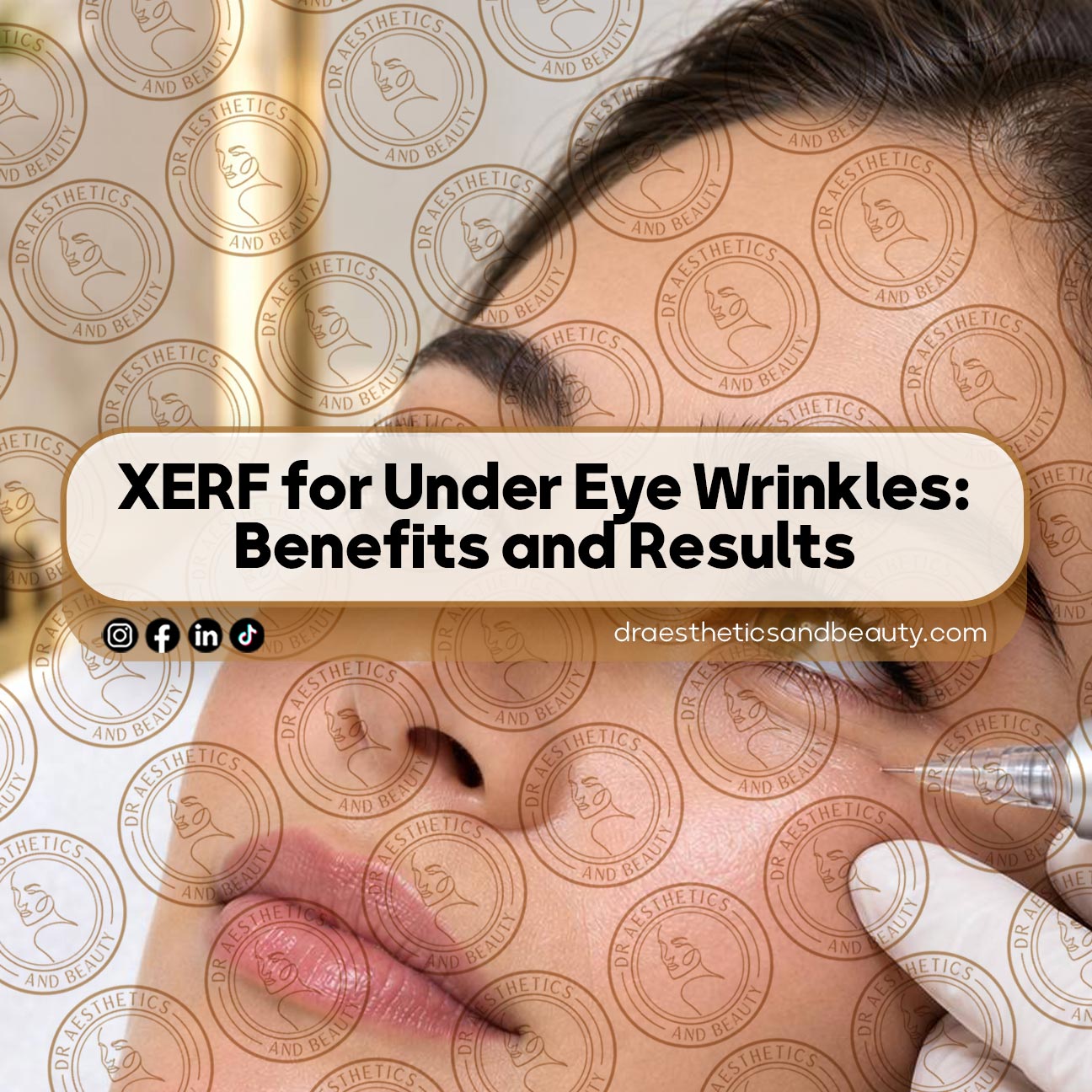
XERF for Under Eye Wrinkles: Quick Summary
- XERF is a non-surgical radiofrequency treatment designed to deliver controlled heat into targeted tissue to support skin tightening and collagen-related remodeling.
- For suitable candidates, improving skin laxity may soften the appearance of fine lines beneath the eyes.
- Results depend on skin quality, the cause of the wrinkles, individual anatomy, and the treatment approach.
- XERF does not replace treatments intended for pronounced under-eye hollows, significant bags, pigmentation, or every type of wrinkle.
- A professional assessment is important because the skin around the eyes is thin and requires careful treatment planning.
- Temporary redness, swelling, tenderness, and other treatment-related effects may occur; uncommon but more serious complications are also possible.
- A qualified aesthetic provider can help determine whether XERF is appropriate or whether another approach may better address your concerns.
Under-eye wrinkles can make the face appear tired, even when you feel well-rested. Fine lines, crepey texture, and gradual skin laxity are common concerns as the skin changes with age, sun exposure, facial movement, and the natural reduction of collagen and elastin. For people seeking a non-surgical approach to skin rejuvenation, XERF for under eye wrinkles may be worth discussing with a qualified aesthetic professional.
XERF is a radiofrequency-based aesthetic treatment intended to deliver controlled energy into tissue. The aim is to support changes in skin firmness and texture without traditional surgery. However, the delicate under-eye area requires a more individualized approach than many other facial regions. Treatment suitability depends on the cause of the lines, the degree of skin laxity, medical history, and the provider’s assessment.
This guide explains how XERF works, which under-eye concerns it may address, how it compares with other options, what a consultation should cover, and how to make an informed decision about treatment.
What This Guide Covers
- Understand the treatment: Learn how radiofrequency energy may support skin tightening and why the under-eye area needs special consideration.
- Assess suitability: Identify which concerns may respond to treatment, which require a different approach, and what affects results.
- Plan with confidence: Review safety considerations, preparation, recovery, alternatives, and questions to ask during a professional consultation.
What Is XERF?
XERF is a non-surgical aesthetic technology that uses radiofrequency energy to heat targeted tissue under controlled conditions. Radiofrequency treatments are used in aesthetic medicine to address selected skin-quality concerns, including laxity and texture. The exact treatment method, energy delivery, settings, and approved treatment areas depend on the device and its instructions for use.
When tissue receives controlled thermal energy, a series of biological responses may occur. These can include immediate changes in the structure of existing collagen and a longer-term remodeling response. Collagen is a structural protein that helps give skin its support and firmness. With age, collagen organization and production change, contributing to visible lines and reduced elasticity.
It is important to distinguish the general principles of radiofrequency treatment from claims about a specific device. The amount of clinical evidence available for XERF specifically, particularly for the lower eyelid and under-eye wrinkles, should be assessed separately from evidence for other radiofrequency technologies.
How Radiofrequency May Affect Skin Quality
Radiofrequency devices deliver energy that is converted into heat within targeted tissue. Under appropriately controlled conditions, this thermal effect may influence collagen structure and stimulate remodeling processes over time. The intended result is an improvement in selected aspects of skin firmness or texture.
The response is not identical for every person. Factors such as age, baseline skin elasticity, tissue thickness, sun exposure, general health, and the severity of laxity may influence the visible outcome.
- Skin firmness: Treatment may help selected areas appear firmer when laxity is a major concern.
- Fine-line appearance: Some fine lines may become less noticeable if improved skin quality addresses part of their underlying cause.
- Skin texture: Changes in firmness may contribute to a smoother appearance, although texture concerns can have several causes.
- Gradual results: If collagen remodeling occurs, visible changes may develop over time rather than appearing immediately.
These are potential effects associated with radiofrequency-based skin treatments, not a guarantee of a particular result with XERF around the eyes.
How XERF for Under Eye Wrinkles May Help
The under-eye area is anatomically complex. The skin is thin, facial muscles move repeatedly throughout the day, and changes in the underlying fat compartments, ligaments, and bone structure can influence the appearance of the lower eyelid. Because several different issues can look like wrinkles, identifying the primary cause is an essential first step.
1. Fine Lines Beneath the Eyes
Fine lines may develop as the skin loses elasticity, becomes drier, and responds to repeated facial expressions. Sun exposure and natural aging can contribute to changes in collagen and elastin. When mild skin laxity is a significant part of the problem, a suitable skin-tightening treatment may help soften the appearance of some lines.
However, fine lines caused mainly by repeated muscle movement may not respond as well to a treatment that targets skin firmness. Similarly, lines associated with dehydration or irritation may require a different plan. A provider should distinguish these causes rather than assuming every line will respond to radiofrequency energy.
2. Crepey Under-Eye Skin
Crepey skin has a thin, finely wrinkled appearance that may become more noticeable when the skin is stretched or exposed to dry conditions. It can be associated with reduced elasticity, cumulative sun exposure, and changes in the skin barrier.
For carefully selected patients, an energy-based treatment may be considered as part of a broader skin-quality plan. The expected improvement should remain realistic: treatment may soften texture concerns, but it cannot reverse every structural change in the lower eyelid.
3. Mild Skin Laxity
Some people notice that the skin below their eyes appears less firm than it used to. Mild laxity may create small folds or emphasize existing lines. Skin-tightening treatments may be considered when laxity is the main concern and the individual is an appropriate candidate.
More pronounced excess skin, prominent fat pads, or significant lower-eyelid changes may require assessment by an appropriately qualified medical professional to discuss other options. XERF should not be presented as a substitute for surgery when surgery is the more suitable intervention.
4. Overall Under-Eye Appearance
Wrinkles are only one factor in the appearance of the under-eye area. Dark circles, visible blood vessels, pigmentation, hollows, puffiness, and shadows can create a similar impression of tiredness. Radiofrequency treatment aimed at skin firmness is not designed to correct every one of these concerns.
A comprehensive assessment can help determine whether the main issue is skin texture, volume loss, pigmentation, fluid retention, or a combination. The most appropriate treatment plan should address the actual cause rather than relying on one procedure for every concern.
Who May Be a Candidate for XERF Under-Eye Treatment?
Suitability depends on the individual, the device’s authorized indications, and the experience of the treating professional. A consultation should establish whether the expected benefit is meaningful in relation to the risks and available alternatives.
A provider may consider discussing XERF with someone who:
- Has mild under-eye skin laxity or fine lines associated with reduced firmness.
- Wants to explore a non-surgical treatment option.
- Understands that results may be subtle and vary between individuals.
- Has realistic expectations about the degree of improvement possible.
- Can follow the recommended preparation, aftercare, and follow-up plan.
These characteristics do not automatically establish eligibility. A clinician must review the person’s medical history, skin condition, medications, previous aesthetic procedures, and any device-specific restrictions before recommending treatment.
When XERF May Not Be the Right Choice
A different approach may be more appropriate when the primary concern is:
- Pronounced under-eye bags: These may relate to fat-pad prominence or other anatomical changes rather than skin laxity alone.
- Deep hollows: Volume loss and facial structure may be more important than skin firmness.
- Persistent pigmentation: Brown discoloration may require a plan focused on pigment, sun protection, or an underlying skin condition.
- Prominent dynamic wrinkles: Lines created mainly by muscle activity may need a different clinical assessment.
- Significant excess skin: A surgical consultation may be appropriate when there is substantial lower-eyelid skin redundancy.
Active skin irritation, infection, certain medical conditions, implanted electronic devices, recent procedures, or other risk factors may affect eligibility. The relevant contraindications must be checked against the specific device instructions and the treating professional’s clinical judgment.
XERF vs. Other Treatments for Under-Eye Wrinkles
Choosing an under-eye treatment starts with identifying what is causing the visible concern. No single procedure is ideal for every type of wrinkle, and treatments that improve one feature may have little effect on another.
The following table provides a general comparison of treatment categories. It is not a clinical ranking, and it does not imply that every treatment is suitable for the lower eyelid or that all options have equivalent evidence.
| Treatment | Main Intended Focus | Potential Role | Important Considerations |
|---|---|---|---|
| XERF radiofrequency | Selected skin-firmness concerns | May be considered for suitable patients with mild laxity or texture concerns, subject to device indications. | Device-specific evidence and eye-area safety must be reviewed; results are variable. |
| Neuromodulator injections | Selected expression-related wrinkles | May help specific dynamic lines when clinically appropriate. | Not a general skin-tightening treatment; periocular use requires appropriate expertise. |
| Dermal fillers | Selected volume-loss concerns | May be considered for certain hollows after careful assessment. | The under-eye area carries specific risks, including swelling and rare serious vascular complications. |
| Laser resurfacing | Selected texture, fine-line, or pigment concerns | May improve certain surface-level changes depending on the device and indication. | Downtime, pigmentary changes, and eye protection require careful consideration. |
| Medical-grade skincare | Skin-barrier support and selected signs of photoaging | May support gradual improvement and help maintain skin health. | Results depend on ingredients, tolerability, consistency, and the underlying concern. |
| Lower blepharoplasty | Selected structural concerns, including excess skin or prominent fat pads | May address anatomical changes that non-surgical skin treatments cannot adequately correct. | Requires surgical assessment, recovery planning, and discussion of operative risks. |
The most suitable choice depends on the diagnosis, the person’s preferences, the expected benefit, and the safety profile of the procedure. A treatment should not be selected solely because it is described as non-surgical or associated with minimal downtime.
What Happens During an XERF Consultation?
A thoughtful consultation should be more than a quick discussion about wrinkles. It should establish the cause of the concern, assess the suitability of the treatment, explain uncertainty, and set realistic expectations.
1. Review of Medical and Aesthetic History
The provider should ask about relevant health conditions, medications, allergies, previous cosmetic treatments, eye-related concerns, and any history that could affect treatment safety. Previous procedures around the eyes are especially important because they may influence the assessment and treatment plan.
2. Assessment of the Under-Eye Area
The skin should be assessed for fine lines, laxity, texture, pigmentation, swelling, and structural changes. The provider should determine which findings may be addressed by the proposed treatment and which are unlikely to improve.
Photographs may be useful for documenting baseline appearance and comparing changes over time. Images should be taken consistently, with similar lighting, facial expression, distance, and camera angle. Differences in lighting can create the impression of improvement or worsening even when the underlying skin has not changed.
3. Discussion of Benefits, Risks, and Alternatives
The provider should explain the proposed procedure, the reason it may be suitable, the limitations of available evidence, and the potential side effects. You should also be given an opportunity to discuss alternatives, including no treatment.
Ask whether treatment of the specific under-eye area is covered by the device’s authorized instructions for use and what training the provider has in treating the periocular region. If the answer is unclear, seek clarification before proceeding.
4. An Individualized Treatment Plan
The plan should be based on your anatomy, skin condition, treatment goals, and risk factors. It should specify the intended treatment area, expected recovery, follow-up arrangements, and the circumstances in which treatment should be postponed or avoided.
What to Expect During Treatment
The exact process depends on the specific XERF system, its authorized use, and the provider’s protocol. Do not assume that settings or procedures used for other radiofrequency devices are interchangeable with XERF.
Before treatment, the provider should confirm the planned area, review consent, and follow the manufacturer’s preparation and safety instructions. Any required eye protection or other precautions must be appropriate for the device and treatment location.
During an energy-based procedure, people may experience warmth, pressure, or temporary discomfort, depending on the technique and individual sensitivity. The provider should monitor the treatment and respond appropriately if discomfort or an unexpected reaction occurs.
Questions worth asking before the appointment include:
- Is XERF specifically indicated for the under-eye area in this setting?
- What evidence supports the expected outcome for my particular concern?
- What sensations should I expect during treatment?
- What eye-safety measures will be used?
- What symptoms during or after treatment should prompt immediate medical attention?
Recovery and Aftercare Following XERF
Recovery depends on the energy delivered, the area treated, individual skin sensitivity, and the treatment protocol. Some people may experience temporary redness, warmth, swelling, or tenderness. The expected duration and severity should be discussed with the provider rather than assumed in advance.
Immediately After Treatment
Follow the specific aftercare instructions supplied by your provider. Avoid rubbing or applying unnecessary pressure to the treated area. Use only recommended products and avoid adding active skincare ingredients unless your provider confirms they are appropriate.
During the Following Days
Keep the skin comfortable and protected. Use gentle skincare and sun protection suitable for the area. If the provider advises temporarily avoiding heat, intense exercise, exfoliants, or other activities, follow those instructions.
Do not assume that every post-treatment reaction is normal. Increasing pain, blistering, marked swelling, skin discoloration, or other unexpected symptoms should be reported promptly. Eye pain, changes in vision, or symptoms affecting the eye itself warrant urgent medical assessment.
Long-Term Skin Support
Daily sun protection, gentle cleansing, adequate moisturization, and avoiding smoking can support overall skin health. A skincare routine may complement a professional treatment plan, but it does not guarantee a specific result or eliminate the need for follow-up.
When Will You See Results from XERF?
The timing and degree of improvement are not the same for everyone. Any immediate change may differ from longer-term changes associated with tissue remodeling. If an effect depends on collagen remodeling, it may develop gradually rather than being fully visible on the day of treatment.
It is not appropriate to promise a fixed number of days, a particular percentage of wrinkle reduction, or a specific duration of results without reliable evidence for the exact device, treatment area, and patient group.
Ask your provider how outcomes are evaluated, when follow-up photographs will be taken, and what degree of improvement is realistic for your baseline skin condition. A responsible plan should include the possibility of limited or no visible improvement.
Factors That Can Influence Results
- Severity of laxity: Mild skin changes may be more amenable to non-surgical treatment than substantial excess skin.
- Underlying cause: Skin laxity, dynamic lines, hollows, and pigmentation require different approaches.
- Skin characteristics: Skin thickness, elasticity, sensitivity, and pigmentary tendency can affect treatment planning.
- Technique and suitability: Device-specific settings, correct patient selection, and the provider’s training matter.
- Aftercare and sun exposure: Following instructions and protecting the skin support general skin health.
- Individual biology: Healing and tissue responses vary, so outcomes cannot be guaranteed.
Safety Considerations for the Delicate Under-Eye Area
The skin around the eyes is thin and lies close to structures that require careful protection. A procedure that may be appropriate on one area of the face is not automatically appropriate near the eyelids. Device-specific training, correct treatment parameters, and compliance with the manufacturer’s instructions are essential.
Potential adverse effects associated with energy-based aesthetic procedures can include redness, swelling, tenderness, burns, blistering, pigmentary changes, textural changes, and scarring. The likelihood and severity depend on the technology, settings, technique, individual characteristics, and treatment location. These risks should be discussed before consent.
Do not proceed until your provider has reviewed relevant contraindications and explained the steps used to protect the eye area. If you have an eye condition, recent eye surgery, unexplained swelling, active irritation, or a medical issue that may affect healing, disclose it during the consultation.
Questions That Support an Informed Decision
- What qualifications and experience do you have with this device and the under-eye region?
- What are the known risks for my skin type and medical history?
- What clinical evidence is available for XERF specifically, rather than radiofrequency treatments in general?
- What alternatives would you recommend if the treatment is not suitable?
- Who should I contact if I experience an unexpected reaction after treatment?
How to Support Under-Eye Skin Before and After Treatment
Healthy skincare habits can support the skin’s barrier and help limit avoidable irritation. They are useful whether you choose a professional treatment or decide to focus on non-procedural care.
Use Sun Protection Consistently
Ultraviolet exposure contributes to premature skin aging. Use a broad-spectrum sunscreen suitable for the face and eye area, follow its application instructions, and combine it with sunglasses and shade where practical. Sun protection is an important long-term measure, but it cannot reverse every existing wrinkle.
Maintain the Skin Barrier
A gentle moisturizer may help reduce dryness that makes fine lines more noticeable. Avoid harsh scrubbing and discontinue products that cause persistent irritation. Products intended for the face should be used near the eyes only as directed.
Choose Active Ingredients Carefully
Some skincare ingredients, including retinoids, can improve selected signs of photoaging when used appropriately, but they may also irritate sensitive skin. The under-eye area requires particular care. Discuss ingredient choice and frequency with a qualified clinician, especially if you have eczema, sensitive skin, or a history of irritation.
Avoid Comparing Results Under Different Conditions
Lighting, sleep, hydration, facial expression, makeup, and camera angle can change how under-eye lines appear. When tracking progress, use consistent photographs and evaluate results at the follow-up interval recommended by your provider.
Frequently Asked Questions About XERF for Under Eye Wrinkles
1. What is XERF for under eye wrinkles?
XERF is a radiofrequency-based aesthetic technology intended to deliver controlled energy into tissue. For appropriate candidates, it may be considered as part of a plan to address selected skin-firmness concerns. Suitability for the under-eye area must be confirmed for the specific device and individual.
2. Can XERF remove under-eye wrinkles completely?
No treatment should be expected to eliminate every under-eye wrinkle. The degree of improvement depends on the cause and severity of the lines, skin characteristics, and treatment suitability. Some concerns may respond better to skincare or a different clinical approach.
3. Is XERF a non-surgical treatment?
XERF is described as a non-surgical radiofrequency treatment. Non-surgical does not mean risk-free, and the exact procedure, authorized use, and safety precautions should be explained by the treating professional.
4. Is XERF safe around the eyes?
Safety depends on the specific device, its instructions for use, the treatment area, the provider’s training, and appropriate precautions. Confirm whether periocular treatment is authorized and ask how the eyes will be protected. No procedure around the eyes should be considered risk-free.
5. How long does it take to see results?
The timing varies by individual and treatment protocol. If the intended effect depends on tissue remodeling, changes may develop gradually. Ask the provider about the evidence-based follow-up timeline for the exact treatment being proposed.
6. How many XERF sessions are needed?
There is no universal session count that can be recommended for everyone. The appropriate plan depends on the device protocol, treatment indication, baseline skin condition, and clinical assessment. Do not rely on a fixed session promise without device-specific support.
7. Does XERF hurt?
Sensation varies depending on the procedure, settings, and individual sensitivity. Warmth or discomfort may occur with energy-based treatments. Your provider should explain what to expect and how discomfort will be managed safely.
8. Is there downtime after XERF?
Downtime depends on the treatment protocol and individual response. Temporary redness, swelling, warmth, or tenderness may occur. Obtain specific recovery instructions before treatment and seek advice if symptoms are unexpected or worsening.
9. Can XERF treat dark circles under the eyes?
Not necessarily. Dark circles may be caused by pigmentation, visible blood vessels, shadows, or volume loss. A treatment aimed at skin firmness may not address these causes, so the reason for discoloration should be assessed first.
10. Can XERF improve under-eye bags?
Prominent bags can be associated with fat-pad anatomy, fluid retention, or other structural changes. Skin tightening alone may not adequately correct them. A qualified provider can determine whether a different treatment or specialist assessment is more appropriate.
11. Is XERF better than fillers for under-eye concerns?
Neither treatment is universally better. Radiofrequency treatment and fillers address different concerns, and fillers carry specific risks around the eyes. The choice depends on whether the main issue is skin laxity, volume loss, or another feature, as well as individual suitability.
12. Can XERF be combined with other aesthetic treatments?
Combination treatment may be considered in some cases, but timing, compatibility, and safety need individual assessment. Tell your provider about all recent and planned procedures. Do not combine treatments without a clear, professionally supervised plan.
13. Who should avoid or postpone treatment?
People with relevant contraindications, active irritation or infection, certain medical conditions, or recent procedures may need to avoid or postpone treatment. The specific device instructions and medical history determine eligibility, so screening is essential.
14. What should I ask before booking?
Ask about the provider’s qualifications, device-specific experience, evidence for under-eye treatment, potential risks, expected benefits, alternatives, recovery, costs, and follow-up arrangements. You should have enough information to make an informed decision without pressure.
15. How can I maintain my results?
Follow the recommended aftercare, protect your skin from ultraviolet exposure, use gentle skincare, and attend appropriate follow-up appointments. The longevity of any improvement is variable and should not be guaranteed.
16. What if I experience eye pain or vision changes after treatment?
Eye pain or changes in vision after an aesthetic procedure require urgent medical assessment. Do not wait for a routine follow-up appointment or assume these symptoms are a normal part of recovery.
Conclusion: Is XERF Worth Considering for Under-Eye Wrinkles?
XERF for under eye wrinkles may be an option to discuss when the main concern is mild skin laxity or selected texture changes and the individual is suitable for the specific device and treatment area. However, its potential benefits should be considered alongside the evidence available for XERF itself, the anatomy of the under-eye region, and the risks associated with energy-based procedures near the eyes.
The most important first step is identifying what causes the visible lines. Skin laxity, expression-related wrinkles, hollows, pigmentation, and under-eye bags are different concerns and may require different approaches. A careful assessment helps avoid choosing a treatment that does not match the underlying problem.
Before proceeding, ask for a clear explanation of expected outcomes, device-specific safety measures, alternatives, recovery, and follow-up. A trustworthy aesthetic plan prioritizes informed consent and realistic expectations rather than promising perfect or permanent results.
Explore Your Under-Eye Rejuvenation Options
If you are concerned about fine lines, crepey texture, or changes in under-eye firmness, the right next step is a personalized consultation. Discuss your goals, medical history, treatment suitability, potential risks, and alternatives with a qualified aesthetic professional before deciding whether XERF is appropriate for you.
Learn more about the clinic and its aesthetic services by visiting Dr. Aesthetics and Beauty.