

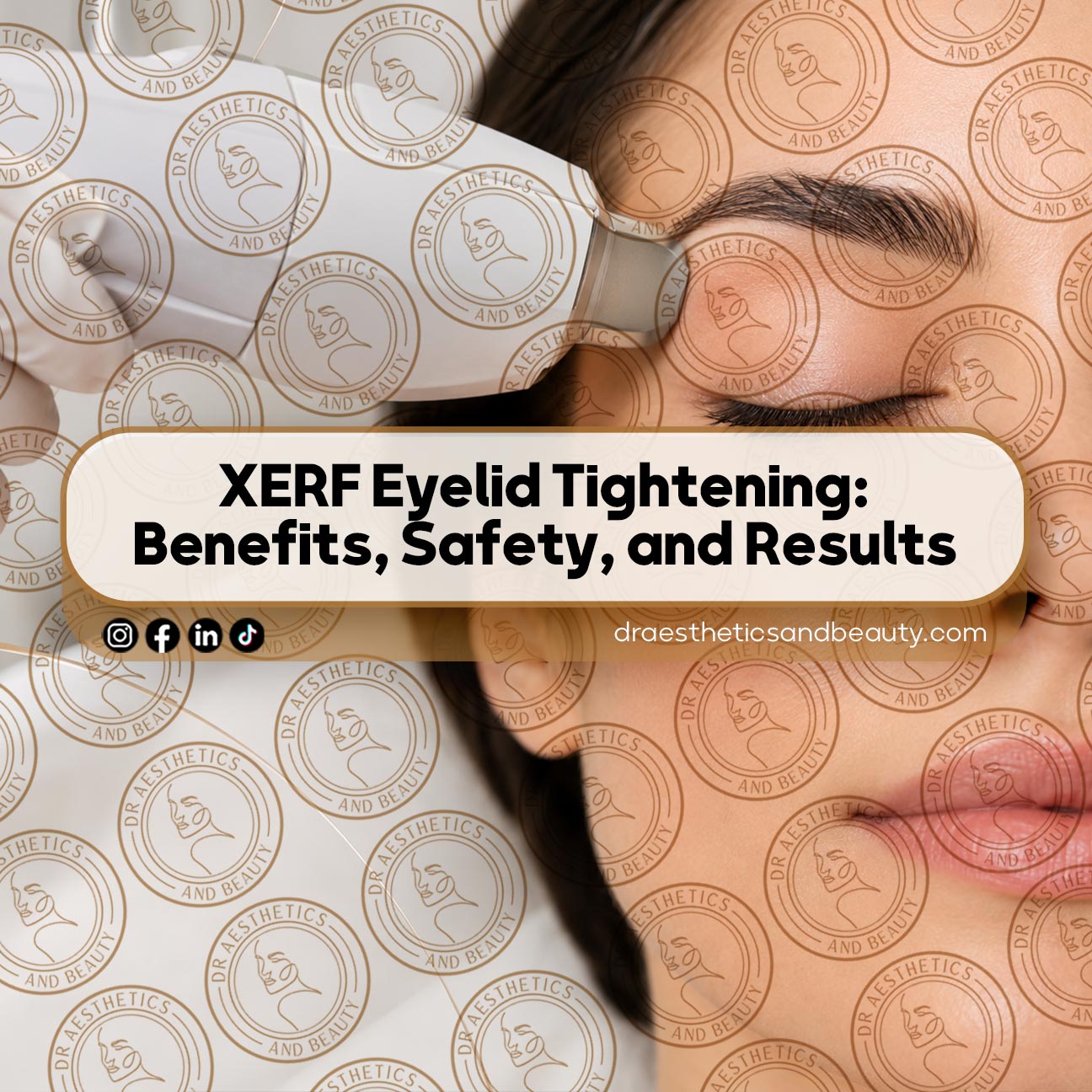
XERF eyelid tightening is an emerging topic in non-surgical aesthetic rejuvenation for people concerned about loose-looking skin, fine lines, and changes in the appearance of the eye area. Understanding how this technology works, what it may realistically achieve, and whether it is appropriate for the delicate eyelid region is essential before considering treatment.
Quick Summary
- XERF is a radiofrequency-based aesthetic technology designed to support skin tightening and improve the appearance of skin laxity.
- The eye area requires particular care because eyelid skin is delicate and lies close to structures essential for vision.
- Results depend on the treatment area, individual skin characteristics, device protocol, and practitioner assessment.
- Non-surgical tightening may improve selected signs of ageing, but it cannot reliably reproduce the results of surgical eyelid correction.
- Not every radiofrequency device or handpiece is appropriate for direct eyelid treatment.
- A qualified aesthetic provider should confirm whether XERF is suitable for the upper eyelids, lower eyelids, or surrounding skin.
- A personalised consultation helps establish realistic expectations, review potential risks, and compare alternative treatments.
What Is XERF Eyelid Tightening?
XERF is a non-invasive aesthetic technology that uses radiofrequency energy to heat targeted tissue. Radiofrequency treatments are used in aesthetic medicine to improve the appearance of skin laxity and support collagen-related remodelling. The specific capabilities of any treatment depend on the device, its approved indications, the treatment protocol, and the area being treated.
When people search for XERF eyelid tightening, they are usually looking for a way to address drooping-looking eyelids, crepey skin, fine lines, or a tired appearance without undergoing surgery. However, an important distinction must be made between treating the skin around the eyes and applying energy directly to the eyelids.
The eyelid region has specialised anatomy, very thin skin, and structures that are essential for protecting the eyes. A technology that is appropriate for the cheeks, jawline, or other facial areas is not automatically appropriate for the upper or lower eyelids.
Before treatment, an experienced aesthetic professional should establish whether the proposed device and handpiece are specifically suitable for the intended area. If direct eyelid treatment is not supported by the device’s instructions and safety requirements, a different approach should be considered.
What Does Eyelid Tightening Aim to Improve?
Depending on the treatment and the individual’s anatomy, non-surgical skin-tightening procedures may be considered for concerns such as:
- Mild skin laxity around the outer corners of the eyes.
- Fine lines associated with changes in skin elasticity.
- A crepey appearance in suitable areas around the eyes.
- Early signs of facial skin laxity that contribute to a tired appearance.
- Changes in skin firmness associated with the natural ageing process.
These are general aesthetic concerns, not guaranteed XERF treatment outcomes. The degree of improvement varies, and a consultation is necessary to determine whether radiofrequency treatment is appropriate for a particular concern.
How Does XERF Radiofrequency Technology Work?
Radiofrequency technology delivers electrical energy into tissue, where it is converted into heat. In appropriately selected aesthetic treatments, controlled heating can influence collagen-containing tissue and initiate biological processes associated with tissue remodelling.
Collagen is a structural protein that helps support skin strength and elasticity. As people age, changes in collagen structure, elastin, subcutaneous tissue, and facial anatomy can contribute to visible laxity and wrinkles. Radiofrequency-based procedures aim to improve selected aspects of skin firmness by delivering controlled energy under defined conditions.
Understanding the Role of Heat
The therapeutic effect of radiofrequency depends on more than simply producing heat. Energy delivery, treatment depth, temperature, tissue characteristics, and exposure time all influence how tissue responds.
Too little energy may not produce the intended effect, while excessive or poorly controlled heating can increase the risk of burns, unwanted tissue injury, pigmentation changes, and other complications. This balance is particularly important around the eyes.
Device-specific treatment parameters should therefore be selected by a properly trained professional. Settings used for one facial area should not be transferred to another area without appropriate clinical justification and manufacturer guidance.
Does XERF Stimulate Collagen?
Radiofrequency treatments are generally associated with thermal effects that can influence collagen remodelling. However, the extent of collagen-related changes and the resulting visible improvement depend on the particular technology and the evidence available for its intended use.
It is important not to assume that every radiofrequency device produces identical outcomes. Evidence from one device, handpiece, or treatment area cannot automatically establish the effectiveness or safety of another.
When considering XERF for eyelid concerns, ask your provider to explain the evidence supporting the specific protocol being proposed. Clear information about the device’s intended use is more useful than broad claims about collagen production or skin rejuvenation.
Can XERF Tighten the Upper and Lower Eyelids?
The answer depends on the device’s authorised or cleared indications, the treatment handpiece, and the provider’s clinical assessment. The upper eyelids, lower eyelids, and surrounding facial skin are anatomically different areas and should not be treated as interchangeable.
Upper Eyelid Tightening
Upper eyelid concerns can range from mild skin creasing to significant excess skin that rests near or over the eyelashes. Some people also experience brow descent, which can make the upper eyelids appear heavier.
These concerns have different causes. Mild skin laxity may be approached differently from excess eyelid skin, changes in brow position, or a structural problem affecting eyelid function.
Non-surgical skin-tightening treatments may be considered for selected concerns involving the surrounding facial skin. However, they should not be presented as a proven substitute for direct eyelid treatment unless appropriate device-specific evidence supports that use.
Lower Eyelid Tightening
The lower eyelids can develop fine lines, loose skin, under-eye hollows, and prominent fat pads. Although these concerns can appear similar in photographs, they do not necessarily have the same underlying cause.
Skin laxity may contribute to a crepey appearance, while hollows relate to volume and anatomical contours. Prominent fat pads may create under-eye bags that cannot be reliably corrected by tightening the skin alone.
A professional assessment should distinguish between these concerns before recommending treatment. Direct energy-based treatment near the lower eyelid requires particular attention to eye protection, device suitability, and the potential for unwanted thermal effects.
The Difference Between Eyelid Skin and Periorbital Skin
The term periorbital refers to the area surrounding the eye. It may include the temples, outer eye corners, and adjacent facial skin. The eyelids themselves have different anatomical characteristics and may be subject to different treatment restrictions.
This distinction matters because a treatment plan for the outer eye area does not necessarily involve treating the eyelid directly. Providers should explain exactly where the device will be applied and which areas will be avoided.
Potential Benefits of XERF for Eye-Area Rejuvenation
For appropriately selected patients and suitable treatment areas, radiofrequency-based skin tightening may offer several practical advantages. The potential benefits should be discussed as possibilities rather than guaranteed results.
- Non-surgical approach: Radiofrequency treatments do not involve the surgical incisions used in blepharoplasty.
- Targeted skin treatment: Depending on the device and protocol, energy can be delivered to selected areas of the face.
- Potential improvement in skin firmness: Certain radiofrequency procedures may improve the appearance of mild skin laxity.
- Limited interruption to daily activities: Some non-invasive treatments involve less downtime than surgery, although temporary redness, swelling, tenderness, or other reactions can occur.
- Individualised treatment planning: A provider can evaluate whether an energy-based procedure fits the patient’s concerns and broader aesthetic goals.
These potential advantages do not establish that XERF is suitable for every eye-area concern. The expected benefit depends on the exact device, the treated area, the patient’s anatomy, and the quality of the supporting clinical evidence.
What XERF May Not Correct
It is equally important to understand the limitations of non-surgical tightening. Radiofrequency treatment should not be expected to reliably correct:
- Significant excess upper eyelid skin.
- Marked eyelid drooping caused by muscle or tendon dysfunction.
- Substantial brow descent.
- Prominent under-eye fat pads requiring structural correction.
- Deep under-eye hollows caused primarily by volume loss.
- Vision problems caused by excess eyelid tissue or eyelid position.
Some of these concerns may require assessment by an ophthalmologist, an oculoplastic surgeon, or another appropriately qualified medical specialist. A responsible treatment plan recognises when an aesthetic procedure is unlikely to provide the desired outcome.
XERF vs Other Eyelid Tightening Treatments
People exploring non-surgical eyelid rejuvenation may encounter radiofrequency, fractional laser procedures, ultrasound-based treatments, injectable treatments, and surgical options. These approaches differ in how they work, the concerns they address, and their associated risks.
The most appropriate option depends on whether the primary issue is skin texture, mild laxity, pigmentation, volume loss, excess skin, or an anatomical problem.
| Treatment | Primary purpose | Important considerations |
|---|---|---|
| XERF radiofrequency | Radiofrequency-based aesthetic skin treatment. | Suitability for the eyelids must be verified for the specific device and protocol. |
| Other radiofrequency procedures | Selected skin-firming or texture concerns. | Devices differ in energy delivery, depth, indications, and safety requirements. |
| Fractional laser treatments | Selected texture, fine-line, and resurfacing concerns. | Recovery, pigmentation risk, and eye protection depend on the laser and treatment protocol. |
| Ultrasound-based treatments | Selected deeper tissue-tightening indications. | Treatment depth and suitability around the eyes require device-specific assessment. |
| Injectable treatments | Selected concerns involving expression lines or volume loss. | Different products address different problems and carry injection-specific risks. |
| Blepharoplasty | Surgical correction of selected excess eyelid skin or other structural concerns. | Requires surgical assessment, recovery, and discussion of operative risks. |
This comparison is intended to explain broad treatment categories, not to establish that one procedure is superior. There is no universal treatment that is best for every patient, and the evidence for a particular device must be assessed independently.
Who May Be a Candidate for XERF Eyelid Tightening?
Candidate selection begins with identifying the concern, assessing the skin and surrounding anatomy, and determining whether the proposed treatment is appropriate for the intended area.
Someone with mild skin laxity may have different options from someone with pronounced excess skin, significant under-eye bags, or drooping that interferes with vision.
Factors Considered During a Consultation
- Skin condition: The degree of laxity, texture changes, and visible fine lines.
- Anatomy: Upper eyelid position, lower eyelid support, brow position, and the relationship between skin and underlying structures.
- Medical history: Relevant eye conditions, previous procedures, healing problems, and other medical factors.
- Medication and skincare use: Products or medications that may affect irritation, healing, or treatment suitability.
- Previous aesthetic treatments: Earlier laser, radiofrequency, injectable, or surgical procedures.
- Expectations: Whether the desired improvement is realistic for a non-surgical procedure.
These factors help determine whether a treatment should proceed, be modified, or be avoided. They may also indicate that a medical eye assessment is more appropriate than an aesthetic procedure.
When Treatment May Need to Be Delayed or Avoided
Active eye infections, irritated or damaged skin, certain inflammatory conditions, recent procedures, and specific medical circumstances may affect treatment suitability. Implanted electronic devices, metal implants, or other contraindications must be assessed according to the manufacturer’s instructions for the particular device.
Patients with unexplained eyelid swelling, new changes in vision, eye pain, significant dry-eye symptoms, or sudden eyelid drooping should obtain appropriate medical assessment before considering cosmetic treatment.
A provider should review relevant medical information and explain any precautions or contraindications before treatment. No online article can determine individual eligibility.
Is XERF Eyelid Tightening Safe?
Safety depends on the device, its intended use, the treatment location, the operator’s training, and the patient’s individual circumstances. Because the eyes are sensitive to thermal injury, treating near the eyelids requires specific precautions.
Before agreeing to treatment, ask whether the exact XERF device and handpiece are intended for the proposed area. Request a clear explanation of the manufacturer’s instructions, required eye protection, and the provider’s experience with the planned protocol.
Potential Risks and Side Effects
Depending on the technology and the area treated, possible reactions to energy-based aesthetic procedures can include:
- Temporary redness or swelling.
- Tenderness, warmth, or discomfort.
- Temporary skin sensitivity.
- Burns or blistering in the event of thermal injury.
- Changes in pigmentation or skin texture.
- Unwanted changes to underlying tissue.
- Eye-related injury if treatment is performed improperly or without appropriate precautions.
This list describes potential risks associated with energy-based aesthetic treatments generally. It should not be interpreted as a verified list of XERF-specific adverse events or their frequency.
Why Eye Protection Matters
Eye protection must be appropriate for the specific technology and treatment protocol. Ordinary closed eyelids should not be assumed to provide adequate protection from energy-based devices.
Depending on the device’s instructions, treatment near the eyes may require specialised protective measures or may be contraindicated altogether. Intraocular or external protective devices should only be used when appropriate for the technology and by qualified professionals following established safety procedures.
If a provider cannot explain how eye safety is maintained during the proposed procedure, it is reasonable to postpone treatment and seek further clarification.
Warning Signs After Treatment
Mild, short-lived redness or swelling may occur after some aesthetic procedures. However, significant eye pain, blurred vision, sudden visual changes, severe swelling, or rapidly worsening symptoms should never be dismissed as an expected reaction.
Seek urgent medical assessment if visual symptoms or severe eye-related symptoms develop. Prompt evaluation is especially important when an injury involving the eye is suspected.
What Happens During a XERF Consultation?
A high-quality consultation should be more than a discussion of treatment benefits. It should establish the cause of the concern, confirm the proposed procedure’s suitability, review risks, and explain alternative options.
Step 1: Discuss Your Concerns
Explain what you would like to improve. You may be concerned about upper eyelid heaviness, fine lines at the outer corners, crepey under-eye skin, or a generally tired appearance.
Clarifying the main concern helps the provider distinguish between skin texture, excess tissue, volume changes, and structural eyelid problems.
Step 2: Assess the Treatment Area
The provider should assess the relevant facial anatomy and determine whether the concern is appropriate for a non-surgical treatment. If the issue may involve eyelid function or vision, referral to an appropriate medical specialist may be necessary.
Step 3: Confirm Device Suitability
Ask which device and handpiece will be used, which areas will be treated, and whether the proposed application is supported by the manufacturer’s instructions. Do not assume that a device intended for general facial tightening is also intended for direct eyelid use.
Step 4: Review Risks and Alternatives
The provider should explain potential side effects, expected recovery, relevant contraindications, and alternative procedures. You should also understand the limitations of the proposed treatment and the possibility of little or no visible improvement.
Step 5: Agree on a Personalised Plan
If treatment is appropriate, the plan should reflect the clinical assessment, device instructions, and your goals. If another procedure is more suitable, the provider should explain why rather than recommending XERF simply because it is available.
What Results Can You Expect From XERF?
Results from radiofrequency-based treatments can vary considerably. Factors include baseline skin laxity, age-related tissue changes, the treatment area, the device’s capabilities, the selected protocol, and individual biological responses.
It is important to distinguish between an immediate sensation of firmness and a lasting, measurable improvement in skin laxity. Temporary changes after treatment do not necessarily predict the final outcome.
When Might Results Become Visible?
The timing of visible changes depends on the specific treatment. Some energy-based procedures may produce an early appearance of improvement, while changes associated with tissue remodelling can develop gradually.
However, a reliable timeline cannot be assigned to XERF eyelid tightening without appropriate evidence for the exact device, protocol, and treatment area. Your provider should explain what is known, what remains uncertain, and when the outcome can reasonably be evaluated.
How Many Sessions Are Needed?
The number of sessions should not be assumed in advance based on general radiofrequency marketing claims. Some protocols may involve a single session, while others may recommend multiple treatments or follow-up assessments.
Any recommendation should be based on the device’s instructions, the clinical evidence, the patient’s response, and the intended treatment area. More treatment is not automatically better, particularly around sensitive anatomy.
How Long Do Results Last?
Longevity depends on the treatment, individual ageing patterns, skin condition, and other factors. Skin continues to change over time, so no non-surgical treatment should be presented as permanently stopping the ageing process.
Before treatment, ask how outcomes are measured, whether published follow-up data exist for the specific indication, and what maintenance—if any—is supported by evidence.
Recovery and Aftercare Following Treatment
Recovery depends on the procedure performed, the treatment area, the energy delivered, and individual skin sensitivity. Instructions for general facial radiofrequency treatment should not automatically be applied to direct eyelid treatment.
Immediately After Treatment
Depending on the procedure, temporary warmth, redness, swelling, or tenderness may occur. Your provider should explain which reactions are expected and how long they may reasonably persist.
Follow the specific aftercare instructions provided for your treatment. Avoid rubbing or applying unnecessary pressure to the treated area, and do not introduce irritating products unless your provider confirms they are appropriate.
Skincare and Sun Protection
Gentle skincare and appropriate sun protection can support the skin barrier after many aesthetic procedures. The products and timing should be tailored to the treatment performed and the condition of the skin.
Retinoids, exfoliating acids, fragranced products, and other potentially irritating ingredients may need to be paused temporarily if advised by the treating professional. Do not apply products close to the eyes if they cause irritation or are not intended for that area.
When to Contact Your Provider
Contact the treating clinic if symptoms are more intense than expected, persist longer than explained, or become progressively worse. Seek urgent medical attention for visual changes, severe eye pain, or other concerning eye symptoms.
XERF Eyelid Tightening Cost: What Influences Pricing?
The cost of an aesthetic procedure depends on several factors, and a reliable price should be provided directly by the clinic after the proposed treatment has been clarified. A generic price for facial skin tightening may not represent the cost or availability of a specific eyelid-related procedure.
Factors that can influence pricing include:
- The exact treatment area and complexity of the assessment.
- The device and handpiece used.
- The number of sessions included in the treatment plan.
- The provider’s qualifications and experience.
- Whether a medical assessment or additional consultation is required.
- The need for follow-up appointments or other procedures.
When comparing prices, confirm what is included and whether the quoted treatment is specifically appropriate for the area you want to address. A lower price does not necessarily represent better value if the treatment does not match your concern or if the safety requirements are unclear.
How to Choose a Provider for Eye-Area Rejuvenation
The quality of the assessment and the appropriateness of the treatment plan are central to a responsible aesthetic experience. When choosing a provider, consider the following questions.
- Does the provider have appropriate training and experience with the proposed technology?
- Can the clinic explain the intended use and limitations of the device?
- Is the proposed treatment area supported by the manufacturer’s instructions?
- Are the risks and alternatives explained clearly?
- Does the provider discuss situations in which treatment should not proceed?
- Is there a clear process for managing complications and arranging medical referral when necessary?
- Are claims about results realistic and consistent with the available evidence?
Be cautious of absolute promises, claims of zero risk, or suggestions that a non-surgical procedure will always replace eyelid surgery. Responsible aesthetic care involves explaining uncertainty as well as potential benefits.
Frequently Asked Questions About XERF Eyelid Tightening
1. What is XERF eyelid tightening?
XERF eyelid tightening refers to interest in using XERF radiofrequency technology to improve the appearance of skin laxity around the eyes. Whether the device is appropriate for direct eyelid treatment must be confirmed for the specific device, handpiece, and intended application.
2. Can XERF tighten loose upper eyelid skin?
The suitability and expected benefit depend on the severity and cause of the concern. Mild laxity and significant excess eyelid skin are not equivalent, and pronounced excess tissue may require assessment for surgical options.
3. Can XERF treat under-eye wrinkles?
Radiofrequency treatments may be considered for selected skin-texture concerns, but suitability for the lower eyelid must be established for the exact technology. Fine lines can have several causes, so an assessment is needed before choosing treatment.
4. Is XERF a non-surgical alternative to blepharoplasty?
XERF is a radiofrequency-based aesthetic technology, whereas blepharoplasty is surgery. A non-surgical treatment may be considered for selected skin concerns, but it cannot be assumed to correct substantial excess eyelid skin or structural problems to the same degree as surgery.
5. Is XERF safe around the eyes?
Safety depends on the device’s intended use, treatment location, protective measures, and the operator’s training. Direct eyelid application should not proceed unless it is appropriate under the manufacturer’s instructions and relevant clinical requirements.
6. Does XERF eyelid tightening hurt?
Sensation varies according to the device, settings, treatment area, and individual sensitivity. Any expected discomfort and available comfort measures should be explained during the consultation. Pain should not be ignored or treated as proof that a procedure is working.
7. How long does a XERF treatment take?
Treatment duration depends on the device protocol and the area being treated. A clinic should provide a realistic estimate for the specific procedure rather than applying a general facial-treatment duration to eyelid treatment.
8. How many XERF sessions are required?
The number of sessions depends on the treatment protocol and the individual’s needs. There is no universal session count that can be recommended for every patient or every eye-area concern.
9. When will I see results?
The timing of visible improvement varies with the treatment and individual response. Ask the provider what timeline is supported by evidence for the exact device and proposed treatment area.
10. How long do the results last?
Longevity depends on the procedure, individual skin changes, and other factors. Claims about lasting results should be supported by follow-up evidence for the particular technology and indication.
11. Is there downtime after XERF?
Some non-invasive radiofrequency procedures involve limited downtime, but temporary redness, swelling, sensitivity, or other reactions may occur. The recovery expectations for the exact procedure should be confirmed before treatment.
12. Can XERF remove under-eye bags?
Under-eye bags may result from prominent fat pads, fluid retention, skin laxity, or a combination of factors. Skin tightening alone may not correct the underlying cause, so a proper assessment is important.
13. Can XERF correct drooping eyelids that affect vision?
Cosmetic skin tightening should not be relied upon to correct functional eyelid drooping. If the eyelid interferes with vision or has changed unexpectedly, seek assessment from an appropriate medical professional.
14. Is XERF suitable for every skin type?
Suitability depends on the device, the treatment protocol, skin characteristics, medical history, and other individual factors. A provider should assess potential risks rather than assuming that every patient is an appropriate candidate.
15. Can XERF be combined with other aesthetic treatments?
Combination treatments may be appropriate in selected circumstances, but timing and compatibility depend on the procedures involved. The provider should assess previous treatments, healing status, potential interactions, and the risks of treating the same area.
16. How much does XERF eyelid tightening cost?
Pricing varies by clinic, treatment area, protocol, and the number of sessions recommended. Request a personalised quote that clearly identifies the procedure being offered and any associated consultation or follow-up fees.
17. What should I ask before booking?
Ask whether the device is intended for the exact treatment area, what evidence supports the expected result, which eye-protection measures are required, what risks apply to you, and which alternatives are available.
18. What happens if XERF is not suitable for my eyelids?
Your provider may discuss alternative approaches based on the cause of your concern. These may include treatments for surrounding skin, other appropriate aesthetic procedures, or referral to an eye specialist or surgeon when structural or functional issues are suspected.
Conclusion: Is XERF Eyelid Tightening Right for You?
XERF eyelid tightening is a topic worth exploring for people interested in non-surgical aesthetic rejuvenation, but choosing the right treatment requires more than comparing marketing claims or focusing on the promise of firmer skin.
Understanding the difference between eyelid skin and surrounding facial skin, identifying the cause of the concern, and confirming the device’s suitability are essential steps. Radiofrequency technology may offer benefits for selected aesthetic indications, but outcomes are not guaranteed and should not be overstated.
The most appropriate treatment is the one that matches your anatomy, goals, medical circumstances, and tolerance for risk. In some cases, a non-surgical procedure may be worth considering. In others, an alternative treatment or specialist assessment may be more appropriate.
A personalised consultation provides the opportunity to discuss realistic expectations, review available evidence, and make a well-informed decision about eye-area rejuvenation.
Explore Your Aesthetic Treatment Options
If you are concerned about eyelid laxity, fine lines, or changes in the appearance of the eye area, a personalised assessment can help clarify which options may be appropriate for your needs.
Learn more about the clinic and its aesthetic approach at Dr. Aesthetics and Beauty.
During your consultation, discuss your main concerns, relevant medical history, the suitability of any proposed device, expected outcomes, and possible alternatives. A clear understanding of benefits and limitations is the foundation of a responsible treatment decision.